Companies hired to modernize California’s “vulnerable” 911 network say the state suddenly walked away from a fully built, ready-to-launch system and shifted to a new approach they contend could add hundreds of millions of dollars in taxpayer costs.
California has already spent nearly $500 million developing a regional Next Generation 911 network, known as NGA 911. But state officials have opted to halt that rollout, leaving most emergency call centers operating on an aging analog network while California pursues a different statewide system.
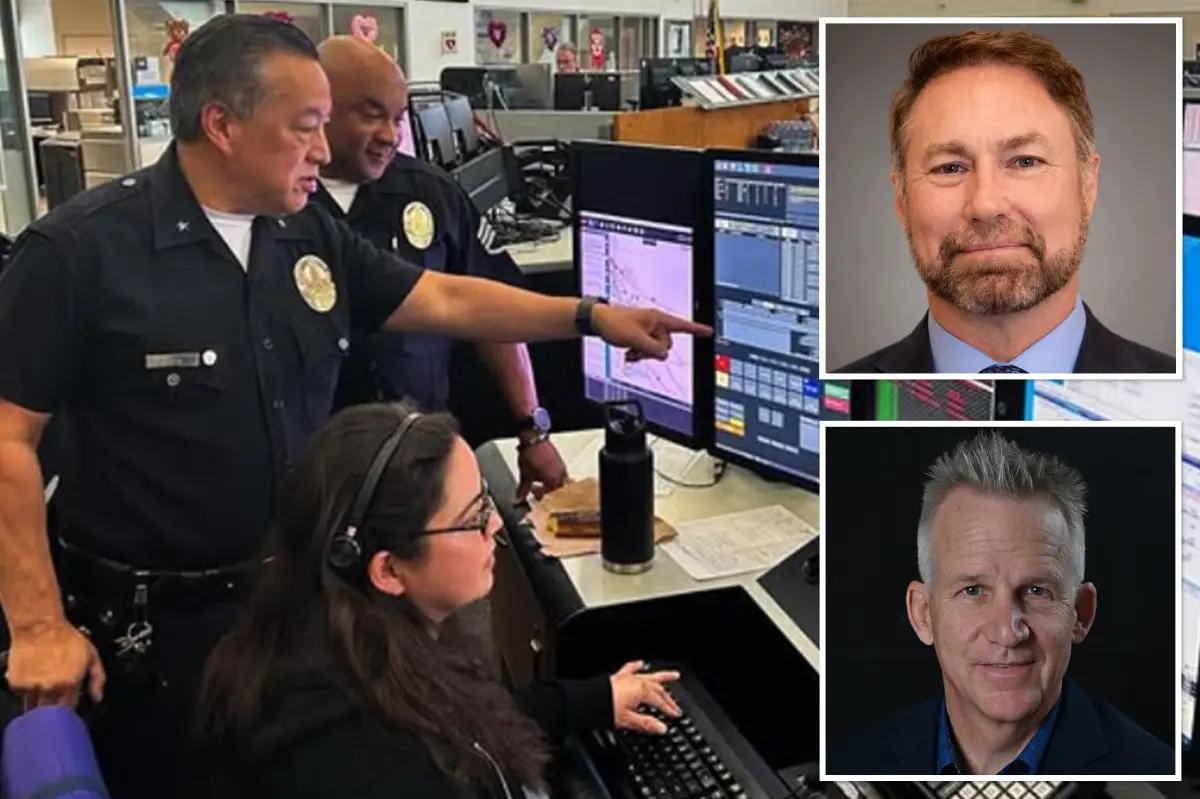
“It doesn’t make sense to anyone other than that little bubble they have in Sacramento,” said Don Ferguson, CEO of NGA 911, one of the firms contracted to help build the upgraded network.
In exclusive interviews with The Post, representatives from two companies hired for the project said the internet-based digital network’s “core was 100% deployed” and “ready to go” before the state scrapped the plan.
The upgraded system was designed to let 911 dispatch centers receive not only voice calls, but also text messages, video and location data — tools intended to improve and speed up emergency response.
California lawmakers approved the shift to digital emergency communications in 2019, selecting four providers — NGA 911, Synergem, Lumen and Atos — to replace the traditional analog system, which primarily handles phone calls, offers limited location details and relies on a single point of failure.
Under the original plan, each company was assigned a region of the state to build out the new network, while Atos was designated to operate the statewide backup system.
Over several years, the state invested $457 million in public funds to create a network meant to link California’s 447 emergency dispatch centers.
The backbone of the network was built, according to NGA 911, and like Synergem they were actively testing and migrating over emergency dispatch centers — 23 had been switched over to the new system, with over 200 more ready to go.
“We’ve done all the work. The heavy lifting has been completed,” Myron Herron, president of Synergem told the Post.
“It’s like you build a race car, you fill it with gas, then the light goes from red, yellow, then let’s get ready to go green and they said, ‘Oh, never mind, race is canceled.’”
The California Governor’s Office of Emergency Services (CAL OES) decided a regional approach was too complicated and opted to go back to a single statewide provider — a decision Herron and Ferguson said will cost taxpayers up to a billion dollars.
With the regional rollout effectively abandoned, the majority of California remains on the old analog network despite a digital framework that is already built.
“That’s the absurdity. They come at this after having spent at minimum a half billion dollars,” Ferguson said.
The Los Angeles Police Department (LAPD) even voiced concerns when CAL OES decided to stall the project, “urgently” requesting CAL OES expedite the process to finish the Next Generation 911 system.
“The ongoing wildfire disaster in Los Angeles County underscores the critical need to replace our vulnerable legacy 911 system — including a single point of failure and a saturated Hollywood Selective Router,” the department wrote in an email to CAL OES last year.
“We respectively ask for a definitive date to begin LAPD’s NG911 turn-up and an immediate meeting to finalize the timeline,” the email, reviewed by the Post, stated.
Despite LAPD’s request, NGA 911 told the Post it was never granted the opportunity to test its network at the agency’s main router and instead was informed by CAL OES the project is on hold.
“LAPD, when they heard of the pause, they called us in and said, ‘You guys got to help us move this Next Gen thing forward. What can you do?’ And we said, really, it’s out of our control, Cal OES directs it,” Ferguson told the Post, adding that LAPD never heard back after sending an email to the Governor’s Office of Emergency Services.
The company claims they provided ”3,000 pages of tests” showing their new system was ready-to-go but were met with silence — until they were sent an email from the state agency in June 2025 saying California was going back to using a single provider.
“This transition is not a reflection of vendors performance and does not impact any existing contractual arrangements you may have or future procurements with the State of California.”
Chief Deputy Director Lisa Mangat stated that the move was “not a reflection of vendor performance.”
”We are confident that we will continue to work as partners,” the email said.
When contacted by The Post, CAL OES claimed the new 911 system was suffering from delays, dropped calls, and disruptions ”at an unacceptable rate.”
“Problems have occurred with the regional system’s core services (the “brains” of NG 9-1-1), including failed call transfers, poor audio quality, missing location data, and lost and dropped calls,” a CAL OES spokesperson said in a statement to The Post.
“The individual regional NG 911 networks also did not work well with one another, which made the system harder to operate and more difficult to stabilize when problems occurred.”
California’s non-partisan watchdog, the Legislative Analyst’s Office, recommended the state pause the transition and conduct a review to determine if abandoning the new digital model is justified given the costs taxpayers would face.
But CAL OES ignored the recommendation and pushed ahead with awarding Atos — a French company — a nearly $200 million bridge contract as tries to move to a single statewide Next Gen system.
Ferguson and Herron estimate rebuilding the system under the new model could ultimately cost taxpayers between $700 million and $1.2 billion, although CAL OES has yet to offer their own estimation.
“I don’t think CAL OES really calculated what it meant to say we’re going to move to a single statewide provider,” Ferguson said, noting that the Atos will have to install their own network systems into the 400-plus 911 call centers across the state.
“It’s the poster child of government waste,” Herron said.
However, Governor Gavin Newsom’s office called it a “responsible decision” when asked whether he supported CAL OES’ plan to switch back to a single statewide provider.
“The state did not abandon modernization—it made the responsible decision to improve its implementation strategy after real-world operational experience identified risks that could not be ignored,” Newsom’s office said in a statement. “Continuing with an approach that was creating deployment challenges would have risked emergency communications for millions of Californians.”
“The state will not accept anything less than a system that is reliable, interoperable, fiscally responsible, and worthy of the public’s trust” the statement continued.
In the meantime, the state is using a function of the Next Generation 911 system that processes call location, according to Ferguson and Herron. In other words, the new network was discarded but the state continues to rely on a certain aspects of the digital network like location services while most emergency call centers continue operating on the analog system.
Herron warns switching to a single statewide provider will be even more complex because “you have to develop those interfaces and do the customization all over again.
“Their endgame is to have the Next Gen,” Herron said. “I think they’re already a decade behind the rest of the United States, I guess they want to be twenty years behind the United States.”
However, more oversight is likely on the horizon for CAL OES, as Newsom recently signed the state budget that includes provisions requiring an independent technical evaluation and audit before future long-term decisions are made on the Next Generation 911 project.


