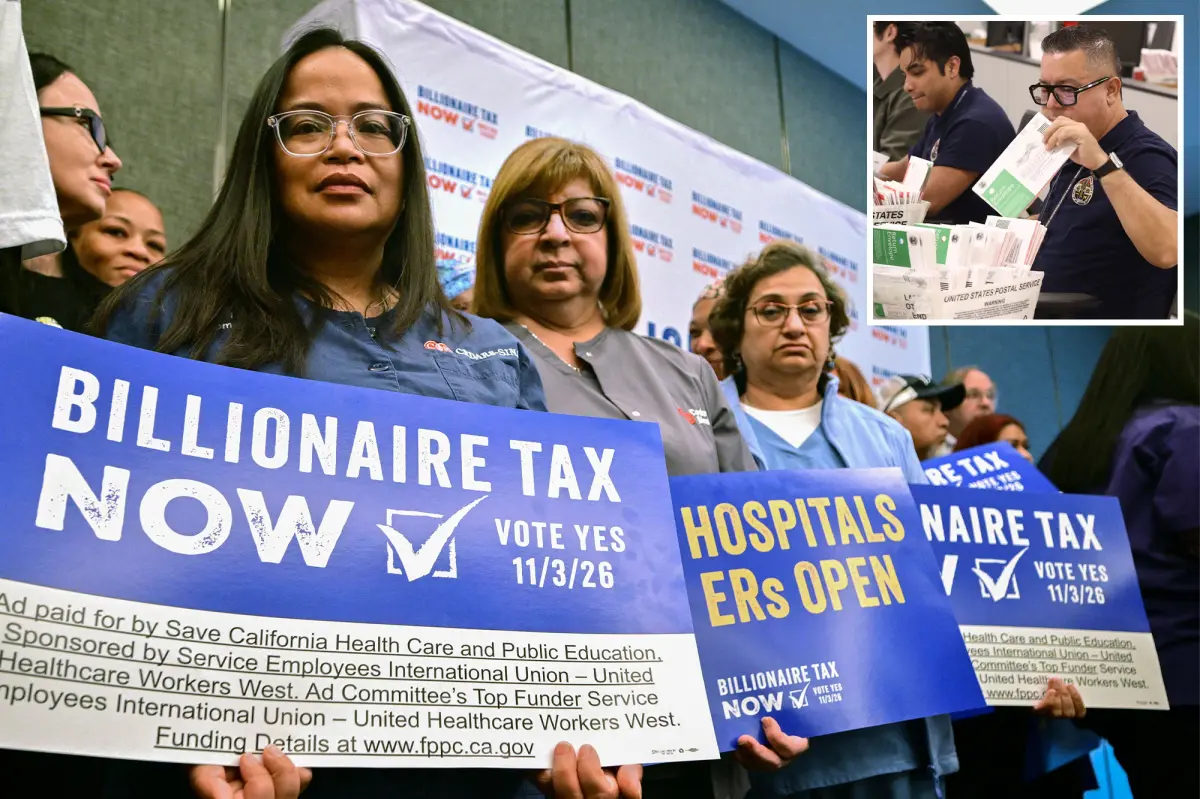

California voters have rejected a controversial proposal that would have created the nation’s first statewide wealth tax on billionaires.
Proposition 40, which called for a one-time tax of 5% on billionaires’ assets, was defeated 52.8% to 47.2%, according to results called by the Associated Press on Monday.
The measure lost in most California counties, although several traditionally Democratic strongholds—including Los Angeles and San Francisco—recorded majority support for the proposal.
In San Francisco County, 56.2% of voters backed Prop 40, while 55% supported it in Los Angeles County.
By contrast, voters in Orange County and San Diego County rejected the measure by margins of 59.3% and 54.3%, respectively.
Opponents raised and spent millions of dollars to defeat the proposal, with major contributions coming from Google co-founder Sergey Brin, former Google CEO Eric Schmidt and Palantir co-founder Peter Thiel.
DON’T MISS: Biography of Judge Tony Graf: Age, Spouse, Salary, and Political Affiliation
Brin contributed nearly $102 million to Building a Better California, a political organization that spent hundreds of millions of dollars campaigning against Prop 40, according to Forbes.
If approved, the billionaire tax was projected to raise approximately $100 billion for healthcare and education, according to the Service Employees International Union-United Healthcare Workers West (SEIU-UHW).
California Gov. Gavin Newsom also expressed doubts about the measure, cautioning that it could push wealthy residents and technology founders out of the state.
Instead, Newsom supported Proposition 42, which bars a wealth tax such as Prop 40 and prohibits new taxes on personal property.
“Proposition 40 risked California’s economic competitiveness and fiscal stability, as well as the revenue we rely on to fund our top priorities — from education and healthcare to public safety and infrastructure,” a group opposing the measure told the Los Angeles Times.
Although most California voters rejected the proposal, SEIU-UHW leaders said they would pursue another billionaire tax initiative for the 2028 election if the state’s healthcare challenges remain unresolved.


