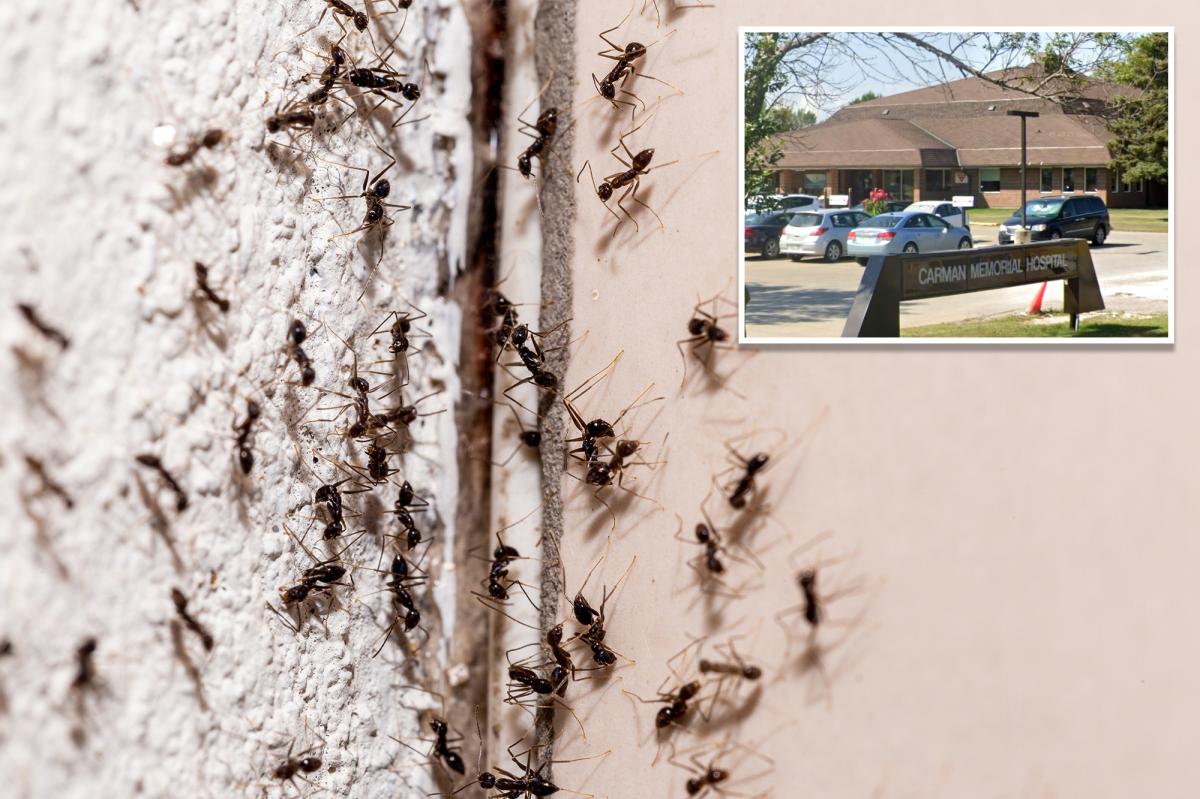

This hospital situation could make anyone uneasy.
In an unusual turn of events, a hospital in Canada had to halt surgeries due to an ant infestation that took over the facility.
Carman Memorial Hospital, located in southern Manitoba, has temporarily stopped some procedures after the ant invasion made it challenging for staff to maintain sterile, ant-free operating rooms, according to a CBC report on Wednesday.
The hospital decided to pause operations, including elective surgeries, to address the issue. Pavement ants were seen making their way under doors and along hallways, as reported by Southern Health, the organization managing the hospital.
A representative stated that staff are taking necessary steps to resolve the situation, aiming to prevent further cancellations and stop the ant problem from escalating.
The hospital emphasized that maintaining sterility is crucial for safe medical procedures, and even a single ant poses an unacceptable risk.
The issue is being addressed “immediately,” and patients undergoing minor operations are being contacted promptly if there are delays, a spokesperson for Manitoba Health Minister Uzoma Asagwara told the publication.
Southern Health said there is no significant risk posed to patients, staff or the integrity of the building and many procedures have not been impacted.
The pavement ants are “simply seeking food sources inside buildings as ants are known to do,” the company added.
Exterminators have made an effort to curb the insect population by cleaning drains and sealing cracks. Sticky tape traps with bait have been placed in the hospital as well.
Pavement ants are small, brown-to-black insects that commonly build nests under sidewalks, driveways, and concrete foundations.

The persistent pests are notorious for invading homes in the late spring, foraging for sweet and greasy foods to fuel large colonies. While they possess a tiny sting, it is generally harmless and too weak to penetrate human skin.
They are highly active, creating visible mounds of sand or soil in driveway cracks and along structural foundations. Effective management requires specialized baits and sealing entry points to stop their scent-trail entry into buildings.
Southern Health did not immediately respond to the Post’s request for comment.


