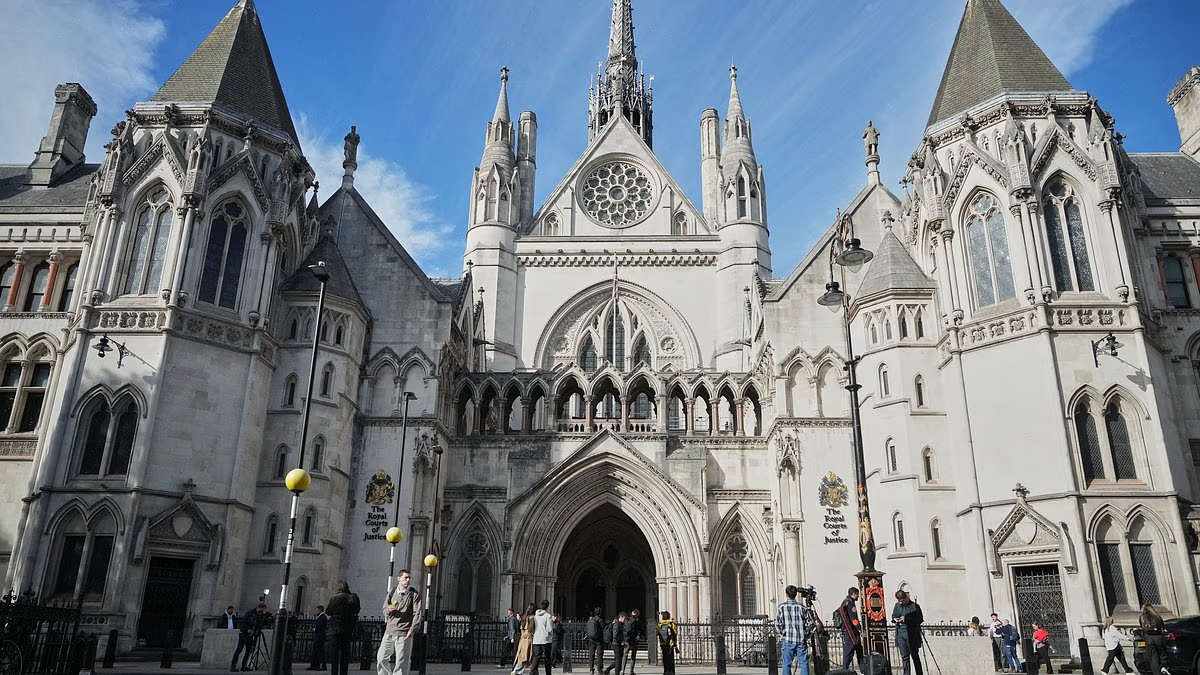

A celebrity who sought to prevent the media from reporting allegations of sexual misconduct could soon be identified after reportedly failing to challenge a High Court ruling allowing the claims to be published.
The Court of Appeal said it had received no documents from the celebrity by the 4.30pm deadline, indicating that the reporting restrictions surrounding the case may now be lifted.
The prominent figure had made what was described as an “unprecedented” argument: that he would take his own life if the allegations became public.
But at the High Court last week, Mr Justice Nicklin declined to grant an injunction. He ruled that ITN and The Guardian could report the allegations if the celebrity failed to appeal by the deadline.
The organisations say they have spoken to more than 100 people familiar with the celebrity’s alleged conduct, including 30 who gave “first-hand” accounts.
At 4.50pm today, the Civil Appeals Office confirmed that it had received neither a notice of appeal nor an application from the celebrity seeking more time.
His lawyers did not respond to requests for comment.
The man, referred to in court as PPT, is accused of abusing his position to engage in “inappropriate and exploitative sexual activities” with “a large number” of women and girls. He denies all wrongdoing.

The unnamed celebrity accused of sexual misconduct could be identified after reportedly deciding not to appeal the High Court’s refusal to grant an injunction
He had sought an injunction against the media organisations, claiming that publication of the allegations would breach his right to life under the European Convention on Human Rights (ECHR) because it would lead him to take his own life.
However, Mr Justice Nicklin ruled that the threat did not make suicide “inevitable” and said an injunction would represent “an exceptionally serious restriction upon freedom of expression”.
“It would prevent [the media outlets] from publishing the results of their investigations and prevent their sources from communicating their accounts,” he said.
“I accept that publication would cause the claimant acute and potentially prolonged mental suffering. His vulnerability and the likely psychiatric consequences are matters of great seriousness.”
The judge said the state’s duty to protect the celebrity’s life was being met by NHS psychiatric services and did not require the media to be silenced.
“I have concluded that the court is not legally required and has no basis to restrain the [media outlets’] publications,” he said.
He added that, unless the celebrity appealed by 4.30pm on Monday, the reporting restrictions protecting his identity would be “discharged automatically upon the first publication by either [ITN or The Guardian] of the allegations which identifies him”.
Mr Justice Nicklin had granted PPT permission to appeal, saying the case raised an important question about the courts’ responsibilities under the ECHR to prevent people from taking their own lives.
ALSO READ: Who Is Cooper Ouellette? CT Trial Explained
“It is important that such an appeal should take place without delay,” he said.
At last week’s hearing, the celebrity’s barrister, Sara Mansoori KC, said he was in a “very vulnerable” condition and had been unable to give instructions to his solicitors.
Instead of relying on the right to privacy, as celebrities have in previous cases, the man argued that publication would put his life at risk and subject him to inhumane or degrading punishment under Articles 2 and 3 of the ECHR.
Ms Mansoori told the court that her client had made two suicide attempts since learning of the allegations, including one in July after he left a secure clinic without permission. She said he was currently receiving care in hospital.
“The [media outlets] wish to publish allegations of wrongdoing which he denies and which the evidence is clear will highly likely lead to his death or psychological injury,” she said.
“They say they have a duty to publish because it’s substantially in the public interest, but their assessment of the public interest is wrong. A newspaper does not have the right to publish information at the cost of an individual being killed or maimed.
“The only way [publication] wouldn’t be fatal is if the claimant is locked up and prevented from taking his own life.”
Ms Mansoori accused the media organisations of intending to publish the reports “regardless of whether he dies or spends months in psychiatric detainment”.
The court heard that when PPT was informed of the allegations in May, his “body language completely changed” and he entered a state of “extreme panic”.
“He started saying that he wanted to kill himself and would seek to do so,” Ms Mansoori said. “Publication of these allegations would lead to a very substantial increase in suicidal ideation.
“He attempted suicide in May when he was first notified of the defendants’ intention to publish, and again in July, on that occasion absconding from secure hospital to do so.”
Gavin Millar KC, representing the media organisations, described PPT’s case as “unprecedented” and said it risked forcing the courts to assess the causes of suicidal thoughts—an issue for medical professionals rather than a judge.
“His contention is that if the allegations are published he will commit suicide, and the state’s duty requires this court to restrain [the media] from publishing them,” he said.
“If the state owes a duty to PPT, it is discharged by NHS mental health services and practitioners. The obligation falls on the hospital to keep him safe, and that’s that.
“There is a strong public interest in publishing these allegations, which are credible and which [the outlets] believe to be true.”
He said the journalists’ investigation indicated that the celebrity had “abused his power… to prey on young women for sexual purposes over an extended period”.
A psychiatrist who assessed PPT said his mood disorder was treatable and that it would be “significantly safer” for him to remain in a secure hospital if the allegations were published.
- For confidential support, call Samaritans on 116 123 or visit samaritans.org


