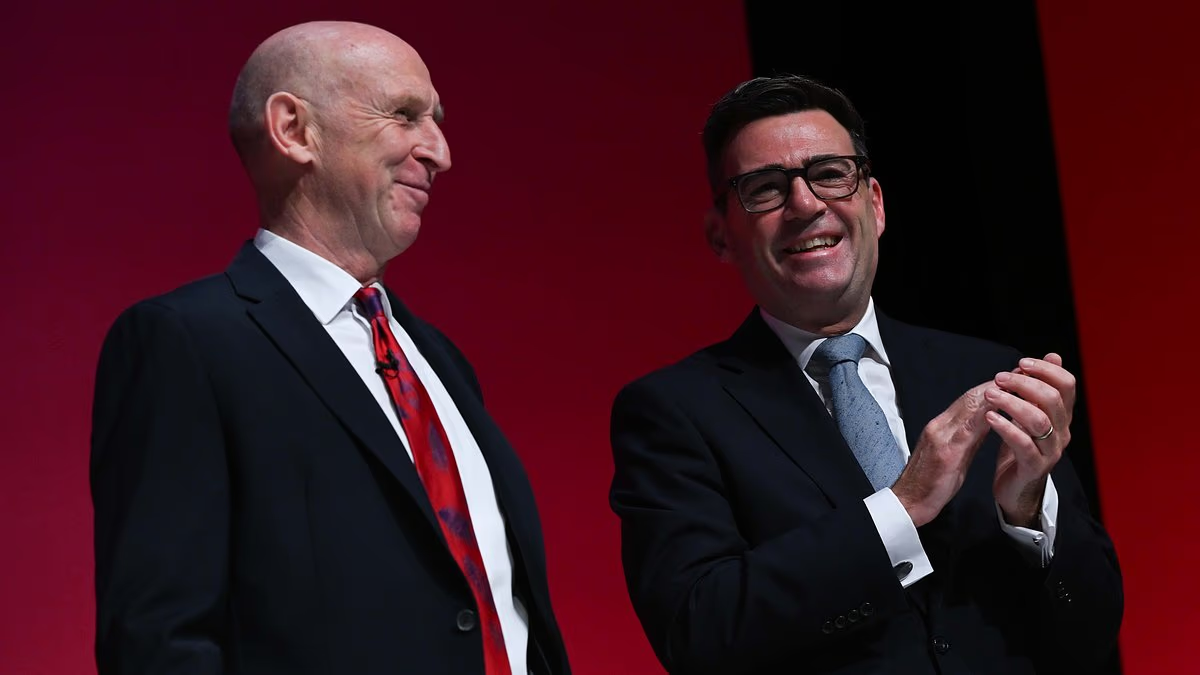

John Healey has sought to calm nerves before the Budget by confirming that capital gains tax will not be increased.
Treasury briefings have become increasingly firm in insisting that the October 28 package will not contain a rise in the levy.
The decision reflects the Chancellor’s determination to prevent another backlash from businesses, many of which have already faced substantial tax increases and higher minimum wage costs.
Even so, speculation is growing that Mr Healey could target the banking sector as he searches for funds to support Andy Burnham’s policy commitments while the Middle East crisis continues to weigh on the economic outlook.
Members of Labour’s Left, including several Cabinet ministers, have been pressing for capital gains tax to be raised on profits from second homes, shares and other investments.
Yet such a move was always considered risky. Treasury calculations indicate that a higher rate could ultimately bring in less money, as wealthy taxpayers might move abroad or use other strategies to avoid the charge.

John Healey has sought to reassure businesses before the Budget by ruling out an increase in capital gains tax
Some economists believe Mr Healey could benefit from an inflation-driven boost to revenues, with frozen tax thresholds pulling more people into the tax system through to 2031.
Although that would help efforts to shore up the public finances, it would also squeeze household budgets and place further pressure on public services unless government departments receive additional funding.
Mr Healey has admitted that the country is entering the Budget in a “tough” economic position.
In a speech this morning, Conservative leader Kemi Badenoch called on ministers to reduce spending, including by taking tougher action on welfare.
She urged the Government to balance its books and said her proposed £70billion savings programme, which includes cuts to benefits and the Civil Service workforce, should be viewed as a starting point.
Meanwhile, former Bank of England chief economist Andy Haldane accused Mr Burnham of preparing a Budget aimed at Labour backbenchers rather than the wider public.
Mr Haldane, once an ally of the Prime Minister, said he expected the package next week to bring both additional borrowing and further tax increases.
He indicated that he now favoured Mrs Badenoch’s Thatcherite vision over what he described as Mr Burnham’s more 1950s-style approach to the role of the state.
DISCOVER MORE: Trump Administration Revokes 300,000 Visas, State Department Says
Speaking at an Ipsos event, Mr Haldane said he welcomed the fact that the Budget preparations had been “less lengthy and less leaky” than they were under Rachel Reeves.
However, he warned that the emerging plans appeared to be designed “for the backbenchers rather than business or the bond markets”.
Mr Haldane, who is now president of the British Chambers of Commerce, also criticised the prospect of imposing a special charge on banks.
“The harm that’s done is that tells an investor in UK business there’s a chance that the taxman is coming for your profits,” he said.
Louise Hellem, chief economist at the Confederation of British Industry, voiced a similar concern.
Appearing before the Treasury Select Committee, Ms Hellen said the idea of a bank tax was a ‘big concern’ and would have an impact far beyond the financial sector.
‘Last week the Chancellor described the FS (financial services) sector as the jewel in the UK’s crown. To do that and then in the same breath increase banking taxes again…’ she told MPs.
‘We would not support an increase at all and I think that is quite negative for the UK economy.’
A poll has found that two-thirds of Britons expect Labour to hike taxes at the Budget, while just 5 per cent anticipate the burden being lowered.
Some 58 per cent of the public think the country is heading in the ‘wrong direction’, compared to just 18 per cent who believe things are looking up, the research by Ipsos found.
This comes despite Labour already raising the tax burden to a post-war high, with former chancellor Rachel Reeves hiking tax by £75billion in the previous two Budgets.
Sarah Coles, head of personal finance at AJ Bell, said of increases to capital gains tax being ruled out: ‘Investors will be pleased to see the end of those potentially damaging Budget rumours, at least for now.
‘It will hopefully stop people taking steps they might come to regret later and crystallising gains they might otherwise have been able to make gradually and avoid tax on entirely.
‘Not raising the rate is probably a sensible move from a tax revenue perspective. The August tax receipt figures were a useful reminder that for this particular tax, tightening the screw doesn’t always raise more money for the public finances.’
RELATED: Anthony Albanese’s Office Shopped Around Dossier on Independent MP Helen Haines Weeks Earlier


