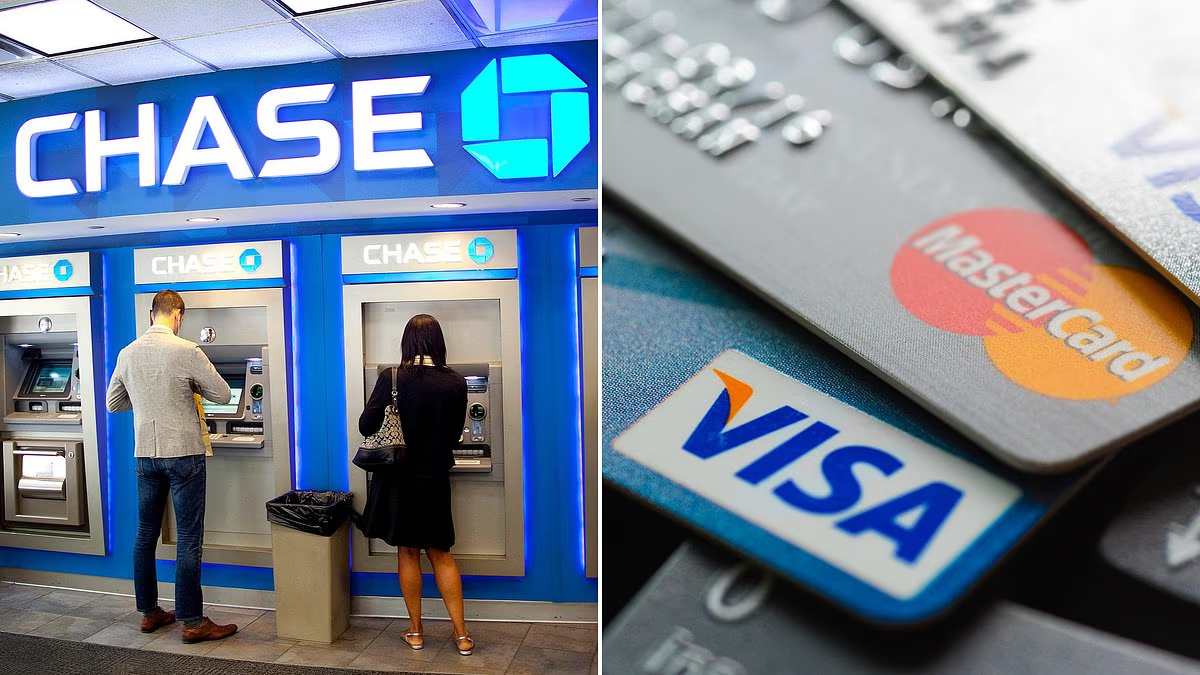
JPMorgan Chase, Visa and Mastercard customers may have had personal information exposed in a major cyberattack targeting third-party vendors.
Officials at Chase, the largest bank in the United States, said Thursday that customer names and email addresses may have been taken during the incident.
Visa and Mastercard were reportedly caught up in the same breach, which was allegedly carried out by a ransomware-linked group, according to The Wall Street Journal.
Cybersecurity company SOCRadar identified the suspected attackers as n0n, a group that has claimed responsibility for the intrusion on the dark web.
Chase and JPMorgan said the breach involved third-party vendors that had access to marketing data connected to the financial institution. Chase serves retail customers, while JPMorgan operates the company’s investment banking and corporate businesses.
Visa said one of its third-party service providers in the Asia-Pacific region was affected. However, the company said payment information and credit card numbers were not included in the stolen data.
A Mastercard representative said the incident involved only a limited number of cardholders enrolled in a particular rewards program.
Chase said in a public statement that the cyberattack was unrelated to the widespread outages that have disrupted banks, technology companies and federal agencies over the past week.

JPMorgan Chase said customer data was involved in a cyberattack aimed at the company

Visa and Mastercard were reportedly targeted in an attack that allegedly exposed customer data held by third-party vendors
JPMorgan Chase added that the breach had not caused any further disruption to its banking services.
The bank did not say how many customers could be affected. Officials said people whose information was involved would be contacted and could receive assistance, including complimentary credit monitoring where appropriate.
JPMorgan Chase is the biggest bank in the United States and ranks among the world’s largest financial institutions. It holds approximately $5.1 trillion in assets and operates the nation’s largest branch network, with more than 5,000 locations.
The bank provides checking and savings accounts, credit cards and other financial services to roughly 86 million to 87 million individual customers, as well as more than seven million small businesses.
As of Thursday morning, neither Visa nor Mastercard had publicly commented on the breach or outlined how they planned to assist potentially affected customers.
SOCRadar said in its report that n0n is “a financially motivated cyber extortion group that emerged in September 2026,” specializing in data theft and extortion rather than traditional ransomware.
The attack on Chase, Visa and Mastercard is believed to have occurred on or around November 16, the same day Chase and several other major banks experienced a significant systems outage.
A Chase spokesperson told Our News Outlet on November 16 that the outage resulted from a “software bug in on-premise hardware systems.” The bank said it had found no evidence that the disruption was caused by a cyberattack.
Our News Outlet has contacted Chase for comment.

Chase disclosed the breach involving third-party vendors on November 19, 2026
Tech publication Cybernews tracked ransom demands allegedly issued by n0n. The group claimed it had obtained Visa’s “complete member profiles,” including full names, personal email addresses and mobile numbers from markets across the Asia-Pacific region.
The attackers also alleged that they had obtained tens of thousands of unique email addresses belonging to JPMorgan Chase cardholders.
According to the reports, n0n gave the financial companies 48 hours to pay a ransom before threatening to publish the stolen information on the dark web.
The disclosure prompted an angry response from Chase customers concerned that their personal information may have been exposed.
“If it was only names and emails why do we need credit monitoring?” one person asked.
Another customer pointed out that some Chase accounts already include free credit monitoring, sarcastically adding that the bank “might as well offer free air to breathe.”
Other customers demanded details about the third-party companies that allegedly received their information and questioned Chase’s assertion that the breach was unrelated to the recent outages.
“You can’t sit there with a straight face and say we had a cyber attack but that wasn’t what cause the early disruptions,” one person wrote.

Chase said customer names and email addresses may have been exposed in the breach
Cyberattacks were also blamed for taking down several of the world’s most heavily visited websites on Monday night in an incident that allegedly put users’ money and payment information at risk.
Hours after an outage disrupted Chase, Bank of America, Capital One and Wells Fargo—leaving customers unable to log in or transfer funds—security researchers found malicious code in website tools used by 178 other organizations.
The affected organizations reportedly included Zoom, CNN, the BBC, HSBC, Equifax, Salesforce, Peacock, IKEA, Fox News, NPR, the ASPCA and Invisalign.
The suspected attack focused on Optimizely, a platform companies use to test website designs, layouts and features.
Hackers allegedly exploited the platform’s customization tool to place malicious code on webpages. Because the code was delivered alongside legitimate software through Optimizely’s trusted systems, it was more difficult to identify.
The malware was designed to divert cryptocurrency payments, capture credit card information entered into certain online forms and exploit security weaknesses in iPhones and iPads.
Those incidents came after major disruptions last week involving Microsoft’s Outlook email service and the Federal Aviation Administration’s communications network for flights in the United States.
Officials in the Trump administration and some technology insiders have suggested that several of the outages may be linked to companies and government agencies using artificial intelligence to identify software problems and deploy real-time fixes.
Cybersecurity specialists, including Digitalwarfare.com’s James Knight, have argued that the timing and scale of the outages appear too unusual to be explained solely by a series of faulty software updates from unrelated organizations.
It remains unknown whether the breach involving Chase’s third-party vendors is connected to the malware discovered in companies that use Optimizely.


