
Residents in Colorado are pressing the billionaire son of a Texas oil baron to remove a disputed barbed-wire fence surrounding parts of his $105 million ranch, citing growing concerns over its impact on wildlife.
William Harrison has been locked in a long-running conflict with local residents over the structure, an eight-foot-high fence that stretches for more than 20 miles across sections of the property.
The dispute gained new momentum after an environmental review, carried out by two consulting firms — one selected by ranch managers and the other by Costilla County officials — concluded that the fence has been damaging to wildlife.
Harrison has maintained that the fence around portions of the 83,368-acre Cielo Vista Ranch is necessary to deter trespassers and keep his bison herd contained.
But hundreds of locals argue the barrier serves a different purpose, claiming it is meant to discourage people with lawful access while also blocking animals from reaching food, water and shelter.
The latest findings in the years-long standoff said the fence is preventing wildlife from escaping danger, limiting access to essential resources and interfering with established migration routes.
‘Elk, mule deer and wildlife species need to access different areas of [Cielo Vista Ranch] and beyond to get to various resources and escape from threats such as deep snow during winter and hunting pressures,’ the wildlife impact assessment report stated.
The report recommended modifying parts of the fence by raising or lowering certain sections and removing barbed wire in key areas so animals can safely pass over or underneath.

Texas oil tycoon’s son William Harrison has been at the center of a years-long feud with locals who are demanding that the over 20 mile-long eight-foot-high barbed-wire fence be removed

Hundreds of locals claim the fence is intended to intimidate those with rightful access and is keeping wildlife from being able to access food, water and shelter

The latest development in the years long feud brought findings that the ranch was prohibiting wildlife from escaping threats, accessing resources and restricting migration patterns
‘There are highly important areas for a diversity of species of wildlife where it is recommended the CVR fence be removed.’
The fence’s construction began in 2021 and, at the time, locals fumed over environmental impacts and said it was reminiscent of a prison yard.
‘It’s a way of him marking the territory of his prized possession, a vanity thing,’ Joseph Quintana told The Colorado Sun in 2024.
Shirley Romero Otero, whose Jicarilla Apache ancestors were among the first settlers in the valley, told the Sun: ‘What’s hard for us living here on a daily basis to internalize and verbalize is the psychological impact.
‘He’s doing this to us because he’s always treated this community as second-class citizens.
‘The bottom line is he wants to keep us access holders from accessing our rights, and that is never going to happen.’
Residents previously said that cameras and drones keep watch on the fence while armed security guards man the gates, meaning even those with keys to the gates have allegedly been harassed.
One resident – who claims he has legal access to the land as a descendant of the original settlers – told the Sun that he was allegedly threatened with a $100,000 fine after he rode onto the land with his wife.

An environmental report conducted by two consulting firms, one chosen by the ranch managers and the other by Costilla County leaders, found that the fence has been harming wildlife

The fence’s construction began in 2021 and, at the time, locals fumed over environmental impacts and said it was reminiscent of a prison yard

Harrison has argued that the fence that encompasses sections of the 83,368-acre Cielo Vista Ranch means to keep trespassers at bay and his herd of bison contained
Harrison’s attorney, Jamie Cotter, told the Sun in 2024 that Harrison has been villainized throughout the process, saying: ‘There has been a consistent attempt to dehumanize and demonize Mr Harrison since he purchased the ranch.
‘It makes it much easier to hate someone when they are not thought of as human.’
She added: ‘The fence is not designed and does not operate to keep people out who have valid access rights.’
But residents said the fence has led to fewer elk and deer, trapped mountain lions and smaller animals as well as creating erosion and irrigation issues.
Despite environmental impacts, the land is also subject to an agreement dating back to 1844 granting descendants of original Mexican and Spanish settlers legal access to the property to hunt, harvest timber or allow livestock grazing.
The ranch is also home to Culebra Park, which is one of the state’s 58 mountains that reach over 14,000 feet high and which hikers can access with a $150 permit.
When construction began, the 20 miles of fence awaiting further development was halted as part of a one-year moratorium on fence-building. Construction ended, but at least 26 miles of fence sections lined the property, some spanning more than three miles, The Denver Post reported.
Come 2024, Harrison and Costilla County reached a settlement that would require the wildlife impact study, which would determine what wildlife populations inhabited the area and the impact of the fence on those animals.

The land is subject to an 1844 agreement granting descendants of original Mexican and Spanish settlers legal access to the property to hunt, harvest timber or allow livestock grazing

The fence currently has 29 wildlife jumps for big game, such as elk and deer, as well as a gate left open, a large natural opening under a section of fence and several smaller openings
The court-mandated deadline on May 15 saw both parties unable to reach a resolution on how changes recommended by the report would be implemented, according to the Post.
On June 3, the judge handed the case back to the Costilla County Board of Adjustment for further deliberation over how much of the fence would be subject to new county rules that regulate high fences, the outlet reported.
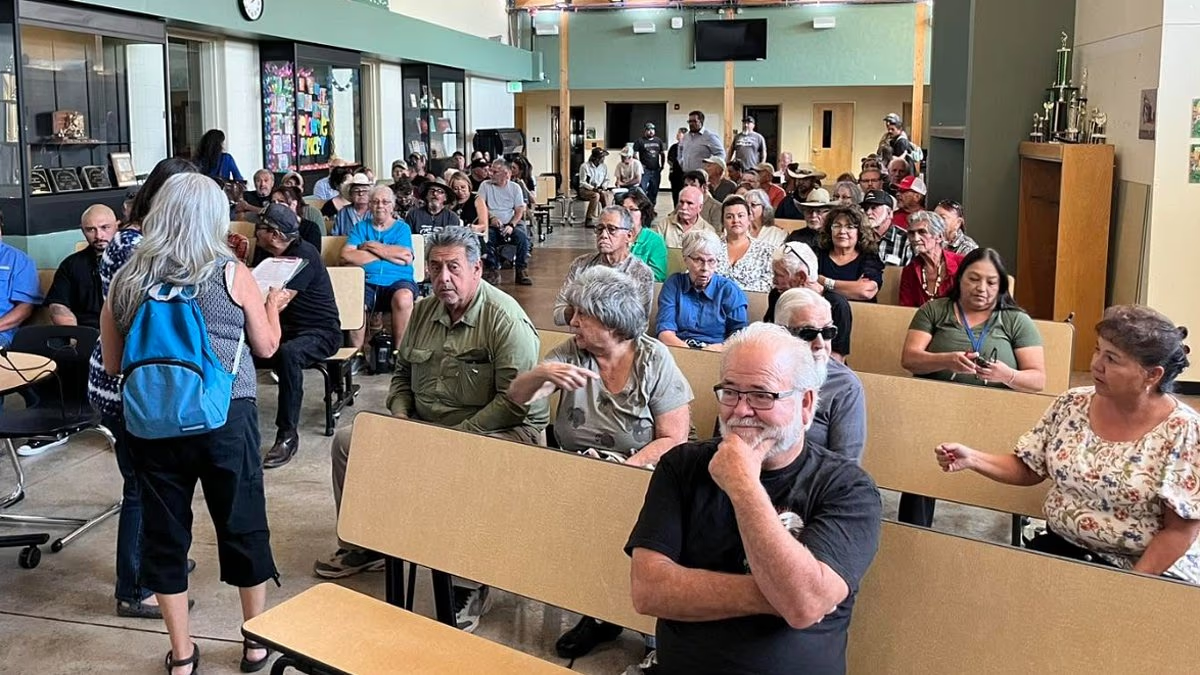
The community, however, responded to the report at a Costilla County commission meeting on June 16 and aired their concerns over the fence.
‘If Mr Harrison decides not to follow it, that’s sad, because it’s the right thing to do,’ Quintana said at the meeting, noting his belief that if construction is abandoned and the recommended changes are made then La Sierra Environmental Guardian Committee would be satisfied.
County attorney Nicola Sarimiento said that there were no ongoing negotiations regarding the report’s mitigation measure recommendations, the outlet reported.
The fence currently has 29 wildlife jumps for big game, such as elk and deer, as well as a gate left open, a large natural opening under a section of fence and several smaller openings, the report stated.
Harrison had plans to install additional wildlife jumps before the project was paused in 2023. He bought the land from group of Texas investors who had in turn bought the land from the disgraced CEO of Enron, Lou Pai. Residents previously said there is never any sign he is living there, except for the arrival and departure of his helicopter.
Changes to the fence for a more wildlife-friendly structure included a wildlife crossing over or under the fence at a minimum of every 1,000 feet, a bottom wire or rail at least 16 inches off the ground, the top two wires of a wired fence be at least 12 inches apart, spacing between rails or wires exceeding 12 inch by 12 inch openings and high-visibility wire or other visual markers.
The Daily Mail reached out to the County of Costilla for comment.