
Share this @internewscast.com
The Commonwealth Bank has initiated an internal probe revealing what may be the most significant fraud ever perpetrated against an Australian financial institution, leading the bank to involve law enforcement. This investigation focuses on its home loan portfolio.
This inquiry was sparked by the notorious Penthouse Syndicate scandal, which allegedly saw the National Australia Bank (NAB) swindled out of approximately $150 million through illicit property acquisitions.
Authorities are currently scrutinizing NAB employees suspected of enabling home and business loans as part of a broader money-laundering operation.
The Penthouse Syndicate reportedly amassed a Sydney real estate empire valued at tens of millions by employing dishonest solicitors, real estate agents, and mortgage brokers.
In light of these events, the Commonwealth Bank decided to reassess its own lending procedures. This review has brought to light nearly $1 billion in home loans allegedly sanctioned with falsified documents.
There is a growing suspicion that some of these documents might have been crafted using artificial intelligence tools.
Mortgage fraud often originates in broker and referral channels, where third parties gather documents and submit applications on behalf of borrowers.
In some cases, dishonest brokers or applicants allegedly inflate incomes, falsify employment details, or alter payslips and tax returns to make borrowers appear more creditworthy than they are.

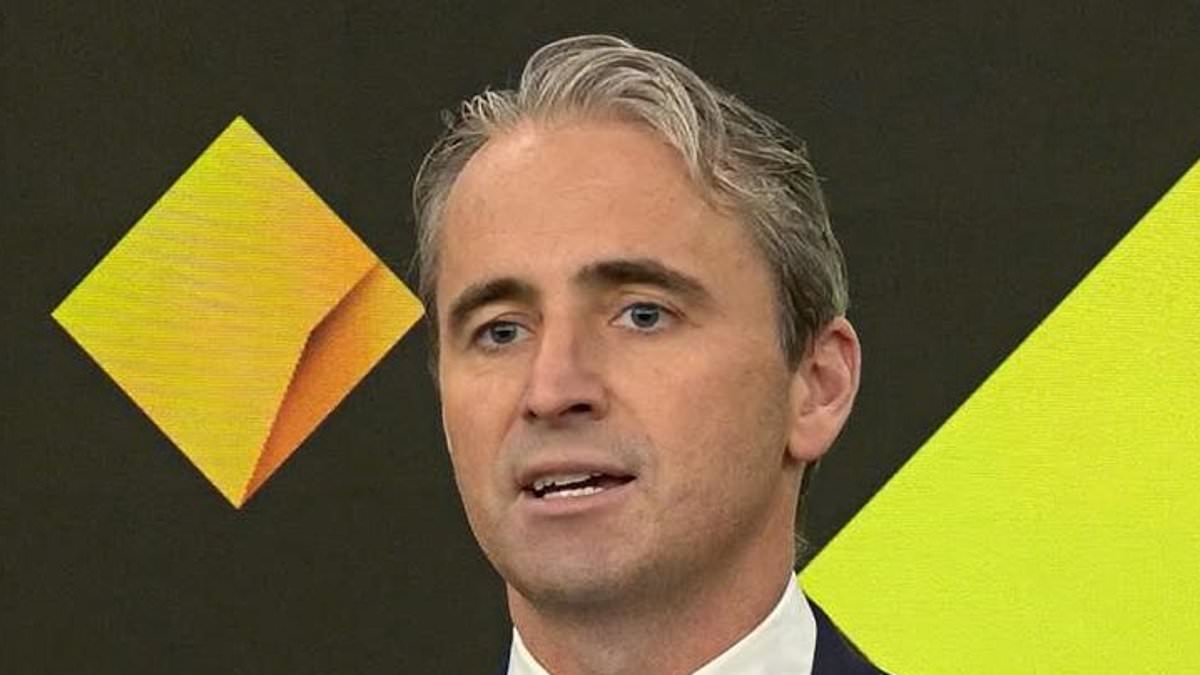
CBA chief executive Matt Comyn said businesses and employees had to prepare for a future where AI played a greater role

Criminals are using AI to obtain home loans fraudulently against the Commonwealth Bank
Because banks process thousands of applications each month and rely heavily on electronically submitted documents, falsified paperwork can slip through if verification systems fail to detect inconsistencies.
Once approved, loans provide access to funds that may otherwise have been denied. In more serious cases, criminal groups can use shell companies or fabricated financial records to obtain legitimate mortgages, then use repayments to ‘clean’ illicit funds.
The property may later be sold, allowing money derived from criminal activity to re-enter the financial system appearing legitimate.
Penny Dunn, a forensics and financial crime partner at PwC, told The Australian Financial Review that artificial intelligence is making document forgery increasingly sophisticated.
‘It’s very difficult for the human eye to see,’ Ms Dunn said.
A CBA spokesperson said: ‘This is an industry-wide challenge, with fraud being attempted through mortgage broking and referral channels.’
While AI is helping criminals commit fraud against financial institutions, it’s also being used by banks to rake in more profits.
Just this week, CBA laid off hundreds of workers in Australia and launched a hiring spree in India after recording a $5billion profit.

CBA discovered that $1billion in home loans was gained fraudulently with the help of AI

CBA laid off hundreds of workers in Australia this week after recording a $5billion profit
The Finance Sector Union said it will affect teams across retail, business and institutional banking, and human resources, with the majority of roles impacted in technology.
Union national secretary Julia Angrisano said cutting 300 workers was ‘totally unacceptable’.
‘For years we have seen CBA continue to axe hundreds upon hundreds of jobs while raking in billions in profits,’ she said.
‘We’ve heard countless stories of CBA workers being tossed onto the redundancy pile and having to fend for themselves at the whim of the bank.
‘These are the very workers who helped generate CBA’s massive profits. The least the bank can do is retrain and reskill workers, and provide opportunities for them to remain at CBA.’
The bank increased its India-based workforce by 21 per cent to 6,788 in the year to June 2025, a 138 per cent increase since 2022.
CBA chief executive Matt Comyn told news.com.au that society had to prepare for a future where AI played a greater role.
‘Australia has to get really good at adopting this technology and whatever follows it,’ he said.
‘This is a topic we have been thinking about for some time.’
Research from the CBA showed Aussies have been overestimating their ability to spot AI scams.
The research found that 89 per cent of Australians believed they could spot a deepfake, but when put to the test, only 42 per cent spotted the difference between a real person and a fake AI image, the study revealed.