Share this @internewscast.com
There is a growing call for the demolition of the footbridge involved in the Bondi Beach terror attack, as residents fear it might become a lasting emblem of violence.
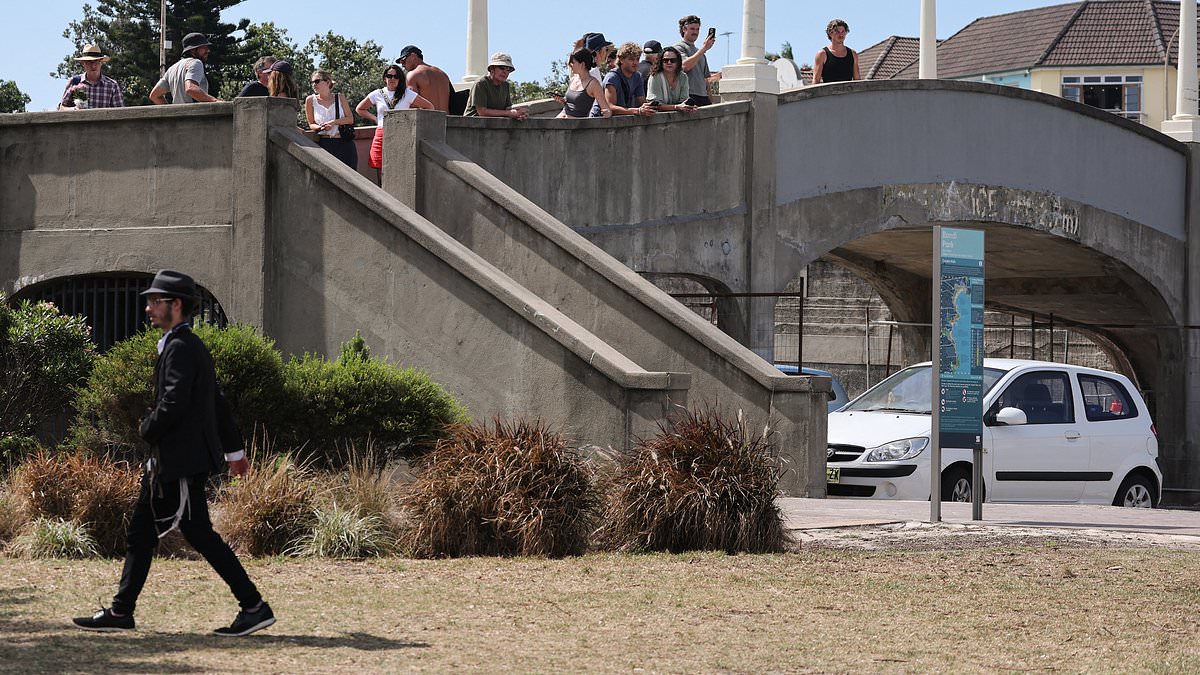
This bridge, which connects Campbell Parade to the famous Sydney beach, served as a strategic point for Akram, 50, and his son Naveed, 24, during the alleged shooting incident.
The suspects reportedly used the bridge’s low walls for concealment and its height over Archer Park to fire numerous shots into a gathering of Jewish families, resulting in the tragic deaths of 15 individuals and injuring many others.
Since the bridge’s reopening, numerous visitors have gathered to pay tribute at a location now associated with one of Australia’s most somber events.
However, opinions are split regarding whether the bridge should remain intact, as some Australians argue it needs to be dismantled to prevent it from becoming a lasting reminder of the attack.
“I believe the bridge should be torn down because it is now so closely tied to the images of the attackers,” one woman expressed online.
She suggested a ‘new pathway or a memorial garden’ be established in its place.
‘Anything that can help the local community and the visitors to reclaim the Bondi they knew and loved,’ the woman added.

Sydneysiders flocked to the Bondi Beach footbridge after it was reopened to the public days after it was used by the two alleged gunmen to open fire on a crowd of Jewish families

Residents have called for the footbridge to be demolished in the wake of the tragedy

Alleged shooter Naveed Akram is pictured on the footbridge during the terror attack on Sunday
Many others agreed, with some calling for the bridge to be demolished in place of a memorial more evocative of the victims.
‘Pull it down (and) create a new bridge painted yellow with a memorial plaque for all lives lost and symbolise little Matilda with a bee,’ another wrote.
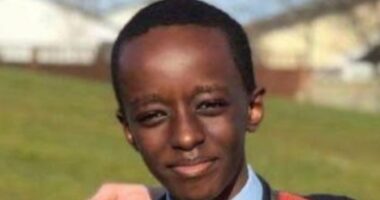
Ten-year-old Matilda was the youngest of the 15 victims of the shooting and was affectionately known as ‘bee’ by loved ones. She was farewelled at an emotional ceremony in Woollahra on Thursday.
The Bondi Beach attacks were the deadliest shooting in Australia since the 1996 Port Arthur massacre, which killed 35 people and wounded 23 others.
In place of the Broad Arrow Café, where perpetrator Martin Bryant opened fire, now stands a memorial garden with a plaque emblazoned with the names of all 35 victims.
Others argued the bridge should remain intact with a memorial plaque designed to serve as a reminder of the loss of innocent lives.
‘Paint it yellow with bumble bees all over,’ one person suggested.
Daily Mail asked prominent Jewish Australians what they thought should happen to the footbridge.

One of the alleged gunmen is pictured on the footbridge on Sunday night

Beachgoers walk along the footbridge on Thursday
Robert Gregory, chief executive of the Australian Jewish Association, has backed calls to transform the bridge into a memorial.
‘Bondi Beach will be forever changed. Images of terror and carnage will now be part of the story of Bondi Beach,’ he said.
‘The innocent victims will also now forever be a part of the story of Bondi Beach. The victims of the Chanukah massacre must be honoured with a prominent memorial.’
Dr Dvir Abramovich, chair of the Anti-Defamation Commission, said the bridge had already become a monument in its own right.
‘Some places carry memories whether we want them to or not. That footbridge at Bondi is no longer just a piece of concrete,’ he told this publication.
‘It is where ordinary life was interrupted by hatred. Where a celebration of light was met with darkness. Where innocence was shattered in public view.
‘Turning that bridge into a memorial would not be about freezing grief in stone. It would be about telling the truth.
‘About saying, plainly and permanently, that what happened there matters, that the people who died were not statistics, but neighbours, parents, children, and grandparents.’

Dr Dvir Abramovich, chair of the Anti-Defamation Commission, said the Bondi footbridge had already become a monument in its own right

Swimmers and surfers are pictured preparing for a swim in tribute to the victims on Friday
Dr Abramovich said memorials are ‘not about reopening wounds’ but about ‘refusing to forget’.
‘They remind us that evil does not arrive without warning, and that societies have a duty to remember the cost of indifference,’ he said.
Waverley Council said many ideas had been floated about how the victims could be honoured, which would be discussed with the Jewish community.
‘There are a lot of ideas about how to mark this unspeakable tragedy, but it is important to consult the community, and this will take time,’ a spokesperson said.
‘When we can, we will share news about how we can best commemorate and honour victims and survivors.’
Dr Abramovich agreed it was ‘essential’ the Jewish community is consulted on the design of the memorial.
‘This loss belongs first to those who were targeted, but its meaning belongs to the whole country. When a place of everyday life becomes a site of terror, it should also become a place of conscience.
‘That bridge should carry more than footsteps. It should carry memory.

A memorial of flowers, pictures and prayers has been established at Bondi Pavilion

Ten-year-old Matilda (pictured) was the youngest victim of the Bondi Beach terror attacks
‘It should say to every passer-by: this happened here, and we choose to remember – not to dwell in grief, but to stand guard over our values.
‘In marking that place, we honour the dead by telling the living that some lines must never be crossed again.’
In the meantime, mourners have established a makeshift memorial of flowers, prayers, stuffed animals, menorahs and framed photographs at the Bondi Pavilion.
Family members of victims, politicians and religious leaders have gathered at the scene throughout the week for vigils filled with prayer and song.