
Share this @internewscast.com
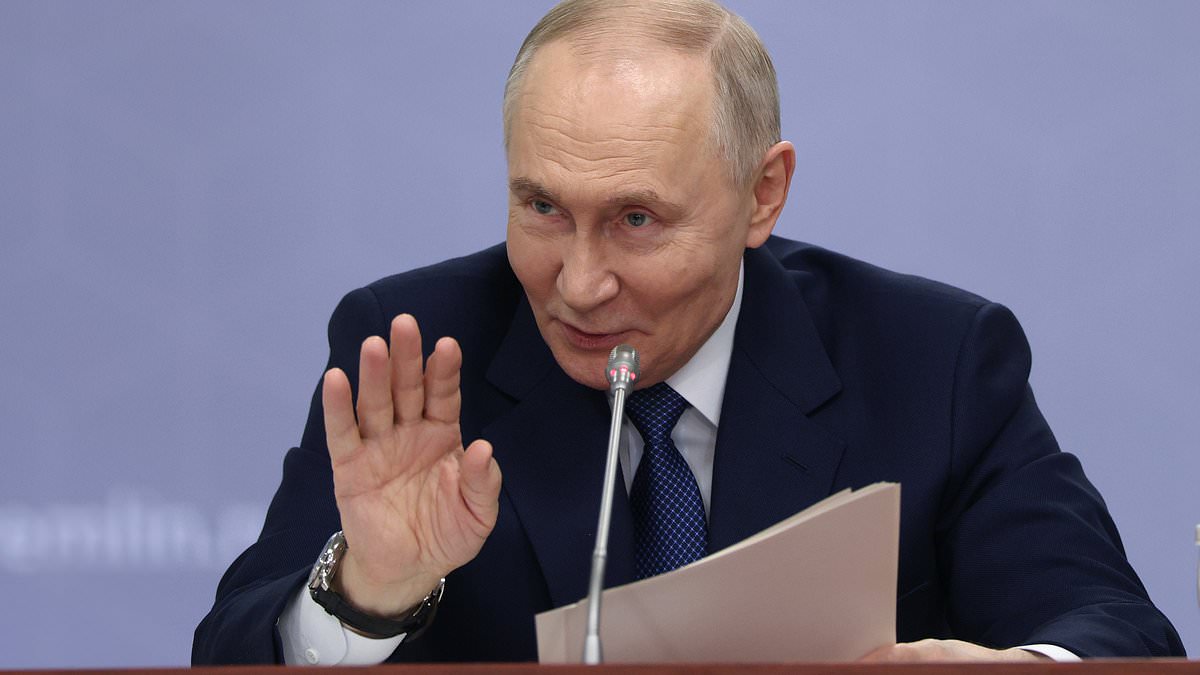
Vladimir Putin might be eyeing a small town in Eastern Europe as a potential target for an incursion into NATO territory, according to expert analysis.
Tim Wilsey, a seasoned former diplomat, has sounded the alarm that Putin’s ambitions are far from complete. He predicts that the Russian leader could see 2026 as a promising year for his agenda.
Speaking from his position at King’s College London, Wilsey cautions that even if hostilities in Ukraine were to wind down, Putin’s ambitions could become more audacious and far-reaching.
Wilsey suggests that Putin might start by subtly encroaching on Ukrainian territory to gauge the resolve of Ukraine’s allies. This strategy could serve as a preliminary move before targeting more strategic locations.
A key area of concern, according to Wilsey, is Narva, a small town straddling the Estonian-Russian border. This location is particularly precarious for NATO due to its predominantly Russian population.
“The situation in Narva is particularly dangerous, given its 80 percent Russian demographic,” Wilsey explained to The Sun, highlighting the geopolitical tensions simmering in the region.
‘Do we really believe that the United States is going to go to war for one town in Estonia? I’m not sure I do anymore.’
It comes as the UN Security Council was set to hold an emergency meeting after Putin launched an Oreshnik ballistic missile at Ukraine.

Vladimir Putin may set his gaze on a tiny town in eastern Europe in a bid to invade Nato, an expert has warned

A point of particular danger to Nato’s foundations will be Narva – a small town on the Estonian-Russian border, Tim Wilsey, a former diplomat
Kyiv also accused Russia of reaching ‘appalling new level of war crimes and crimes against humanity by its terror against civilians.’
Meanwhile, it has been claimed that Russia duped African troops into joining its ranks before using them as ‘meat for the meat grinder’ in the ongoing war.
In November, Kyiv said it had identified 1,426 fighters from 36 African countries serving in the Russian army, but warned the actual number could be higher.
Ukrainian Foreign Minister Andrii Sybiha claimed they were being used as cannon fodder.
Elsewhere, warnings of the small Estonian town, Narva, have emerged from experts at Chatham House amid speculation Moscow views it as an unfinished project.
Situated on the eastern border of the country, Narva is separated from Russia by an eponymous river with the city of Ivangorod directly opposite.
The two towns were divided after Estonia established its independence, making Narva one of the most eastern points of not only the EU but Nato.
And the town’s demographics only further risks, with around 97 per cent of locals speaking Russian, as well as many locals having familial connections in Russia.
Shortly following Estonia’s independence, the city and surrounding areas also voted for independence from the country in an unofficial referendum.

Narva’s (Pictured: The town’s border with Russia) demographics only further risks, with around 97 per cent of locals speaking Russian, as well as many locals having familial connections in Russia
However, the vote was labelled as unconstitutional by the Estonian government, with many assuming it was a move quietly pushed by Moscow.
But worries only grew after Russia’s full-scale invasion of Ukraine, following comments by Putin suggesting Narva would need to be ‘taken back’ in 2022.
And while the country is one of Ukraine’s biggest backers, and has given more aid in line with GDP than any other nation, daily life in the town of Narva is complex.
After being under the USSR for decades, the town’s deep cultural and linguistic connections with Russia did not evaporate when it became autonomous.
The animosity between the two nations remains clear today, with Estonia aggressively trying to get as far away from its Soviet past as possible, urging its citizens to avoid travel to Russia.
Meanwhile, crossing the border, something that was once routine, can now take as long as ten hours.
It comes after Russia said Ukraine and its European allies were an ‘axis of war’ earlier this month.
The Kremlin also warned that foreign troops could become a legitimate military target after Britain vowed to base soldiers in Kyiv as part of a peace deal.
The message from Moscow comes after President Volodymyr Zelensky’s allies said they had agreed to key security guarantees for Ukraine at a summit in Paris.
Russia slammed the plan as ‘militarist’ – with its Foreign Ministry saying that ‘all such units and facilities will be considered legitimate military targets’.
‘The new militarist declarations of the so-called Coalition of the Willing and the Kyiv regime together form a genuine ‘axis of war’,’ a statement from Russia’s Foreign Ministry said, calling the plans drafted by Kyiv’s allies ‘dangerous’ and ‘destructive’.
‘The plans of these participants are becoming increasingly dangerous and destructive for the future of the European continent and its inhabitants, who are also being forced by Western politicians to finance these aspirations out of their own pockets’, it added.
Moscow, which launched a full-scale invasion of Ukraine in February 2022, has repeatedly warned that it would not accept any NATO members sending peacekeeping troops to Ukraine and threatened that they too could come under fire.
It comes after Sir Keir Starmer signed a declaration of intent in Paris with France’s Emmanuel Macron and Zelensky outlining the deployment of forces in the event a peace deal is reached in January.
However, specific details on how it would engage were absent, as Zelensky reiterated he had yet to receive an ‘unequivocal’ answer on what would happen if Russia attacked again.

A destroyed house in the direction of Kostiantynivka, Ukraine, on December 31, 2025

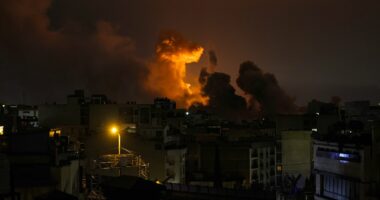
Pictured: A Russian missile attack on residential block in Kyiv on January 9
Ukraine also said that the most difficult questions in any possible deal to end the fighting – territorial control of the eastern Donbas region and the fate of the Russian-occupied Zaporizhzhia nuclear power plant – were still unresolved.
Starmer assured that any deployment of UK forces under the declaration would be subject to a parliamentary vote.
‘I will keep the house updated as the situation develops, and were troops to be deployed under the declaration signed, I would put that matter to the house for a vote,’ Starmer told parliament.
He said the number of troops would be determined under UK military plans, which were being drawn.
Starmer also said he had spoken to U.S. President Donald Trump about security guarantees for Ukraine twice over Christmas and assured lawmakers there was ‘no question of acting on this without full discussion with the Americans’.
The Prime Minister’s move prompted a fiery reaction from Kremlin senator and space agency chief Dmitry Rogozin.
‘Even after Russia’s defeat in the Crimean War of 1853-1856, such thoughts never occurred to England, France, or the Turks and Sardinians,’ Mr Rogozin said.
‘Of course, Starmer is illiterate and a fool in the grand scheme of things, but he should still understand what we will do to their shi*** kingdom if they actually try to implement this nonsense.’
Zelensky said the bilateral security guarantees between Kyiv and Washington were ‘essentially ready’ to be finalised with US President Donald Trump.
The Ukrainian President said a meeting between both countries’ representatives discussed ‘complex issues’ as they discussed a path to end the nearly four-year war.
‘We understand that the American side will engage with Russia, and we expect feedback on whether the aggressor is genuinely willing to end the war,’ Zelensky wrote on X.