
The messages arrived in a relentless stream, many of them as brief as they were vicious. “Revolting,” one person wrote. “Disgusting,” declared another.
Others went further, particularly those who believed that my medical background should have given me better judgment. “I cannot believe someone with medical training would think this is okay,” one critic said.
What, you may wonder, had I done to provoke such outrage? Suggested reusing surgical gloves? Admitted to salvaging discarded food from hospital bins for lunch?
No. My supposed crime was announcing that I was pregnant.
There was, admittedly, one unusual detail. At 59, I am far older than the average expectant mother – and already have a 37-year-old son and an eight-year-old daughter. By the time my baby girl is born next year, I will have turned 60.
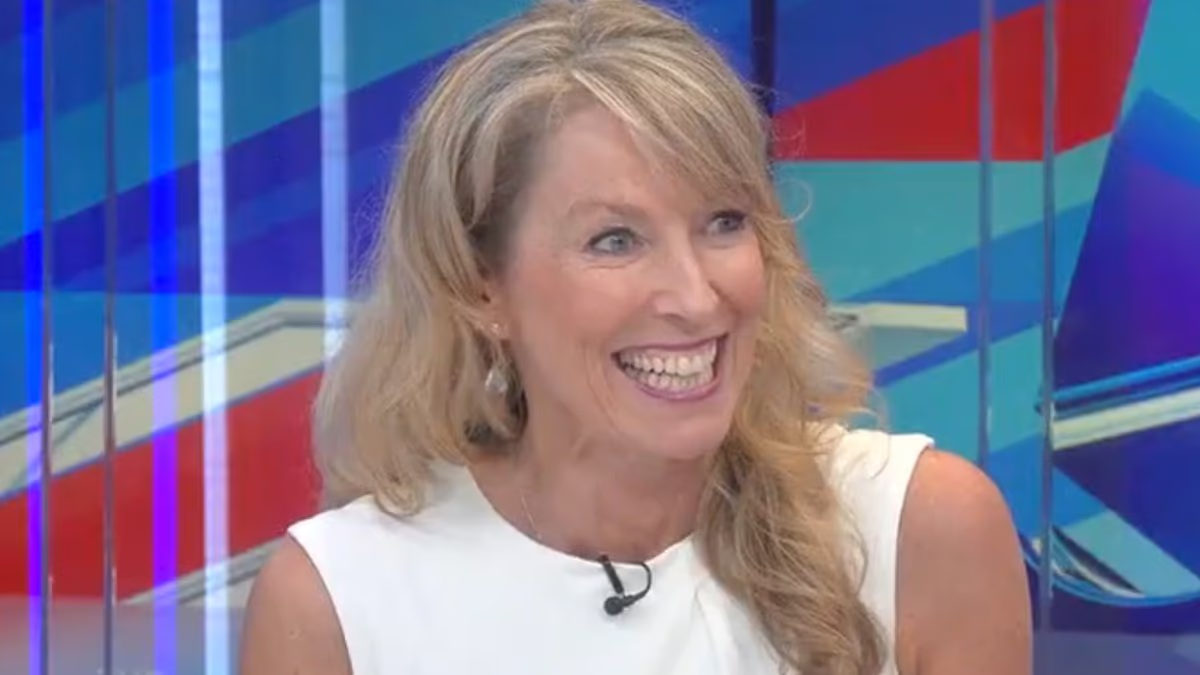
I expected surprise, perhaps even disbelief. What I did not anticipate was the sheer hostility that followed my announcement on The Saturday Five, the GB News programme I co-host.
To some people, choosing to have a much-wanted baby at my age was not simply unconventional. It was, they claimed, deeply selfish.

Dr Renee Hoenderkamp revealed she is expecting her third child at 59, nearly four decades after giving birth to her son at 21
I find that accusation both painful and misguided. To understand why, it helps to know something about my experience of motherhood, which began almost 40 years ago and taught me that being biologically capable of having a baby is not the same as being emotionally prepared to raise one.
My eldest child, Calum, was born when I was 21. He arrived at five o’clock on New Year’s morning, just three hours after I had left the pub where I had been celebrating the start of the year.
If ever there was evidence that the female body is well equipped for pregnancy in the early 20s, that was it. Sadly, the brain does not always mature at the same speed – one of nature’s harsher ironies.
Calum was unplanned. I had been with his father for five years, but we were both very young – he was 24. I had a respectable publishing job and a decent income, and I saw no reason not to become a mother. What I had failed to grasp was the extraordinary emotional commitment that motherhood requires.
Calum’s father and I separated soon after his birth. I returned to full-time work when Calum was just 28 days old, leaving home at seven each morning and often not getting back until eight at night.
I arranged a nanny, nursery care and a comfortable home. I convinced myself that these were the foundations of a happy childhood.
But one essential element was missing: me. Calum, now a wonderful young man with whom I am very close, became an angry and hyperactive little boy who was constantly in trouble at school. Looking back, I believe much of that behaviour was his way of desperately seeking my attention.
I did not recognise that at the time. It took the arrival of my second child, Alice, almost 30 years later to show me how different motherhood could feel.
During my 30s, my career remained my main focus. I later married an older man who wanted children, but throughout our 17-year marriage I never felt ready to become a mother again.
After that marriage ended, I decided at 39 to retrain as a doctor. During that process I met Colin, a surgeon seven years older than me. Our relationship began to flourish when, at 43, I started my first medical job at the Royal London Hospital.
Colin, who had five children and had also been through a failed marriage, was already a father of a large family. With six children between us, having another baby was not an immediate priority.
As I moved through my 40s, however, my feelings began to change. I was settled, my career was established and I could increasingly hear the ticking of my biological clock.
Even then, we chose not to push matters. I stopped using contraception and decided that, if Mother Nature wanted to give us a child, she would.

The doctor conceived naturally at 50 and later gave birth to her daughter Alice
Remarkably, I became pregnant naturally at 50. Despite the alarming headlines that can make later-life pregnancy sound like a perilous journey to Mars, mine was remarkably straightforward.
Because of my age, I was initially referred to a high-risk clinic. I was soon discharged, though, after a doctor told me I was in better shape than many of the 30-year-olds he treated.
I continued running 5km three times a week and worked almost until the end of my pregnancy. At Colin’s insistence, I made just one concession to my age and chose an elective caesarean.
Alice was born at 37 weeks and four days, weighing a petite 2.65kg (5lb 13oz). We were home within 18 hours, and three days later I was walking briskly to the shops.
From the beginning, Alice was a delight – an enchanting, sociable little girl whose arrival transformed our lives and continues to do so. Watching her grow has made me understand the profound difference between the mother I was at 21 and the mother I became at 50.
This time, I was able to give my daughter something I had not been able to give Calum: my time.
Colin and I were financially secure and could arrange our working lives around her. One of us has been present for every school drop-off and pick-up, as well as every breakfast and bedtime.
Of course, I know many young mothers who balance demanding careers with raising happy, well-adjusted children. I am not claiming that age alone makes someone a better parent. But my own experience has shown me that emotional maturity, patience and the ability to be present matter far more than society sometimes admits.
Still, with seven children between us and Colin nearing 60, you might reasonably assume that we considered our family complete.
Colin certainly did. I was less certain. As Alice grew older, I found it increasingly difficult to accept that this remarkable chapter of my life had ended. Her repeated, heartfelt pleas for a sibling only reinforced those feelings.
Fortunately, I had chosen to freeze my eggs in my 30s. At the time, I had little desire for another baby, but I recognised that my future self might feel differently.
By the time I reached my 50s, those frozen eggs offered the possibility of another child, although significant obstacles remained. The NHS has strict age limits for state-funded IVF, and most private clinics in Britain are reluctant to treat women beyond their mid-50s.
The Covid pandemic created further delays. Once it was over, it became clear that my best option was to seek treatment abroad. After extensive research, I found a clinic in Poland prepared to consider treating me, provided I passed an assessment confirming that I was healthy enough to carry a pregnancy.

The mother of two announced her pregnancy on The Saturday Five, the GB News show she co-hosts, but later faced a torrent of hostile messages
The assessment involved extensive tests, including heart and abdominal scans and breast examinations.
Thankfully, I passed with flying colours. Using my frozen eggs and Colin’s sperm, we created embryos and tested them for chromosomal abnormalities. Three were deemed suitable for transfer, and I underwent my first embryo transfer last July.
What followed was an emotional rollercoaster that even my medical training could not have prepared me for. It has also been a lonely experience. Aside from close family and a small number of trusted friends, almost no one knew what we were trying to do.
The first transfer failed, as did the second. Each negative pregnancy test brought a fresh wave of despair. No matter how pragmatic you try to be, it is impossible not to hope – or to avoid the pain when that hope is dashed.
I began to wonder whether I was asking too much of fate. By the time I returned for another transfer in September, my optimism had almost disappeared.
The previous month I had suffered from shingles, and I was also fighting a stonking cold. Sitting in the clinic waiting room feeling thoroughly unwell, I remember thinking that this attempt was unlikely to succeed.
Five days later, however, a pregnancy test showed the faintest line. It became clearer when I tested again the next day, and stronger still the day after that.
There was no doubt: I was pregnant. The joy was overwhelming, quickly followed by fear.
Anyone who has undergone IVF will understand how difficult it can be to trust good news. Early pregnancy loss is a possibility, and there are countless other things that can go wrong.
A small bleed did little to calm my nerves. Nor did the miscarriages suffered by some of my female patients, each heartbreaking story reminding me that pregnancy offers no guarantees at any age.
Yet here I am, 12 weeks pregnant with a thriving baby girl. After weeks of overwhelming fatigue, I am finally starting to feel like myself again.
Alice is ecstatic and has already given her baby sister the nickname “Splodge”.
My 83-year-old mother is delighted too. Becoming a grandmother to Alice in her 70s gave her a wonderful new lease of life, and the close, loving bond they share is one of my greatest joys.

Dr Hoenderkamp with baby Alice, who was born at 37 weeks and four days weighing 2.65kg (5lb 13oz)
Calum, who now has a child of his own roughly the same age as Alice, has taken the news in his stride. He jokingly called it “insane”, before adding that if it makes us happy, that is all that matters.
That brings me back to the reaction from complete strangers. After reading some of the comments on Sunday night, I became so angry that I eventually had to put down my phone and step away from the internet.
Much of the criticism rests on the claim that I am selfish. Several people have said that I am having this baby “for me”. But is that not true of almost every woman who consciously decides to become a mother? We do not normally demand that women in their 20s or 30s prove that their wish to have children is an act of altruism.
Why should that desire suddenly become morally questionable merely because a woman is older?
In my case, Alice has also wanted a sibling closer to her own age. Giving her that relationship is one of the reasons behind my decision.
I understand the main concern, of course: that I may not live long enough to see this child reach adulthood.
It is a valid issue, and I have considered it carefully. I cannot guarantee that I will be alive when my daughter is 20 or 30. But who can make that promise? I have more years behind me than ahead, certainly. Yet as a doctor, I see people much younger than me whose health is considerably more fragile. Illness and tragedy do not wait politely for someone to reach retirement age.
Colin has also found enormous pleasure in becoming a father later in life, and believes that age has given him more time and patience to offer.
That is not to say age is irrelevant. But the possibility of an earlier bereavement does not, in my view, automatically outweigh the chance of giving a child a happy, secure and deeply loved upbringing. My children have a stable home, parents who adore them, financial security and a caring extended family.
Alice often tells me how much she loves her life. Do people really believe that life should not exist simply because I had her in my 50s?
There is another revealing aspect to the criticism: almost no one mentions that Colin is 66. Older fatherhood has long been treated as an eccentricity, and sometimes even as an achievement. Mick Jagger and Bernie Ecclestone have both become fathers at ages well beyond those at which women are routinely told to give up on having children.

Dr Hoenderkamp and Colin, 66, have seven children between them
Yet when a 59-year-old woman chooses to have a baby, the response can tip into moral outrage.
There are, of course, biological differences between older mothers and older fathers. But when discussion moves beyond medical risk and becomes an accusation of selfishness, why is the judgment so heavily directed at women?
Our attitude towards medical progress is contradictory. We celebrate advances that help people live longer, recover from illness and experience opportunities that earlier generations were denied. Yet when fertility treatment allows an older woman to have another child, some people view it as an unacceptable challenge to nature.
I do not believe that everything science makes possible should automatically be pursued. Nor am I suggesting that motherhood at 59 is right for every woman, or even for most women. I am simply asking people not to reduce an intensely personal decision to one supposedly damning number.
I know I will be an unusually old mother. I know there may be difficulties ahead and that some things will remain beyond my control. At 21, I had youth on my side, but little understanding of what motherhood would demand.
Almost 40 years later, I have fewer years ahead of me, but I also have the wisdom, patience and freedom to value every moment.
My daughter will be born into a family where she is desperately wanted and surrounded by people who already love her. At a time when so much of the news is bleak, surely that is something worth celebrating.