
Pensioners and Universal Credit claimants have been locked out of their online accounts after the Department for Work and Pensions took several systems offline following a reported “cyber incident”.
The department, which oversees the UK’s welfare system, is investigating the disruption with support from GCHQ’s National Cyber Security Centre and other government cybersecurity specialists.
A number of key public services were unavailable this morning, although officials said regular benefit and pension payments would continue without interruption.
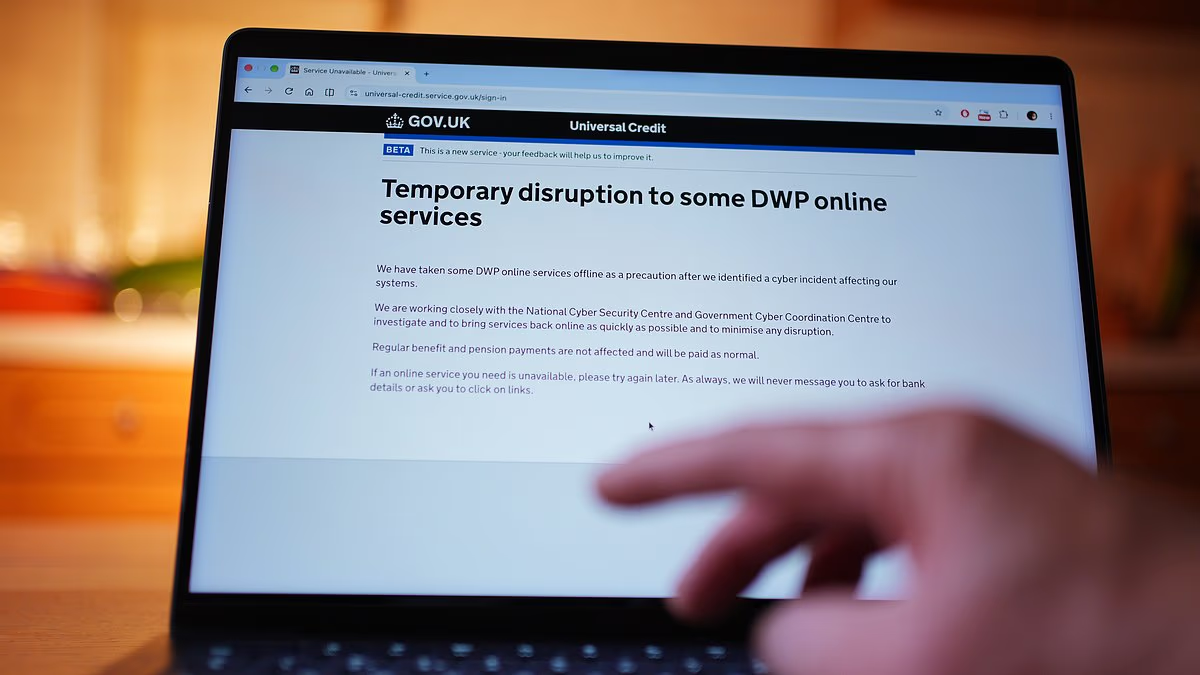
The Universal Credit login portal is currently inaccessible. Visitors directed to the service through GOV.UK are being shown a notice reading: “Temporary disruption to some DWP online services.” New Universal Credit applications are also unavailable.
People attempting to access the state pension service were instead met with an error message stating: “Sorry, the service is unavailable. You will be able to use the service later.”
The disruption has also affected Personal Independence Payment (PIP) applications, job-search services and “Tell Us Once”, the system used to notify authorities when someone has died.
Politicians described the incident as “deeply alarming”, warning that the latest disruption highlighted the urgent need to strengthen national resilience in what they called “the new world that we’re now in”.
Downdetector, which tracks reports of online outages, recorded an increase in complaints about GOV.UK at around 7.30pm on the previous evening, followed by another sharp rise at approximately 7am.
One user in Scotland posted on X: “I called them and they said they can’t access anything on their side either. The guy tried to hang up, I told him we couldn’t access the site.”

A notice on the Universal Credit sign-in page, informing users of disruption to online services
The DWP has not disclosed the nature of the cyber incident, and it remains unclear whether any personal information was accessed.
However, officials understood to be familiar with the situation said there was no indication this morning that claimant data had been stolen. The investigation is continuing.
Conservative health and social care spokesman Dr Neil Shastri-Hurst said: “Today’s cyber incident at DWP is a stark reminder that national resilience is not a tomorrow issue.
“It means protecting the essential services people rely on every day, with secure systems and the ability to recover quickly when things go wrong.”
Liberal Democrat leader Sir Ed Davey told Sky News: “We’re seeing cyber attacks on the health service, on other parts of government, now on DWP, which holds huge amounts of records about individuals, their financial circumstances, bank accounts and more. That represents a huge invasion of people’s privacy and confidentiality.
“So, I mean, let’s see the details. Obviously, I don’t want to prejudge what’s happened, but this is deeply alarming.
“We have to protect individual citizens from these criminals, and the state ought to be the place where citizens receive the strongest protection.
“If that proves not to be the case here, I think people will be alarmed and will want to ask serious questions of the government.”
UK companies and public institutions have faced a growing number of serious cyber attacks in recent years, with some organisations enduring disruption for months.
Targets have included the British Library, a blood-testing provider, Transport for London, Marks & Spencer, the Co-op and Jaguar Land Rover.
Liam Byrne, chair of the Business and Trade Select Committee, said: “I’m afraid that in this new world we’re now in, cyberattacks are going to become more prevalent.”

Anyone trying to access the portal to log in to Universal Credit is greeted with this message

Those trying to log in to manage their state pension are also being shown an error message
MORE ON THIS: Thanksgiving Meals for Elizabeth Holmes, Maxwell, Clancy and Pike
Speaking to Sky News, he referred to last year’s cyber attack on Jaguar Land Rover and said the UK would need to improve its approach to online security.
“We are going to have to upgrade our cybersecurity,” he said. “If you’re running a particularly small business, you need to be more cyber-aware these days. GCHQ has agencies that can offer very good advice, particularly through a course called Cyber Essentials.
“This is something that, frankly, we are all going to have to learn about.”
A DWP spokesman said: “We have taken some DWP online services offline as a precaution after identifying a cyber incident affecting our systems.
“We are working closely with the National Cyber Security Centre and the Government Cyber Coordination Centre to investigate the incident, restore services as quickly as possible and minimise disruption.
“Regular benefit and pension payments are not affected and will be made as normal.
“If an online service you need is unavailable, please try again later. As always, we will never message you to request bank details or ask you to click on links.”
The National Cyber Security Centre said it had no further comment beyond the DWP’s statement.
Only three weeks earlier, the DWP’s most senior official, Sarah Healey, said cybersecurity was “one of the things that keeps a new permanent secretary [top civil servant] awake”.
During a Work and Pensions Select Committee hearing on November 4, Labour MP Patrick Hurley asked her: “How will you make sure that the DWP systems will not be the front line in some sort of hybrid warfare from the Kremlin?”

The Department for Work and Pensions headquarters in Westminster today

A cyber incident forced the Department for Work and Pensions to take some systems offline
Ms Healey, the DWP’s permanent secretary, replied: “The security of DWP systems is absolutely paramount, given the amount of personal information we hold and the amount of money flowing through our systems.
“Our cybersecurity and resilience measures are critical and one of the things that keeps a new permanent secretary awake.”
In response to another question during the hearing, Ms Healey acknowledged that the DWP was “quite often” working with extremely old computer systems.
The latest disruption follows a wider online outage last month, when a security flaw in the widely used PHP programming language temporarily took 32 government services offline as vulnerabilities were addressed.
NCSC experts worked alongside OpenAI, whose technology helped identify the problems, to contain the impact.
The incident comes amid calls from some critics to slow the development of artificial intelligence, following warnings from experts that uncontrolled technology could pose an existential threat to humanity within a decade.
The government has said strong safeguards are essential to ensure developers build systems that keep humans in control.
A £210million Government Cyber Action Plan is also being introduced nationally, including the creation of a new Government Cyber Unit to coordinate responses to major incidents.
Andy Ward, a cybersecurity expert at Absolute Security, said: “We are seeing a concerning pattern of cyberattacks that go beyond financial gain, with criminals targeting services people depend on every day.
“Extended downtime affecting these services could have serious consequences for users. Unfortunately, this incident is another reminder of the growing cyber threat facing organisations today.
“It is only a matter of time before another organisation finds itself in the same position.”