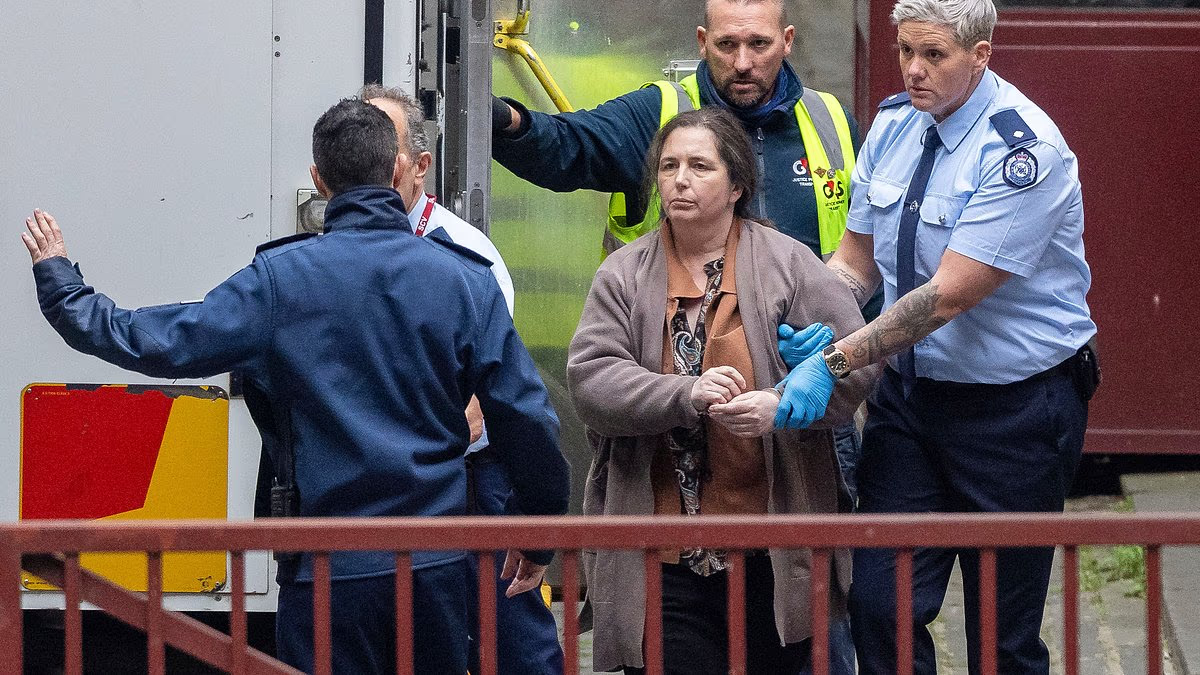

Mushroom murderer Erin Patterson waited until the final hours to lodge a last-ditch appeal against her convictions with the High Court.
Last month, Victorian Court of Appeal Justices Stephen McLeish, Lesley Taylor and Peter Kidd rejected her challenge, describing her crimes as “extraordinarily cold and calculated”.
Supreme Court of Victoria Justice Christopher Beale sentenced Patterson to life in prison on September 8, 2025, after a jury found her guilty of murdering Don and Gail Patterson and Gail’s sister, Heather Wilkinson. The three died after eating death cap mushrooms in a beef Wellington. Patterson has consistently maintained that the deaths were accidental.
Justice Beale originally set a 33-year non-parole period. However, the Court of Appeal allowed the prosecution’s appeal against the sentence and increased it to life imprisonment without parole.
After the appeal was dismissed, Patterson’s barrister, Veronika Drago, immediately said her client intended to seek special leave to appeal from the High Court of Australia.
Patterson’s lawyers had 28 days to submit the application before the 5pm deadline on Friday.
Although reports of the expected late filing emerged on Friday morning, the application had still not been lodged by 3pm.
The High Court represents Patterson’s final legal avenue to challenge both her convictions and sentence.

Erin Patterson received a life sentence without parole after the Court of Appeal increased her punishment
Patterson’s victims became ill and died after eating death cap mushrooms served in beef Wellingtons at a lunch held at her Leongatha home on July 29, 2023.
Pastor Ian Wilkinson survived after being critically unwell, and Patterson was also found guilty of attempting to murder him.
Patterson challenged her convictions on seven grounds, claiming multiple errors had resulted in a substantial miscarriage of justice and that the verdicts should be overturned. The Court of Appeal granted leave on only two grounds and rejected both.
A central part of her appeal was the claim that a “fundamental irregularity” arose because the jury stayed at the same hotel as police and prosecutors while deliberating. Patterson argued the arrangement could have affected the verdicts. The judges dismissed the argument after the jury keeper confirmed there had been no communication between the groups.
DON’T MISS: Campus Assault Survivor Urges Colleges, Families to Protect Students
The ruling makes Patterson only the second woman in Australian history to receive a sentence of life without parole.
Katherine Knight, from New South Wales, became the first in 2001 after killing her partner, John Price, skinning his body and cooking his head with the stated intention of feeding it to his children.
Delivering the judgment, Justice McLeish said the case involved “such shocking criminality that it is inappropriate to fix a non-parole period”.
Patterson also argued that some evidence had been wrongly admitted or excluded. The material included mobile phone tower data connected to sightings of death cap mushrooms, Facebook messages, evidence from friends, and mushroom photographs and videos stored on an SD card. She said the material could have supported her account that she had been foraging.

Patterson’s barrister Veronika Drago (pictured) said immediately that her client would seek special leave to appeal to the High Court

Pastor Ian Wilkinson (pictured) was the only guest to survive the deadly lunch
She further claimed that the prosecution’s lengthy cross-examination was “unfair and oppressive”. Patterson also alleged that the prosecutor’s closing address contained numerous errors and misstatements and wrongly suggested she had a motive to kill.
Patterson faces a considerably higher barrier to having her case heard by the High Court.
Before the matter can proceed, she must obtain special leave—a separate permission stage that criminologist Brianna Chesser says 90 per cent of cases fail to pass.
Losing in the Court of Appeal does not give her an automatic right to pursue a further appeal.
The High Court generally grants special leave only when a case raises a legal principle of public importance or when the interests of justice require it.
To succeed, her lawyers would likely need to identify an exceptionally serious procedural error or a human rights breach.