
Share this @internewscast.com
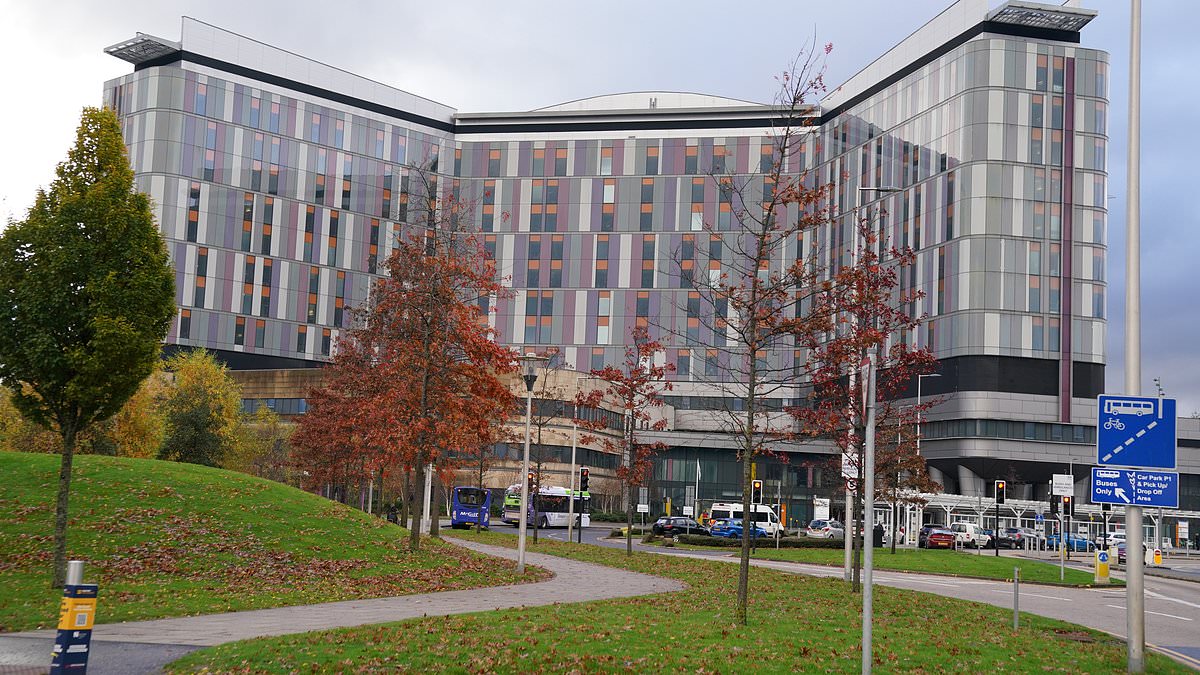
Relatives mourning patients who died at a troubled super hospital have united to deliver an urgent message to John Swinney, insisting the £1 billion facility remains unsafe.
A collective of 91 individuals, whose loved ones either passed away or suffered from unusual infections at the Queen Elizabeth University Hospital (QEUH), have penned a direct letter to the First Minister. They are urging immediate action to prevent further tragedies.
The group, representing families of 27 QEUH patients, is pressing for the dismissal of incompetent NHS leaders and has accused the government of using a public inquiry as a shield to dodge accountability.
Their letter demands swift measures to ensure the hospital’s safety and calls on the government to release confidential reports detailing the condition of the site, both historically and currently.
In their words, the letter states: “We believe it is essential for you to hear our perspective, directly from those who have lost children, soul mates, and whose lives have been irreversibly altered.”
It continues: “Although our experiences began at different moments, we share a united goal—no family should endure what we have faced.”
The intervention comes after the the Mail on Sunday revealed claims that the government’s former Chief Nursing Officer Fiona McQueen tried to ‘bribe’ a grieving family with £20,000 and a holiday during a phone call about their deceased baby daughter, which Ms McQueen has strenuously denied.
We also revealed how NHS bosses admitted a probable link between infections in child cancer patients and the QEUH’s contaminated water system, after denying any such connection for seven years.

Maureen Dynes (right) and Louise Slorance, whose husbands both died in the Queen Elizabeth University Hospital

The QEUH hospital in Glasgow has been plagued with issues and now families fear it is still a risk for patients today

Tony Dynes with his wife Maureen, who is among the 91 relatives calling for urgent action
And we uncovered documents showing the government was sent 14 critical infection warnings before the scandal came to light, on which they appeared to take no action.
Last week Mr Gray dodged questions about the facility citing the public inquiry which is looking into problems at the QEUH.
The Health Secretary and First Minister also claimed NHS Greater Glasgow and Clyde (NHSGGC), received two ‘positive’ reports on the QEUH’s current water and ventilation systems.
However, the documents have not been made public and have instead been passed to a newly-established oversight board, whose members include the current NHSGGC chief executive.
Despite claiming the oversight group would have involvement from families, the group said it ‘suggests our involvement without any one of us being contacted. Are we an afterthought or are you deliberating how to minimise our voice?’
The families said the oversight board ‘does little to quell our concerns’ and the fact these new reports have not been published or submitted to the inquiry ‘appears to us as unnecessary secrecy’.
They added: ‘Despite this both yourself and the Cabinet Secretary have stated the conclusions to be that the systems are “fully compliant”. You omit to state what they are compliant with. We are devastatingly aware that ventilation is not, and cannot be, compliant with [recommended standards]…’
Ministers have come under pressure to explain why the hospital has yet to be validated – a formal safety assurance process – with families arguing that the current ventilation system is a risk to patients who have weakened immune systems.
The majority of wards have yet to receive this validation and the ventilation rates are still believed to be operating below recommended levels for vulnerable patients.
The families said: ‘Of importance to every patient, past and future, is that the air change rate in the majority of rooms…is less than half that specified in national guidance.

Andrew and Louise Slorance before Andrew’s death in 2020 while at the QEUH
‘Scottish Government have repeated GGC’s line that substantial works have been carried out, but the nature of these works remain publicly unsaid and undocumented.’
They urged the First Minister to take action immediately to ensure the hospital is up to the national standard, and said: ‘The families cannot comprehend any delay, when lives are at stake…The only thing we have delayed is own grief and trauma to ensure others do not suffer the same fate. The whole QEUH must be validated…as soon as possible.’
NHS Greater Glasgow and Clyde has been named as a suspect in a corporate homicide probe into the death of four patients – Gail Armstrong, 73, Milly Main, 10, and two other children while investigators are also probing the death of Andrew Slorance, 49, Tony Dynes, 63, and Molly Cuddihy, 23.
The wives and children of Mr Dynes and Mr Slorance, and Ms Armstrong’s two daughters Beth and Sandie are among the dozens of relatives to sign the letter.
They are joined by relatives of patients who developed rare infections while receiving cancer treatment at the QEUH, including Charmaine Lacock and Alfie Rawson, parents of nine-year-old Paige, and Mark and Kirsty Bissett, parents of 14-year-old Charly.
A Scottish Government spokeswoman said the public inquiry was established ‘so families and patients can get the truth they deserve’ and said: ‘The First Minister thanks the families for their letter, and recognises their dedication to engaging with the independent public inquiry, despite the pain and distress this will inevitably be causing.’