
A British patient has become the first person to undergo a pioneering lung transplant procedure that could represent a major NHS breakthrough and potentially save as many as 750 lives each year.
Joe McConnell, 62, was critically ill and dependent on an oxygen supply when he received donor lungs that would normally have been considered too uncertain for transplantation.
Instead of being discarded, the organs were moved between three hospitals inside a specially developed medical device that kept them functioning and ‘breathing’. The system enabled doctors to observe the lungs and improve the likelihood of a successful transplant.
Royal Papworth Hospital in Cambridge, which led the pilot project, said the journey was ‘the furthest perfused lungs have ever travelled for transplantation outside North America’, setting a new record for the UK and Europe.
Many donated lungs are currently rejected before removal because they fall into a medical ‘grey area’. In these cases, specialists cannot confidently determine whether the organs will be suitable for a seriously ill recipient.
Lungs that are accepted for removal are usually preserved on ice during transport. However, their fragility means a considerable number are rejected after further examination, leading to last-minute cancellations of potentially life-saving operations. About 17 per cent of people waiting for a lung transplant die each year before an organ becomes available.
Under the new pilot programme, questionable or borderline lungs can be placed in a ‘lung-in-a-box’ machine and transported to Papworth. There, they are supplied with oxygen-rich blood and nutrients for up to 12 hours while specialists test whether they are working properly and suitable for transplantation.
The approach could restore lungs that might previously have been rejected because they were difficult to evaluate, offering fresh hope to hundreds of patients on the UK transplant waiting list.

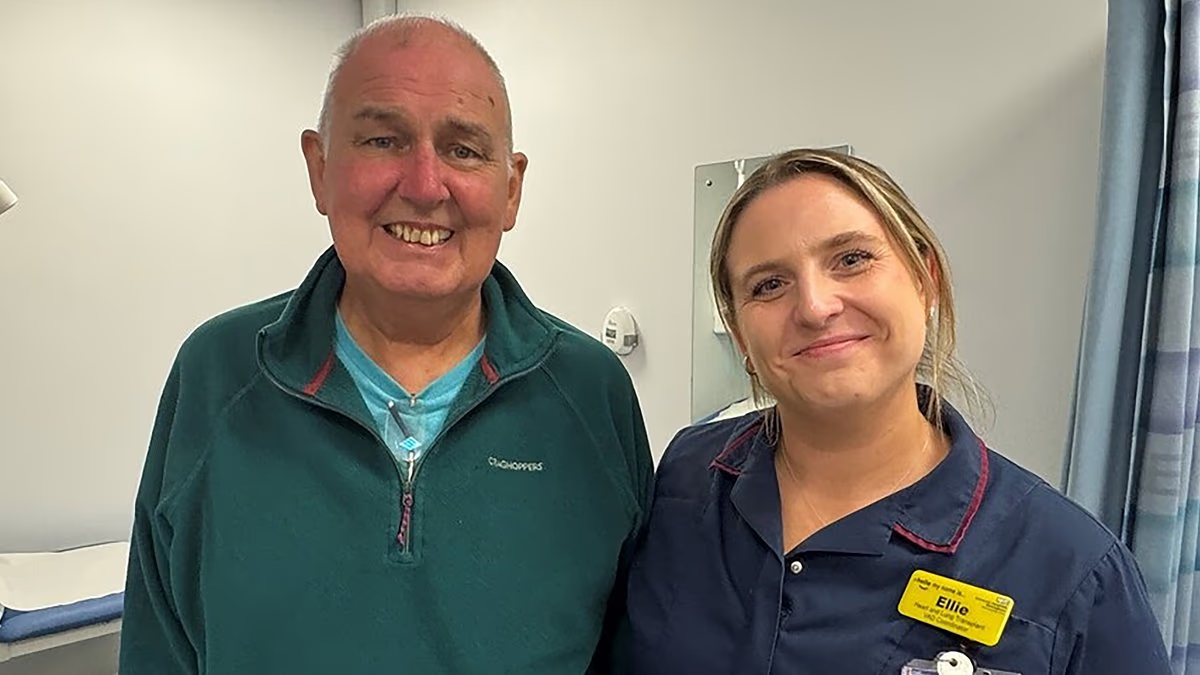
Joseph McConnell pictured with Ellie Johnson, the hospital’s heart and lung transplant coordinator

The transplant, surgical and operating-theatre teams involved in perfusing the lungs before their successful transplant in Birmingham

Royal Papworth Hospital is a specialist heart and lung centre on the Cambridge Biomedical Campus in Cambridgeshire
When father-of-two Joe, from Newport in South Wales, underwent the transplant at Birmingham’s Queen Elizabeth Hospital, the lungs had been approved for use and were in almost perfect condition, despite travelling hundreds of miles.
The carpenter had idiopathic pulmonary fibrosis, a potentially fatal disease that causes permanent scarring of the lungs. Without a transplant, doctors believed he would not survive.
Ten weeks after the operation, Joe told The Mail on Sunday that he felt ‘fighting fit’ and had experienced a remarkable transformation.
‘I was dying,’ Joe said. ‘I was grey, I was blue and I was down. Everyone who knew me could see it. I was walking around with an oxygen tank to stay alive.’
‘Everyone tells me now how well I look. Compared with how I was ten weeks ago, I’m a completely different person.’
The technology behind the NHS Blood and Transplant pilot is called ex vivo machine perfusion. It has already been used in hospitals across the UK to assess donated hearts, kidneys, lungs and livers before transplantation.
Fifteen hospitals in England, including Royal Papworth, have perfusion machines that recreate conditions inside the human body and allow organs to remain active outside it.
Organs that continue to perform well for several hours can then be prepared for transplant. More than half of the lungs evaluated using this method are ultimately transplanted—twice the proportion of those preserved on ice.


The new pilot expands on that technology by allowing lungs to remain ‘alive’ while being transported across the country, while also adding a further assessment stage at Royal Papworth.
This can potentially improve their condition, and means fewer will go to waste.
Last year, just 154 of 748 donors whose lungs were offered ultimately had them transplanted – about 21 per cent. Most organs are rejected before being removed from the donor.
In Joe’s case, the organ was donated at a hospital in the North of England, and then taken to Papworth in one of the perfusion machines known as a ‘lung-in-a-box’. The warm, high-tech chamber connects the lungs to a ventilator and pumps them with a nutrient-rich, blood-like solution which keeps them functioning outside the body.
The organ underwent its detailed assessment at Papworth before being sent to Queen Elizabeth in Birmingham for Joe’s operation.
He had previously been called to the hospital seven times when potential donor lungs became available, but on each occasion the transplant could not proceed – until, in August the call came which changed his life.
Joe said: ‘You don’t know whether you’re going to wake up or not. But I was surrounded by positive people and that made me feel positive. Everyone put me at ease and there was plenty of banter.’
He no longer needs to use an oxygen cylinder and is back to going on walks with wife Anita and their seven-year-old rescue greyhound, Molly.

Pictured: The first lung transplant to take place through the hospital’s ARCs pilot
The Assessment and Recovery Centres programme was developed by NHS Blood and Transplant (NHSBT) in collaboration with cardiothoracic transplant teams and funded by the Department of Health and Social Care.
If successful, it could become the standard way of assessing donated organs that need further evaluation before they can be accepted for transplant.
NHSBT predicts it could enable up to 750 extra lifesaving and life-improving transplants every year.
Marius Berman, Consultant Cardiothoracic & Transplant Surgeon and Clinical Director for Transplantation at Royal Papworth Hospital NHS Foundation Trust, said: ‘The decision to accept donor lungs must frequently be made within a short timeframe and on the basis of sometimes incomplete information. Potentially transplantable lungs may therefore be declined because of uncertainty on how suitable they are.
‘Ex vivo lung perfusion (EVLP) has provided an important way of addressing this limitation. By ventilating and perfusing donor lungs outside the body under controlled conditions, transplant teams can obtain additional information about the performance of the lungs, including gas exchange and lung function.
‘However, availability of EVLP does not automatically translate into equitable national access.
‘Specialist equipment, trained personnel, operating theatre capacity and the logistics of organ retrieval and transportation all influence whether this technology can be used.
‘The development of Lung Assessment and Recovery Centres (ARCs), currently on a trial basis by NHS Blood and Transplant, represents an attempt to address these barriers through a coordinated national service.’
Mr Berman, who is also National Speciality Advisor on heart transplantation for NHS England, added: ‘In 2024, Royal Papworth Hospital NHS Foundation Trust in Cambridge established a clinical EVLP transplantation programme supported by NHS England funding. The programme provided the infrastructure, technical capability and multidisciplinary expertise necessary for the subsequent ARCs pilot.
‘We are delighted to have played a key role in the national ARCs programme, working with other lung transplant centres to improve both the number of lung transplants and equity of access to lung transplantation for everyone in the UK.’


