
Share this @internewscast.com
Until not long ago, I held a firm belief in humanity’s ability to advance and evolve positively.
As the year drew to its conclusion, I often highlighted the numerous positive developments that, despite being largely overlooked, were happening around us.
I noted that global poverty had dropped significantly, particularly from the 1990s onward. Although wars remained horrific, they had become less frequent and less deadly compared to previous eras. Additionally, life expectancy was on the rise.
While all of these statements were accurate, the progress we once relied upon seems to have slowed, halted, or even regressed in recent times.
Looking at the broader global context, many of us grew up in a world where, generally, justice and positive forces prevailed over time.
More countries embraced freedom rather than moving away from it. Often, democratization happened rapidly, such as when several nations broke free from fascism in 1945 or when others emerged from the grip of Communism in 1990. Sometimes, dictatorships fell one by one. Despite occasional setbacks, the world appeared to be steadily advancing toward representative governance and the rule of law.
The Better Angels Of Our Nature by Steven Pinker examined, in brilliant statistical detail, the way violence of every kind – wars, homicides, slavery, sexual assaults – was in long-term decline.
I’ve also been much influenced by Matt Ridley’s The Rational Optimist, which extended that thesis and looked at how we are not only living longer but becoming safer, taller, healthier, cleaner, more literate and better fed.

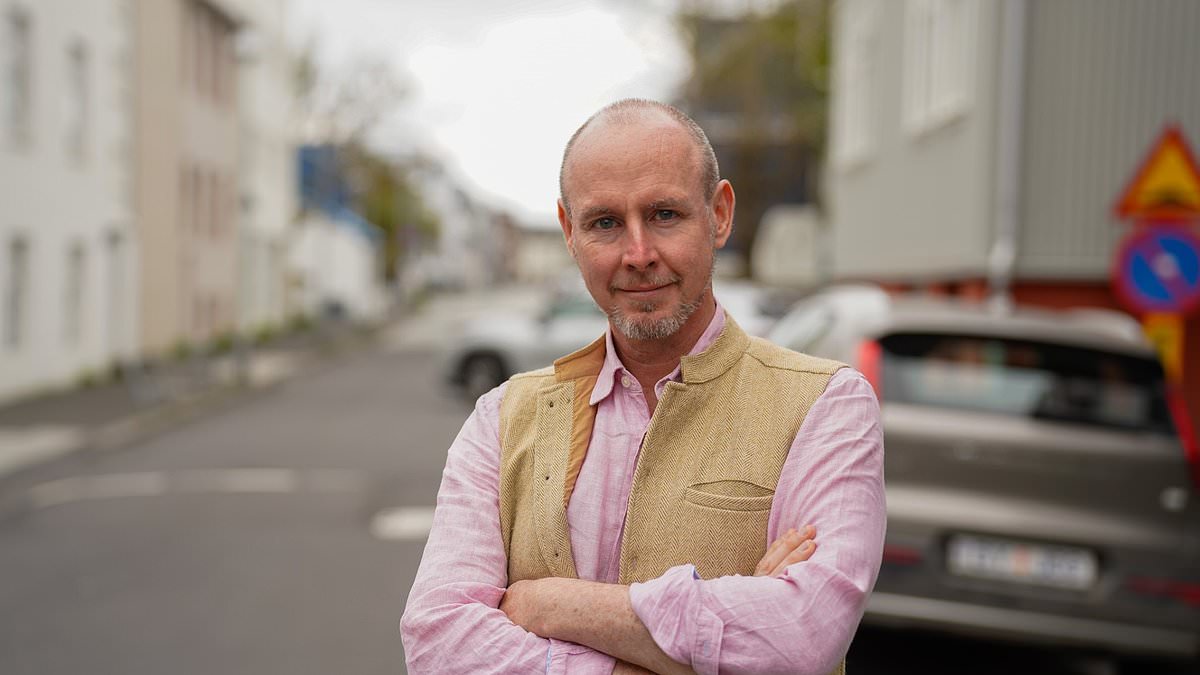
The disaster of lockdown – or, more precisely, the public clamour for lockdown – has knocked the optimism out of me personally and out of Britain as a whole, Daniel Hannan writes

Lord Hannan of Kingsclere is a Conservative peer and president of the Institute for Free Trade
Both authors unfashionably gave credit to capitalism. Both challenged the nostalgia and pessimism intrinsic in our nature.
I would often quote that great optimist, the Whig historian Lord Macaulay: ‘On what principle is it,’ he asked, ‘that with nothing but improvement behind us, we are to expect nothing but deterioration before us?’
Well, that was then. Indeed, the years in which both Pinker and Ridley’s books were published, 2010-11, are beginning to look like the high-point of global liberty.
Various international organisations publish annual league tables evaluating the state of freedom in the world. They use slightly different methodologies and, in consequence, reach slightly different conclusions.
But they agree about this: at some point between ten and 20 years ago, the worldwide trend towards democracy stalled and began to go into reverse.
Let me quote the most recent annual reports of the most highly regarded of these organisations.
According to Freedom House, ‘global freedom declined for the 19th consecutive year in 2024. Sixty countries experienced deterioration in their political rights and civil liberties, and only 34 secured improvements’.
Here is the Economist Intelligence Unit: ‘More than one-third (39 per cent) of the world population live under authoritarian rule. Sixty countries are now classified as ‘authoritarian regimes’, an increase of eight from a decade ago.’
In the words of Sweden’s V-Dem Institute: ‘The level of democracy for the average world citizen is back to 1985; by country averages, it is back to 1996. It is a truly global wave of autocratisation.’
That wave of autocracy seems certain to crash through more democracies next year, not least because the guardian of the Western order, the United States, has all but swapped sides.
Encouraged by Donald Trump’s refusal to criticise him, Vladimir Putin continues to advance in Ukraine. And Taiwan, no longer confident of American protection, is moving closer to China.
Leaders of Western democracies, watching the US President, are clocking the extent to which political pluralism rests on precedent, norms and self-restraint, rather than on hard safeguards. What caused the reversal? Did the global financial crisis delegitimise the market system that ushered in the rising prosperity of the previous six decades?
Did the surge in global migration destroy the homogeneity on which liberal democracy used to rest?
Did the rapid spread of smartphones from around 2012 make us stupider, more irritable, more prone to conspiracy theories?
All of these things might be true to some extent. Let’s explore the last possibility.
If you have read this far, the chances are that you are over the age of 30.
A third of British adults say they have given up reading, and universities tell us undergraduates struggle to get through texts. The OECD reports a decline in literacy in every developed country as people turn to frenetic images. The average time spent on a TikTok video is seven seconds. Some commentators call it ‘the post-literate society’, and it is bad news for liberal democracy, which depends on civility, reason, the acceptance of legitimate opposition and a readiness to elevate process over outcome.
One measure of post-literacy is that, as voters, we refuse to acknowledge trade-offs. We are like stroppy teenagers, raging at the Government while expecting it to solve all our problems. Our expectations are both out of control and contradictory.
Cut my fuel bills – and deliver on net zero! Make housing affordable – and don’t build anywhere near me! Pay nurses more – and bring inflation down! Cut waiting lists – and Hands Off Our NHS! Increase my pension – and cut my taxes! Grow the economy – but don’t expect to find me back working in the office!
Difficult choices are avoided. Public spending continues to rise and the productive, revenue-generating part of the economy is squeezed. Growth slows.
Britain is not alone in having this disease, but we have it more severely than most.
As recently as the Blair years, the Government was spending 34p in every pound. Now it is 45p.
Why? I’m afraid the disaster of lockdown – or, more precisely, the public clamour for lockdown – has knocked the optimism out of me personally and out of Britain as a whole.
It turns out that millions of us rather enjoyed the disturbing extension of state power that we endured in 2020-22 and we want it to continue.
We got used to a highly regulated world where we could work at home in the company of our loved ones, where healthcare was a daily obsession, where debts would be written off by the Government and where risk-taking was outlawed by Government decree.
We have turned our back on the spirit of capitalism and on the enterprise and risk-taking at the heart of it. In its place we have embraced the soulless comfort of state regulation and steady but inevitable decline.
Since 2020, we have become poorer, grumpier and less ambitious. We have become more demanding of Government intervention and less ready to help ourselves. We have become more indulgent of authoritarian rule.
At the start of 2020, the Office for Budget Responsibility was predicting we would have a budget surplus by 2022. Instead, we are borrowing more than £130 billion a year.
No country can spend as much as we do without becoming poorer.
On current trends, according to the Centre for Economics and Business Research, our standard of living will fall behind Lithuania in five years’ time and behind the Czech Republic in six.
The deadweight of taxation and debt have pushed us steadily down the league tables, from 12th place at the beginning of the century to 24th today. If nothing changes, we will fall to 46th by 2050 – a middle-income nation. Along the way, we will have been overtaken by Romania, Georgia, Turkey and Moldova.
This is not some statistical trickery. We can observe the immiseration on every side. We see it in closed pubs, boarded-up shops, the profusion of charity outlets.
We hear it in the resigned tone of young graduates sending out unanswered job applications. We feel it in the judder of unfilled potholes under our tyres. We learn it from friends leaving for higher salaries and lower taxes in Dubai.
We say we want growth, but we won’t countenance the reforms needed to generate it.
Yes, we want the economy to expand and our rising expectations to be met, but not if that means abandoning the triple lock on our pensions, or building on the green belt, or admitting skilled immigrants, or removing statutory employment rights, or fracking under our fields, or scrapping the minimum wage, or privatising the NHS. We moan at our leaders for failing to get the country moving; but we will not accept short-term pain in exchange for long-term prosperity.
Instead, we tell ourselves our problems could be solved by some painless short-cut: abolishing foreign aid, taxing the 1 per cent, axing MPs’ expenses, squeezing oil companies, scrapping DEI programmes.
In truth, the big rises in spending have been in healthcare and in social security. If we don’t want to cut those budgets, we don’t want to cut spending.
Hence the dangerous popularity of politicians such as the Green Party leader, Zack Polanski, who jumps from slogan to slogan, never letting himself be pinned down on policy. Everything is possible, just don’t think about the costs and sacrifices that are involved.
Polanski’s voters are drawn overwhelmingly from the seven-second TikTok-video generation. He is the ultimate post-literate politician.
This is how democracy collapses.
One of the reasons we are reluctant to cut the welfare budget, of course, is that, as the average age of the electorate has risen, we have become more risk-averse and more attached to our entitlements.
For the young, the very people upon whom some sense of a future must depend, this is little short of a disaster.
The lockdown was the ultimate manifestation of generational lop-sidedness. We exacted the heaviest price from young people who were at least risk.
And, by whacking up the national debt, we stuck them with the bill. Unsurprisingly, many of them have had enough. A survey by the British Council found that 72 per cent of 18- to 30-year-olds were contemplating emigration.
Nearly a million 16-to 24-year-olds, meanwhile, are in neither education nor training – a potential tidal wave of waste.
In our personal lives, we tend to become less self-centred as we get older. We don’t want to live at the expense of our grandchildren – we want them to lead richer lives than we did.
Yet until we are prepared to act that way as voters, too, we condemn our descendants to penury – and, indeed, ourselves, too, because a country that pushes its youngsters into emigration is not a pleasant place to live.
Our greatest resource is in our youth. We still have world-class universities, as well as ambitious youngsters who would rather get stuck in right away than attend one.
The kids born around the Millennium, whose lives were the most messed up by the lockdown, have developed a healthy contempt for authority in consequence, a readiness to do their own thing.
There is no easy answer to a range of problems bearing down upon Britain and the West itself. We need to get a grip, of course we do. We need to rein in the galloping expectations we can no longer afford. We need to grow up.
I’m not expecting to see much progress in 2026 but, as the new year dawns, we can start by resolving upon this: to release young people from the sink of hopelessness into which so many have slipped.
If we want to grow again as a country, we need to put their ambition to use at home. We need to encourage them to have their own children here, so breaking our demographic doom-loop. We need an end to the dead hand of statism.
We’re crying out for a culture of enterprise. We need to set them free.
Lord Hannan of Kingsclere is a Conservative peer and president of the Institute for Free Trade.