
Share this @internewscast.com
The initial signs were easy to dismiss.
Becky Lee experienced a chest tightness reminiscent of heartburn, sporadic muscle spasms, occasional bouts of dizziness, and an odd sensation that made her vision seem to tremble as if the world itself was quivering.
At 21, Becky was active and full of energy, so these symptoms hardly seemed alarming. There was always a reasonable explanation—perhaps a lack of vitamins, stress, or just the random oddities of youth that come and go.
She chose to ignore them, relegating the discomfort to the back of her mind.
However, the symptoms persisted, gradually infiltrating her daily existence—disrupting her balance, sapping her strength, and even affecting her eyesight. Yet, she continued to brush them aside.
In hindsight, she admits that a part of her was reluctant to face the truth.
A decade later, Becky, from Bristol, has been diagnosed with multiple sclerosis (MS), an incurable neurological condition that affects around 150,000 in the UK.
Today, with hindsight, she realises the warning signs were there all along.

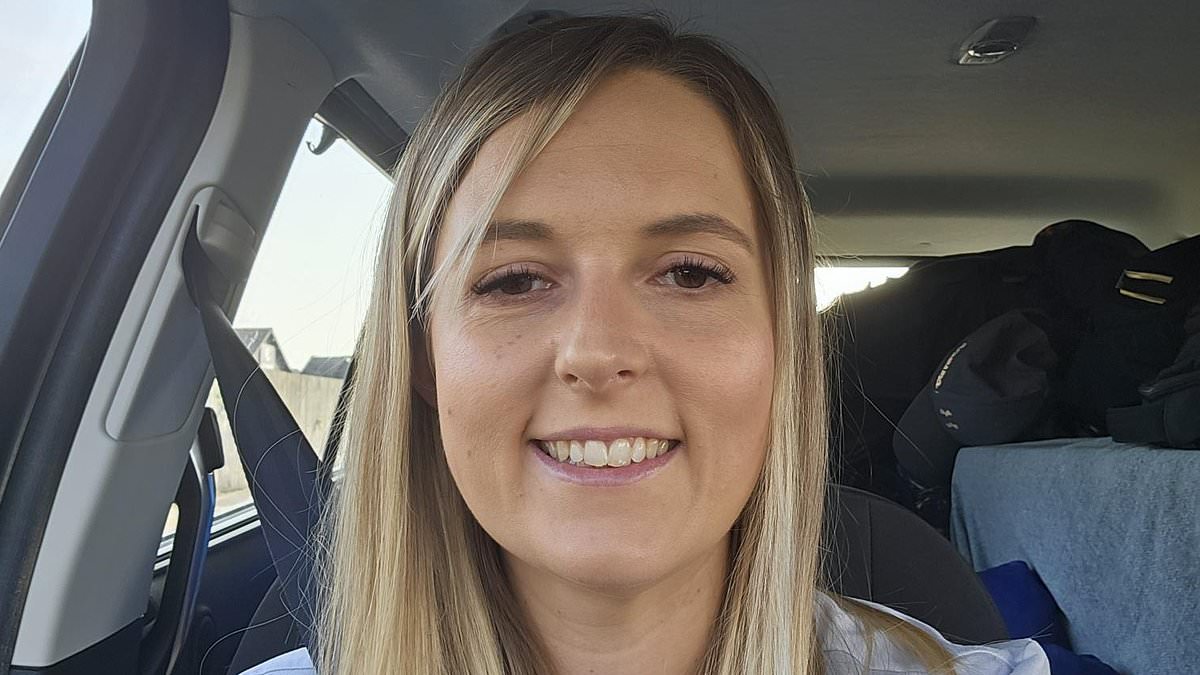
Becky Lee began experiencing early symptoms of multiple sclerosis – known as MS – in 2015
Recalling those early, mysterious symptoms that began in 2015, Becky, now 32, a project manager, says: ’I always had an explanation. I assumed the spasms were due to a vitamin deficiency. And the tightness in my chest was reflux or weight-related.’
That year, she sought medical advice and was told she was suffering from clinically isolated syndrome (CIS), a condition involving inflammation and damage to the central nervous system that often precedes MS.
Although she was advised she could ’continue living normally’, doctors warned that it could develop into the disease.
At the time, cases of MS in Britain were already rising. In 2019, around 130,000 were thought to be living with the condition. Today, that figure has climbed by more than 20,000.
Experts say the rise in MS cases is largely driven by better diagnosis and people living longer with the condition – though growing evidence suggests environmental and lifestyle factors, from Vitamin D deficiency to viral infections, may also influence who develops the disease.
Lucy Taylor, chief executive of the MS Trust, has said: ’These new figures highlight a problem we already knew existed. There are simply not enough neurologists and MS specialists to support people living with multiple sclerosis.
’Every day, our helpline hears from people living with MS, struggling to get access to the care they need. This is just not acceptable.
’We fully support the MS Society in their call for the Government to urgently address the shortage of neurologists and MS specialists in the UK.’
Meanwhile, Becky’s own symptoms continued to worsen in the years following her CIS diagnosis.
She began experiencing persistent dizziness, problems with balance and weakness down her left side – along with ongoing visual disturbances that she struggled to make sense of.

Becky was 21 when she began feeling tightness in her chest and experienced dizzy spells

She is now calling for greater awareness of the signs that can prove to be the onset of MS
’I remember looking at signs or something in the distance and feeling like it was always slightly shaking or vibrating,’ she says.
’But my eye tests always came back normal, so I assumed it was something everyone experienced.
’I also had significant weakness on my left side. Over time, the muscle deteriorated more than normal.
’Looking back, these were early warning signs. I didn’t realise they were connected.’
Despite this, when she was offered an MRI scan five years after her initial symptoms began, she chose not to go ahead.
’I was young and fearful of how a diagnosis could change my future,’ she says. ’Living without a formal one felt easier than facing reality.’
According to the NHS, MS affects everyone differently, but common early symptoms include vision problems, fatigue, numbness, tingling, muscle spasms and balance issues – many of which Becky experienced.
The condition can also cause bladder problems, memory difficulties and sexual issues, such as vaginal dryness or difficulty achieving an erection.
Sarah Rawlings, executive director of research and external affairs at the MS Society, said: ’There’s a wide range of early signs and symptoms of MS – including vision problems, fatigue, numbness, tingling, spasms and balance issues – but many can also be symptoms of other conditions.
’If you’re concerned you might have MS, it’s important to speak to your GP, as early diagnosis and treatment can improve your long-term outlook. They’ll be able to check for any other possible causes too.
’While an MS diagnosis can be overwhelming, there is brilliant support available – including our free MS Help Hub, which offers support and information for those who need it.’
Eventually, as her condition deteriorated, Becky underwent further tests.
In February 2023, she was diagnosed with relapsing-remitting multiple sclerosis (RRMS) – the most common form of the disease, in which symptoms flare up and then ease in cycles.
’It is difficult to know if an earlier diagnosis would’ve changed anything,’ she says.
’It’s invisible, from the outside, and I look completely fine. But, inside, I’m dealing with fatigue, weakness and dizziness each day.’
She describes the first year after diagnosis as ‘terrifying’, and says the condition has forced her to rethink how she lives her life.
Now receiving treatment with the neurologist-prescribed drug Kesimpta to help slow progression, she is learning to manage her symptoms day by day.
’It’s forced me to adapt my life,’ she says. ’I have to be more mindful of my energy levels and slow down more than I used to.
’I also focus on managing fatigue to help with day-to-day symptoms.
’It’s unpredictable, which can make the future seem uncertain at times. Lots of people with MS probably feel the same.
’For now, I try to focus on living my life as best as possible rather than worrying too much about what might happen.’
Now, she is urging others not to ignore the kind of subtle warning signs she once brushed aside.