
The man at the end of the telephone line sounded panicked, his voice high and unsteady.
‘I need to decide very quickly what to do,’ he told a Mail on Sunday reporter. ‘My mental health is through the roof… I’m in a very dark place and I want you to pull the story. I’m feeling suicidal… I can feel myself having deep, dark thoughts.’
It would be understandable to assume that the distressed man was David Walliams.
Earlier this month, the comedian and children’s author was identified as the celebrity whose lawyer argued that publishing sexual abuse allegations against him would cause ‘such profound mental anguish that he would seek to end his life’.
But on this occasion, the person in trouble was a British political figure working at the centre of government. Like Walliams, he was desperate to prevent allegations about his conduct from becoming public.
Among a series of claims, female colleagues said he sexually harassed them after inviting them to supposed Westminster ‘gatherings’ that did not exist, leaving them alone with him. He was also alleged to have asked a Cabinet minister and the minister’s partner to join him in a sexual threesome.
‘It was almost frightening how inappropriate he was and how little he understood about acceptable workplace behaviour,’ said a senior politician who worked alongside him. ‘The way he spoke about women was deeply unpleasant.’
The story was ultimately never published, leaving his alleged behaviour unknown to the wider public. Editors and newspaper lawyers weigh many considerations before deciding whether to publish, and claims of serious mental distress can inevitably influence that judgment.

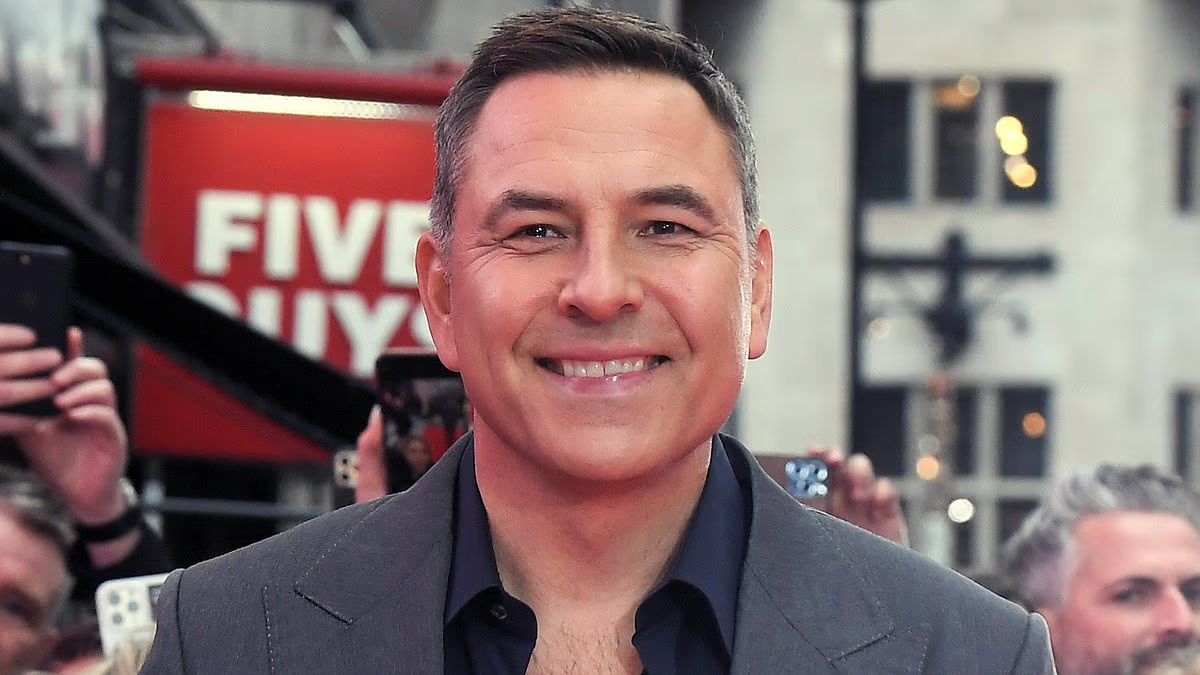
David Walliams was identified as the celebrity whose lawyer argued that publication of the allegations would cause ‘profound mental anguish’

When reports emerged that Huw Edwards had paid a teenager for explicit images, they were followed soon afterwards by news that he was mentally unwell
This is not a new phenomenon. Increasingly, celebrities, politicians and other prominent figures — including members of the Royal Household — seek to prevent revelations about alleged misconduct, and in some cases alleged crimes, by saying they are experiencing severe mental health problems.
Fifty years ago, mental illness was more likely to be concealed, treated as a private matter or dismissed as a sign of weakness. Today, mental health is rightly a central issue in public debate. Greater awareness has emerged as the influence of the Press has weakened, partly because of the expansion of privacy law.
For celebrities, their public relations advisers and reputation managers, it may never have been easier to invoke mental health concerns. Nor can such claims simply be ignored, particularly after the tragic death in August of Jason Arday, the Cambridge University academic involved in a plagiarism dispute, who took his own life.
In Walliams’s case, Mr Justice Nicklin ruled against him while accepting that the risk of him attempting to take his own life was ‘genuine, grave and closely connected to the court’s decision and any subsequent publication’.
However, the judge said responsibility for protecting Walliams lay with clinicians and the hospital to which he had already been taken, rather than with the court or the Press. He had been detained for his own protection, meaning the state was already taking steps to protect him from harm.
‘That judgment sends a very strong signal that courts should approach such attempts [to suppress allegations of sexual misconduct] with considerable caution,’ says Professor Gavin Phillipson, a media law specialist. It is unlikely, however, to prevent agents and lawyers from making emotionally charged appeals to editors on behalf of their clients. In many cases, it is difficult to verify claims about a celebrity’s mental health, even when psychiatric reports are provided. Matthew Dando, head of media litigation at law firm Wiggin, says: ‘Psychiatric reports offer one perspective and are focused on one party’s interests. They must be taken seriously but examined critically, particularly when commissioned as part of an effort to prevent publication of an investigation involving significant public interest.’
At times, it is difficult not to question the claims, because not every case appears to be as genuine as Walliams’s.
Several months ago, while investigating alleged misconduct by a high-profile influencer, one of my colleagues received an urgent warning from the person’s publicists.
They said their client was suicidal and subject to welfare checks, circumstances that they claimed made publication impossible. Yet on that same day, the influencer was posting enthusiastically on Instagram, showing followers a new pair of designer shoes. The Mail encountered a similar situation several years ago while preparing to report that an ITV drama star had left the programme after allegedly sexually harassing a co-star, who was said to have been dismissed by producers when she complained.
The actor’s representative pleaded with the newspaper not to publish, saying the report would push him beyond breaking point. At the time, he was reportedly in a psychiatric unit experiencing suicidal thoughts.
Once again, the tactic succeeded and the story did not appear. Yet, after what seemed to be a remarkably rapid recovery, the actor was photographed back on set just days later.
Only last week, Buckingham Palace warned the MoS that identifying a royal aide accused of committing a criminal offence would damage the individual’s mental health.
We were told that the prospect of exposure had already led to a doctor being called. Combined with concerns about the aide’s privacy, that meant the story would not be published.
READ MORE: Burglars Target $3.3M Encino Home in Brazen Home Invasion
Mr Dando told the MoS that ‘claims that reporting an investigation will have serious mental health consequences for the subject and their family have been increasing for some time and create an obvious dilemma.
‘Those at the centre of investigations often describe the devastating consequences publication would have for them and, in particular, for their children.
‘It is an issue newsrooms have had to confront more frequently as privacy rights have expanded.
‘Journalists understand that investigative reporting can have serious consequences, and editors are accustomed to balancing the competing interests involved.
‘If the subject’s mental health interests always outweigh fair and accurate reporting, wrongdoing will remain hidden and opportunities to prevent continuing abusive behaviour will be lost.
‘Victims may then be denied the chance to tell their stories, while their interests are placed below those of the alleged perpetrator. That carries its own mental health consequences and can deepen the trauma caused by the conduct being reported.’

Former This Morning presenter Phillip Schofield admitted an affair with a much younger runner on the ITV programme and later said his daughters had effectively been keeping watch over him

Strictly contestant Wynne Evans took time away to reflect after being filmed making an offensive sexual remark about one of the show’s female hosts
Children are not the only relatives cited in such appeals. Partners are also frequently mentioned, as happened in the case of a leading football manager accused of having an affair.
His lawyers successfully argued that publishing details of his relationship with a player’s wife could lead his own wife, who was unaware of the infidelity, to attempt suicide. The report was not published.
Even when celebrities do not seek injunctions to silence the media — Ministry of Justice figures obtained by the Mail last week showed that 11 such privacy orders had been issued this year alone — mental health is often used to explain misconduct and attract public sympathy.
A former media consultant said: ‘It also gives the subject time and, crucially, provides protection from the intense scrutiny that follows when a story breaks and someone is at the centre of a storm.
‘It is certainly an effective tactic. Some may see it as cynical, but anyone facing a media onslaught would be distressed and need to protect their wellbeing.’ He said the cases of disgraced television presenters Huw Edwards and Phillip Schofield were ‘classic’ examples.
When reports emerged that Edwards, once a leading newsreader, had paid a teenager for explicit images, they were quickly followed by news that he was mentally unwell. ‘He is now receiving in-patient hospital care, where he will remain for the foreseeable future,’ his wife said.
There is no suggestion that her statement was not a genuine account of his condition at the time. It nevertheless encouraged editors to think carefully about the way subsequent reports were presented. That changed at least partly when Edwards pleaded guilty a year later to making indecent images of children and received a six-month prison sentence, suspended for two years.
‘I am prepared to be completely honest about the reality of long-term mental illness and the continuing failure to recognise its devastating impact,’ he later said.
Former This Morning presenter Phillip Schofield cried during an interview days after admitting that he had been involved in an affair with a much younger runner on the ITV programme. ‘Do you want me to die? Because that is where I am,’ he said.
He later said that his daughters had effectively been monitoring him because they feared for his safety.
‘My girls saved my life,’ he said. ‘They have been beside me for a month because they are frightened to let me out of their sight… and they said to me, “Don’t you dare do this on [our] watch.”’
Katie Hind, the MoS’s consultant showbusiness editor, recalls another major British male star becoming furious about media coverage following allegations that he had cheated on his partner. He instructed his lawyers to email her, stating: ‘Every time Katie Hind writes about our client, it affects his mental health.’
Former Strictly contestant Wynne Evans was another BBC star who stepped away to ‘reflect on his wellbeing’ after the MoS filmed him making an offensive sexual remark about one of the show’s female hosts. Fellow Strictly dancer Graziano Di Prima, who was dismissed in 2024 for kicking his partner Zara McDermott during rehearsals, was also said to have withdrawn from public life while ‘coming to terms with his mental health issues’.
Being at the centre of a media storm is undoubtedly stressful. But as Mr Dando points out, although publicity can be unwelcome and overwhelming, ‘it is the illegal or immoral behaviour at the heart of the story that is the root cause of the harm, not the investigation and reporting of it’.


