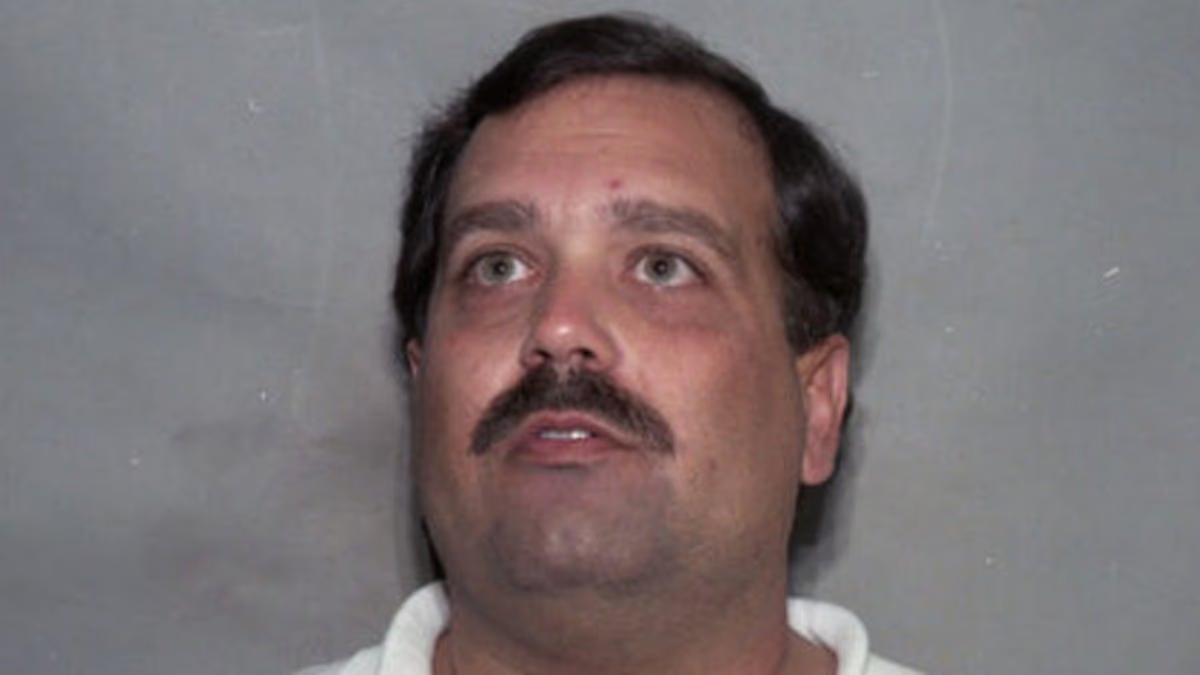

Crime writer Pamela Colloff suspected she had found the story of her career when she began examining the extraordinary criminal history of former Austin police officer Paul Skalnik.
A veteran journalist who has spent years reporting on the criminal justice system and wrongful convictions, Colloff first heard Skalnik’s name in 2018 from the attorney representing Jim Dailey.
By then, Skalnik had become a serial jailhouse informant. He was the key witness against Dailey in the 1985 murder case involving 14-year-old Shelly Boggio—and his testimony helped send Dailey to death row.
In this exclusive excerpt from her book, Colloff recounts her first face-to-face meeting with Skalnik inside a Texas prison, where even she was initially taken in by the charismatic con man.
I met Paul Skalnik for the first time in the fall of 2018, while he was serving a federal prison sentence. I had spent my career covering crime and punishment in Texas, where Skalnik was raised, and had encountered plenty of liars and self-promoters. Still, I had never met anyone quite like him.
At the time, I knew only the broad outline of his story, assembled from court documents in Florida. For more than three decades, the small-time con artist had moved around the Gulf Coast, repeatedly inventing new identities.
Over the years that followed, I would uncover the astonishing scale of his deception.
He had posed as a fighter pilot, a wealthy oilman, a criminal defense lawyer, an undercover agent and a man dying of cancer. Under those various identities, he married nine women—sometimes more than one at the same time.

Skalnik claimed to be a fighter pilot, a wealthy oilman, a criminal defense lawyer, an undercover agent and a terminal cancer patient

He married nine women, sometimes simultaneously, including Suzanne Bordeau, pictured with him
Whenever he was exposed, as he inevitably was, Skalnik devised another scheme. While jailed alongside men awaiting trial, he claimed they had confessed their crimes to him, then sold those supposed confessions to prosecutors.
In Florida’s Pinellas County, he became a regular witness for the state. His testimony helped send dozens of people to prison, including four who were sentenced to death.
In exchange, he was given his freedom—an arrangement that strengthened his growing belief that he was untouchable.
Before long, his crimes extended beyond fraud. He began targeting teenage girls, including some who were barely adolescents.
More than three decades after he testified against fellow prisoners, some of those men were still behind bars.
Among them was Jim Dailey, a struggling Vietnam veteran accused in the 1985 killing of 14-year-old Shelly Boggio.
Dailey’s lawyer reached out to me in 2018. She maintained that he was innocent and explained that Skalnik had been the prosecution’s star witness. It was the first time I had heard his name.
There was no forensic evidence or apparent motive connecting Dailey to Shelly’s death. Yet Skalnik’s account of an alleged prison-mate “confession” helped put Dailey on death row.
After another man came forward and claimed responsibility for Shelly’s murder, I decided to meet Skalnik in prison. I wanted to know whether he still stood by his claim that Dailey had confessed.
I located him at a federal penitentiary in Texas, southeast of Dallas—a low, red-brick complex surrounded by two layers of fencing and razor wire. One October morning, I was granted entry.
He was serving time for failing to register as a sex offender and possessing a gun despite prior felony convictions.
To my surprise, he had agreed to meet with me, though the prison limited us to just an hour.
Time had eroded his once-roguish appeal; at 69, he was Falstaffian in scale, his bulk straining against the wheelchair he sat in. His thinning gray hair was greasy, and his complexion had the waxy pallor that comes from years spent in confinement.
But his eyes remained sharp and alert, bright with anticipation, and he thanked me effusively for coming to see him.
Then, without warning, he began to cry. His voice swelled with emotion as he confided that he had been diagnosed with late-stage colon cancer. From his waistband, he pulled out a soiled rag, stained with dried, rust-colored blood. He thrust it toward me, as if offering it as evidence, and his voice dropped to a whisper.
‘I’m dying,’ he said.
Like much of what he told me during our brief time together, it was impossible to know if it was true. He blamed his imprisonment on a vendetta. He boasted of money he’d stashed in offshore accounts in the Cayman Islands and Abu Dhabi, and of his time as a star witness in Pinellas County, Florida.

14-year-old Shelly Boggio was killed in 1985

Jim Dailey served in Vietnam before being implicated in Shelly’s murder

No forensic evidence or motive linked Jim Dailey to Shelly’s killing but Skalnik’s account of his ‘confession’ helped put Dailey on death row

Dailey was sentenced to death – another man has since claimed responsibility for the murder
His reputation in the Florida jail, he said, had been so fearsome that the mere possibility of his testimony could sway the outcome of a case. ‘If I was on the witness list, people would take deals,’ Skalnik said. ‘I never lost a case – never ever.’
He thumped the table in front of him for emphasis.
When I pressed Skalnik to explain how he had extracted so many confessions from so many men in a single jail, he sidestepped my questions.
Soon the correctional officer rapped on the visitation room’s window: five minutes left. Our time was nearly up.
Skalnik acknowledged my obvious frustration with a smile, assuring me this would be the first of many conversations. He told me to send him my questions so we could continue to correspond and he encouraged me to visit him as often as the warden allowed.
‘This is a story that needs to be told,’ he said when I stood to leave, ‘and I want to help you tell it.’
Elated that he had agreed to cooperate, I drove home to Austin, where I pored over jail logs, case files and trial transcripts and wrote him letters that brimmed with questions.
He wrote often, describing the daily indignities of prison life and his fear of dying alone – but never a word about Pinellas County.
I refused to admit to myself, until it was much too late, that Skalnik had been stringing me along. Months after our visit, when I was still holding out hope that he might talk, he wrote to say that my questions were making him uneasy. Then he went dark on me.
A year later – in September 2019 – Jim Dailey’s death warrant was signed, and his execution set for November 7.
In the meantime, another man had signed an affidavit claiming responsibility for Shelly’s death. But when he appeared in court, he refused to testify.
So, with time running out, I went back in search of Skalnik. He had never backed away from his claim that Dailey confessed but if he was ever going to, it would have to be now.
Skalnik was no longer in prison, having served out his sentence, but I had some idea where he was; he appeared on the state’s sex offender registry, his listed address a Corsicana, Texas, nursing home.
I found him splayed across a bed in a drab, cluttered room with the blinds drawn and a television on low. He seemed stunned to see me standing in his doorway.
After a beat, he motioned toward the empty wheelchair next to his bed and told me to take a seat. He was mostly naked and barely concealed under a tangle of sheets, and he did not cover up when I sat down next to him. Instead, he just stared back at me as I asked how he had been faring.
‘Do you know that you’re the only visitor I’ve had?’ he said, his eyes watering. ‘I appreciate you very much.’

Pamela Colloff tracked Skalnik down to a Corsicana, Texas, nursing home

Colloff writes: ‘I found him splayed across a bed in a drab, cluttered room with the blinds drawn and a television on low. He seemed stunned to see me standing in his doorway’


Pamela Colloff visited Skalnik in prison and admits she was taken in by his lies
We talked for a while before I asked: ‘Do you remember a man named James Dailey?’
Skalnik shook his head.
‘From the Pinellas County Jail?’ I said
After thinking for a while, Skalnik nodded. ‘He’s on death row. He drowned a girl.’
‘He’s going to be executed in less than five weeks,’ I said. ‘If there’s any chance that your testimony against him was false…’
‘No,’ Skalnik said firmly.
I circled back to the subject of Dailey’s impending execution more than once, but Skalnik showed little interest in discussing it further.
‘I won’t retract what I said,’ he told me. ‘Whatever I testified to was fact.’
He sidestepped my questions, portraying himself as the unfairly maligned hero of a story that featured a supporting cast of scheming and vindictive women.
Of both charges of child molestation, he insisted that he had been wrongly accused, a victim of girls who lied to the authorities.
His ex-wives? Greedy opportunists who were only after his money.
The people who accused him of conning them? ‘You try to do people a favor,’ he said, ‘and they turn on you.’
Then I understood. Skalnik was never going to admit that he lied on the stand because there was nothing in it for him.

Mary Kay Dollar, Dailey’s partner, with him at the Union Correctional Institution, Florida, in April, 2023. He is still on death row, but holds out hope for a happy ending
In Florida, there is no statute of limitations on perjury in capital felony cases; a jailhouse witness who later changes his story can face the threat of criminal prosecution. Once a verdict has been rendered, there is more incentive to perpetuate a lie than admit error; it’s a system designed for finality, not necessarily for correction.
My revulsion at that moment was not reserved for Skalnik, who had known he would be rewarded, all those years ago, for telling just the right story; it was for the entire apparatus that enabled and encouraged him.
For the detectives who incentivized him. For the prosecutors who represented him as a truth teller.
For the trial judge who allowed jurors to hear Skalnik’s testimony.
For the appellate judges who rubber-stamped it all, paving the way for the governor to one day sign a death warrant.
Skalnik died in 2020, taking his secrets with him.
Jim Dailey is, as of this writing, still on death row, but he has never given up on the possibility of a happy ending.
Adapted from Catch the Devil by Pamela Colloff. Copyright © 2026 by Pamela Colloff. Published by arrangement with Alfred A Knopf, an imprint of The Knopf Doubleday Group, a division of Penguin Random House LLC.