
Amid escalating tensions due to Donald Trump’s ongoing conflict with Iran, experts warn that the UK could face significant shortages in just two to three weeks.
The Middle East turmoil has sparked fears of potential disruptions, primarily because the Strait of Hormuz remains largely inaccessible to shipping traffic.
This strategic channel, responsible for transporting around 20% of the global oil and gas supply, has emerged as a pivotal point in the escalating crisis.
With the waterway effectively closed, there are rising concerns over increasing prices for fuel, food, and other essential items, stoking fears of an impending global economic downturn.
Industry leaders also highlight the detrimental effects on air freight, as airlines in the Middle East are forced to operate below their usual capacity.
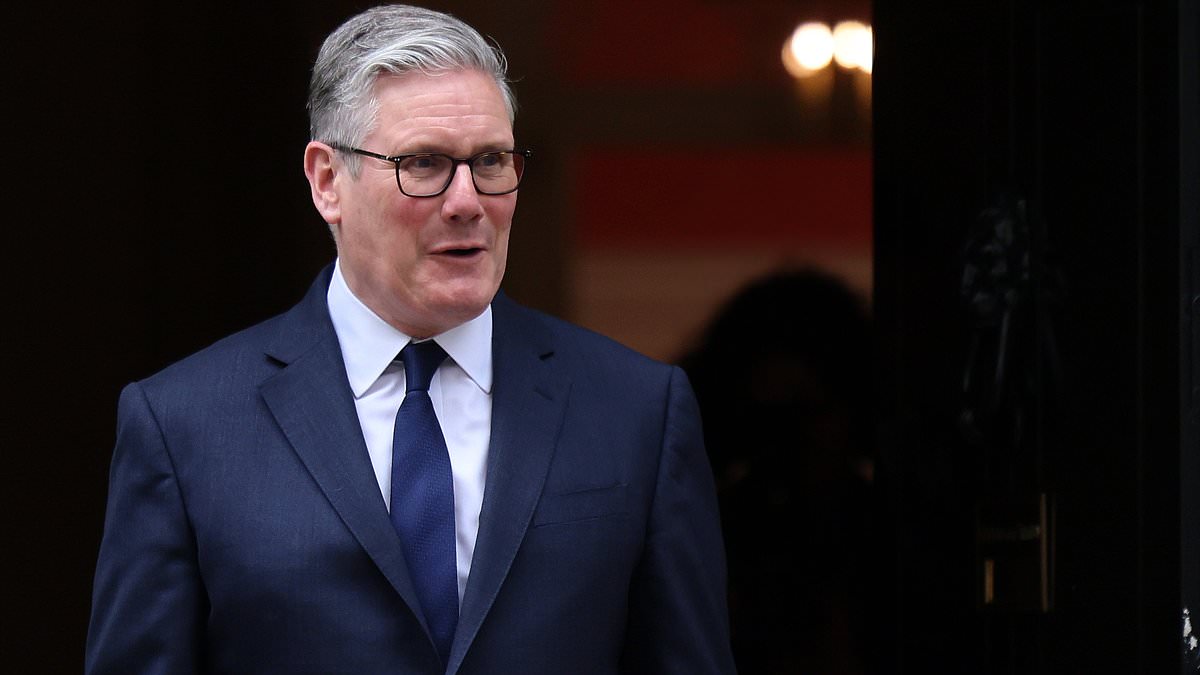
This week, Keir Starmer established a new Cabinet committee to address the crisis’s fallout and is being urged to contemplate measures such as energy rationing.
The Prime Minister was this week told to encourage Brits to work from home in the face of looming problems with fuel supplies.
This is despite the US President repeating his claim that the war with Iran was ‘very close to being over’ in a TV interview.

Brits are facing shortages within ‘two or three weeks’ as Donald Trump’s Iran war drags on, it has been claimed

Industry figures are also warning about the impact of cuts to air cargo, as Middle East carriers operate ‘below normal capacity’
Sources told ITV News that the UK is ‘two or three weeks away’ from shortages of diesel and jet fuel, although petrol supplies are healthier.
The Government is said to be facing ‘difficult decisions’ over how to allot fuel supplies, including how to keep ‘ancillary power’ going for NHS hospitals.
However, a senior minister this morning insisted ‘there are no issues with jet fuel supply at the moment’.
James Murray, the Chief Secretary to the Treasury, told Sky News: ‘The chief executive of Virgin Atlantic spoke out about this yesterday, saying they’ve got a clear sight on their supplies until at least the end of May.
‘So there are no issues with jet fuel supply at the moment.’
Asked if supply issues could occur later on, Mr Murray added: ‘We’re obviously keeping an eye on everything as a Government, and we’re planning for all eventualities.
‘But people should go about their business as usual. We expect suppliers to honour their contracts.
‘People should go about their business as usual and there are no issues with this supply at present.’
However, the rising price of jet fuel was said to be having a ‘significant’ effect on cargo fees, which could soon be passed on to consumers through higher prices.

Keir Starmer, who this week set up a new Cabinet committee to deal with the impact of the crisis, has been urged to consider energy rationing

Sources told ITV News that the UK is ‘two or three weeks away’ from shortages of diesel and jet fuel, although petrol supplies are healthier
Brandon Fried, head of the Air Forwarders Association, which represents hundreds of US companies, told BBC Radio 4’s Today programme: ‘Capacity is tight, rates are up and volatility is high every day.
‘These Middle Eastern carriers, Emirates and Etihad and Qatar, they run about 18-20 per cent of the world’s cargo through those hubs which are now constrained and operating below normal capacity. So that is causing congestion and delays.’
He added: ‘It’s backing up into Europe, it’s backing up in the US, we are also seeing ocean cargo delayed significantly because they are dropping containers off at other ports other than the actual destinations… it is just adding to the disruption.’
Asked for comparisons to the current problem, Mr Fried said: ‘The pandemic was when we were last taxed significantly… this is regional but it is starting to have a worldwide effect.
Mr Fried said jet fuel was having a ‘significant’ effect on cargo fees, as well as costs of rerouting, risk insurance and added security measures.
‘It varies but, significantly, we’ve seen rates 20-30 per cent higher in some instances,’ he added.
‘As an industry we can only absorb this for so long. Sooner or later the actual customer pays for it.’
He continued: ‘Obviously in air cargo we’re the pressure valve for global trade. As time progresses I think we’re going to see more demand and that will probably signal supply chain shortages more.’

There are growing warnings of disruption due to the Middle East conflict as the Strait of Hormuz remains closed to most shipping
Former No10 energy expert Nick Butler has also warned the effective closure of the Strait of Hormuz will see Britain hit with shortages within weeks.
Prof Butler, who was an adviser to Gordon Brown and worked for BP for nearly three decades, attacked Labour for being ‘complacent’ and for failing to ‘lay out a plan of what’s going to be done’ to deal with potential shortages.
Asked if ministers should be encouraging people to work from home more to save fuel, he said: ‘Yes, I think that that would be a perfectly sensible measure.’
He added: ‘I’m waiting for the Government to publish what they’re supposed to publish in these circumstances, which is a national emergency fuel plan.
‘They haven’t done that. They hate the word rationing, and I think you’re right, there shouldn’t be panic buying.
‘But I think the way to avoid panic buying is to lay out a plan of what’s going to be done.’
Speaking to Times Radio, he said: ‘We’ve now had six weeks during which none of the tankers have come through Hormuz.
‘Those tankers take weeks to get to their destination, and we’re now running out of the tankers that set off before the war began.
‘So there’s now going to be a real gap in supply. I think the boss of Shell said it a couple of weeks ago, and I think he was exactly right, that the real crisis for Britain and for Europe will come at the end of April and in early May, when the real shortage will translate into both a physical shortage and a sharp rise in prices.
‘I don’t think we’ve yet seen the full impact on prices of this loss of supply.’


