

LONDON – In March, the United Kingdom experienced a rise in inflation, primarily due to a significant surge in fuel prices following energy supply disruptions triggered by the conflict in Iran, as per official data released on Wednesday.
The Office for National Statistics reported that the annual rate of consumer price inflation climbed to 3.3%, marking a three-month peak from the previous month’s 3%. This increase was anticipated by market analysts.
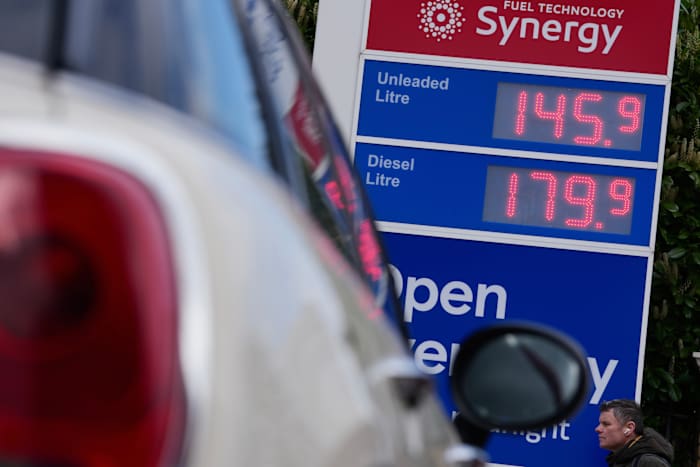
The surge in inflation was largely attributed to an 8.7% monthly rise in motor fuel costs, the most substantial hike since June 2022, shortly after the Russian incursion into Ukraine. Additionally, airfare and food expenses, both influenced by the elevated energy prices, saw noticeable increases.
Treasury chief Rachel Reeves commented on the economic impact, noting that while the Middle Eastern conflict isn’t directly Britain’s war, it is causing financial strain on both families and businesses through increased bills.
The economic repercussions have dashed hopes for a reduction in borrowing costs by the Bank of England. Before the onset of the conflict on February 28, there was an expectation among financial markets that the bank would lower its main interest rate from 3.75%, anticipating inflation to retreat to its 2% target in the spring.
Looking ahead, inflation is projected to escalate further, potentially reaching 4%, as rising energy costs continue to affect household expenses. Economists and Bank of England policymakers are closely monitoring whether this inflationary trend will ripple through the economy, potentially leading to increased wages.
Luke Bartholomew, deputy chief economist at asset management firm Aberdeen, said that it will be “hard” to see workers and firms being able to push through higher wages and prices, given the relative weakness of both the labor market and the British economy.
“That should ultimately limit the size and extent of the coming inflation shock,” he said. “For now, though, the Bank of England is likely to remain in wait-and-see mode, keeping policy on hold next week and maintaining maximum optionality about whether interest rates ultimately end up increasing or decreasing later this year.”
How inflation develops will depend on what happens in the war and the crucial waterway of the Strait of Hormuz, which has been largely closed to oil tanker traffic since the onset of hostilities, stoking fears over oil and gas supplies in many parts of the world.
A resolution sooner rather than later will limit the long-term impact. With developments so fast-moving, financial markets will remain on edge and energy prices will stay volatile. Over the past couple of weeks, oil prices have oscillated between the $90-100 a barrel range, having gone even higher during the conflict. Before the war, oil prices were pretty stable around $60 a barrel.
Copyright 2026 The Associated Press. All rights reserved. This material may not be published, broadcast, rewritten or redistributed without permission.