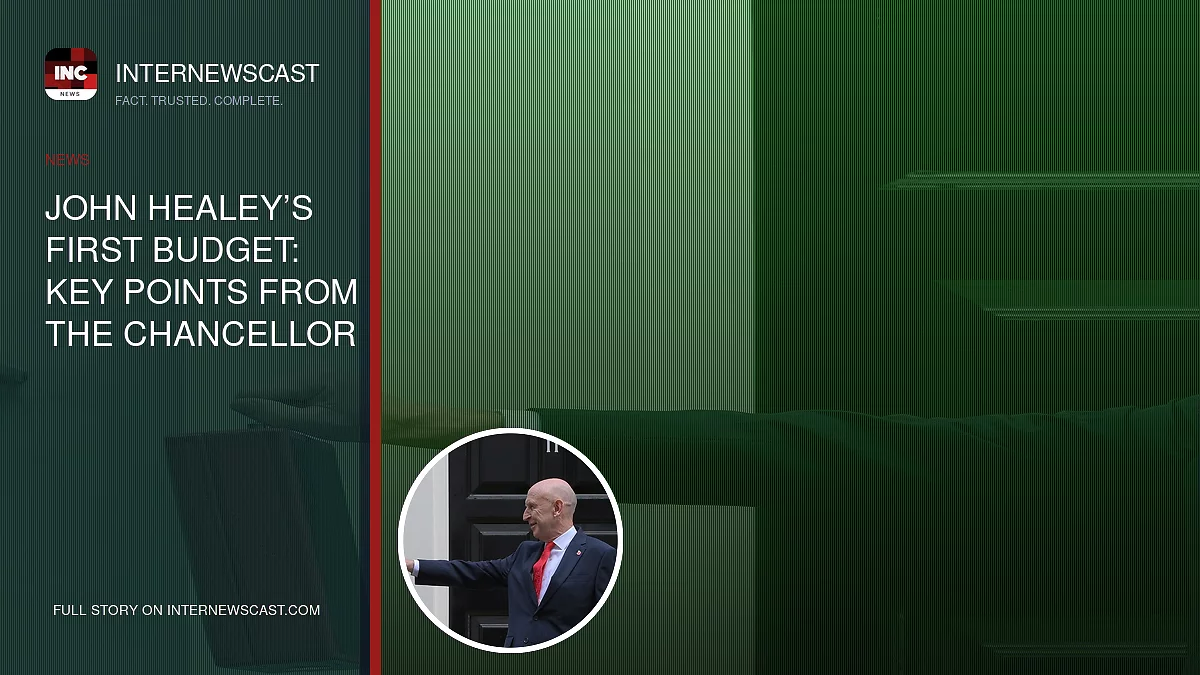

Chancellor John Healey used his first Budget to announce measures aimed at easing the cost-of-living squeeze, while warning that Britain faces a continuing “global economic storm”.
With borrowing costs at their highest level in 30 years and household fuel and energy bills climbing, Healey promised to give families and businesses some “breathing space”.
Among the measures is targeted energy assistance, including a £100 payment for households in council tax bands A to D.
Presented as a “do no harm” package, the Budget relies on relatively limited tax increases to fund cost-of-living support. These include a higher levy on banks, while major decisions on defence, benefits and social care have been deferred.
The Office for Budget Responsibility also published its forecasts, highlighting the economic pressures confronting the Chancellor.

John Healey has already announced energy-bill support for low-income families
Budget founded on “fiscal discipline”
Opening his Budget, the Chancellor said it was designed for the “working people of Britain” and for businesses of every size.
He said the plan would have three main aims: “First, by giving Britain some breathing space on the cost of living and the cost of business,
“Second, backing the enterprise of British business to unleash innovation and growth in every postcode
“And third, by tackling the big challenges on energy, on national security, on public service transformation and on housing.”
Borrowing is forecast to drop to 4.2 per cent of GDP this year and then fall to 1.8 per cent in 2030-31. UK debt is expected to reach 83.2 per cent of GDP this year and 83.8 per cent next year, before easing to 81.7 per cent in 2031-32, according to the Chancellor.
The OBR expects the Government to spend an additional £14billion on debt interest this year as the UK contends with “global economic storms”.
GDP growth is predicted to reach 1.2 per cent this year, slow to 1 per cent next year and then improve to 1.6 per cent in 2028.
Energy bills
Healey has already confirmed plans to scrap standing charges on gas bills, a move expected to help millions of households. However, experts have warned that people living in larger homes could end up paying more.
The Treasury said the Chancellor will ask energy regulator Ofgem to remove the charges in 2027, or as soon as possible afterwards. He also promised similar changes to electricity bills.
“From this point, our priority is first and foremost cheaper energy, with clean power key to achieving this,” he said in his statement.
The VAT reduction on domestic energy bills will be extended through the winter, while businesses will receive a 25 per cent cut in their energy bills from April.
In addition, households in council tax bands A to D will receive a £100 energy payment paid directly into their accounts.
> What will changes to standing charges mean for your energy bill?
Low-income pensioners to avoid income tax
The Chancellor has confirmed that pensioners whose only income is the state pension will not have to pay income tax.
Those dependent solely on the state pension had been due to pay income tax for the first time from next April, because the annual payment was set to exceed the £12,570 income tax threshold.
Fuel duty
The 5p cut in fuel duty will remain in place until July 2027, Healey confirmed.
Duty on motor fuel has been frozen since 2011, apart from the temporary reduction introduced in 2022 after oil prices surged following Russia’s full-scale invasion of Ukraine.
Business rates relief
John Healey said an additional 70,000 small businesses will be taken out of business rates altogether.
The threshold for small business rates relief for firms in the retail, hospitality and leisure sectors will rise from £12,000 to £18,000. Healey said the change would help businesses such as bakeries and hair salons that “make the places we live and work, the places we love”.
For larger retail and hospitality companies, rates will be frozen in real terms, meaning none will face an above-inflation increase for two years. Vape shops and adult gaming centres will not qualify for the relief.
Healey also confirmed that all business rates will be retained locally by the end of the decade, with mayors receiving 20 per cent of the revenue from next year.
Gambling tax increases
To fund tax relief for high-street businesses, Healey said gambling taxes would rise. Machine games duty on higher-stakes machines will increase from 20 per cent to 25 per cent, although pubs and seaside arcades will be protected from the increase.
Minimum wage rise
The national minimum wage and national living wage will rise by 3.9 per cent, benefiting 2.3 million workers, Healey confirmed.
Cash Isa cut abandoned
Healey has dropped former Chancellor Rachel Reeves’ proposal to reduce the cash Isa Isa allowance from £20,000 to £12,000. He also confirmed plans to work with the sector on a new “starter Isa” aimed at encouraging first-time investors.
Tax increase for banks
John Healey confirmed a temporary increase in the bank surcharge. The levy, currently set at 3 per cent on top of the 25 per cent corporation tax rate, will rise by three percentage points to 6 per cent to help fund energy support.
READ MORE: Florida Mom Irene Miller Refused to Fly Home After Son Was Hospitalized
“Banks will pay an extra 3 per cent on the Bank Surcharge, this will be time limited, to pay for immediate support on energy bills. Starting in January, ending 15 months later,” he said.
“I’ve made my choice at this Budget: asking a bit more of our banks to support ordinary people, raising taxes on gambling to support good growth on every high street.”
Support for entrepreneurs
Healey has promised further help for entrepreneurs through a new “founders’ relief”, which will apply a 10 per cent rate to lifetime gains of up to £10million for the most successful founders.
The trading allowance will also increase, allowing people to earn £3,000 without paying tax, up from the current £1,000 limit.
A new young entrepreneurs allowance will be introduced to cover a year of living costs for founders.
Defence
Healey, who resigned as defence secretary under Sir Keir Starmer, said he would close a £4.7billion shortfall in the Defence Investment Plan.
“In today’s budget, I am fully funding the Defence Investment Plan, including through capital reprioritisation across Whitehall.”
“This honours the commitment made both by me – and by the prime minister.”
He said work was already under way to increase defence spending to 3 per cent of GDP by 2030, with further details on how that target will be reached due at next year’s spending review.
The UK will also provide £10 billion in additional economic and military support for Ukraine, including £500million in urgent military funding this winter.
Your First Home scheme
The Government will introduce a new first-time buyer Isa to replace the lifetime Isa. It also confirmed plans for its “Your First Home” scheme, which will enable buyers to purchase a property with a deposit of just 2.5 per cent.
Eligible buyers will additionally be offered an equity loan worth up to 20 per cent of the property price, reducing the size of their mortgage.
The Burnham Budget is here… but what does it mean for YOU? Click here to sign up to Simon Lambert’s subscriber-exclusive newsletter series and learn exactly how to Protect Your Money.
SAVE MONEY, MAKE MONEY

Up to £300 cashback
Up to £300 cashback
£25-£300 cashback on at least £300

4.87% cash Isa
4.87% cash Isa
Trading 212: 1.27% fixed 12-month bonus

£2,500 cashback
£2,500 cashback
£250-£2,500 cashback when opening Sipp

Up to £150 cashback
Up to £150 cashback
Open a savings account with at least £5,000

Welcome bonus
Welcome bonus
Get up to £200 when you invest £100
Affiliate links: If you take out a product This is Money may earn a commission. These deals are chosen by our editorial team, as we think they are worth highlighting. This does not affect our editorial independence. Terms and conditions apply on all offers.


