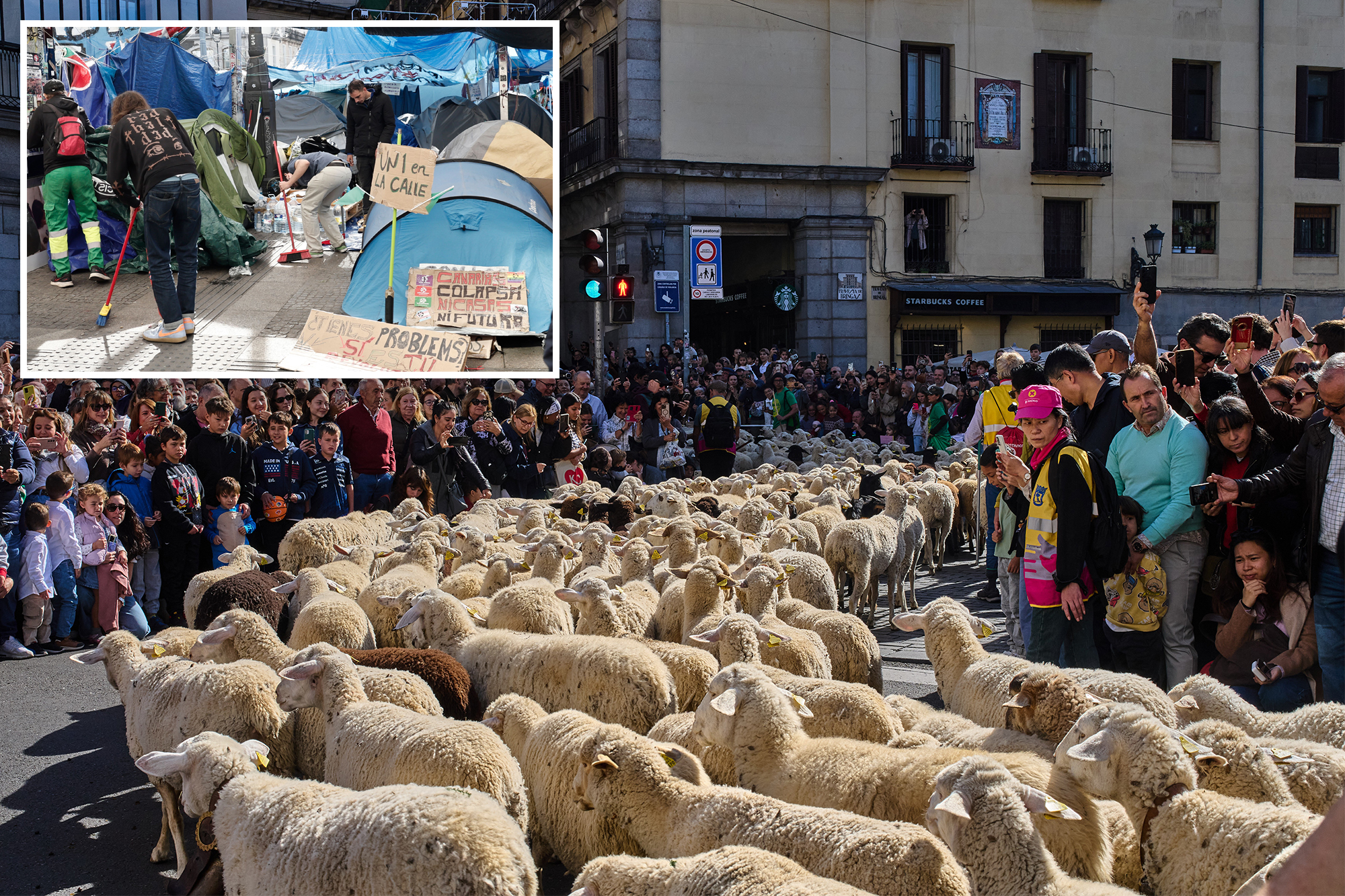

Thousands of sheep and goats filled the streets of Madrid on Sunday, attracting crowds of residents and tourists eager to see the Spanish capital’s annual Transhumance Festival. The event revives the centuries-old practice of moving livestock between seasonal grazing areas.
Madrid lies along an ancient livestock migration route that formed part of an extensive network of rural paths stretching across the Iberian Peninsula. Before the city expanded, the surrounding landscape was made up of open fields and woodland crossed by routes used to drive herds from one pasture to another.
This year’s procession was diverted from its traditional historic route to bypass Puerta del Sol, Madrid’s central square, where housing activists have established a protest camp.
The housing demonstrations intensified last month after widespread anger over the eviction of an 87-year-old woman from the downtown apartment where she had lived for 70 years. María del Carmen Abascal, known to many as Maricarmen, died in hospital soon after being removed from her home.
With the protest site avoided, the herds passed through central Madrid amid the ringing of bells and the sound of bleating animals. The festival also highlights the environmental role of traditional grazing: livestock can clear shrubs and other highly flammable vegetation, helping limit the spread of wildfires.
KEEP READING: Venezuela’s María Corina Machado Returns Home After Nearly Year Abroad
The seasonal movement of animals between different pastures is known as transhumance.
The practice has declined, however, as Spain’s interior has experienced a long-running population exodus. Beginning around 1950, successive generations of young people left rural communities to pursue jobs and greater opportunities in the cities.
Madrid has hosted the Transhumance Festival since 1994.
Similar celebrations are held in towns and smaller cities across Italy, France and California. In Spain, modern agricultural practices have reduced transhumance to a small community of farmers who preserve it for both its environmental advantages and its cultural heritage.


