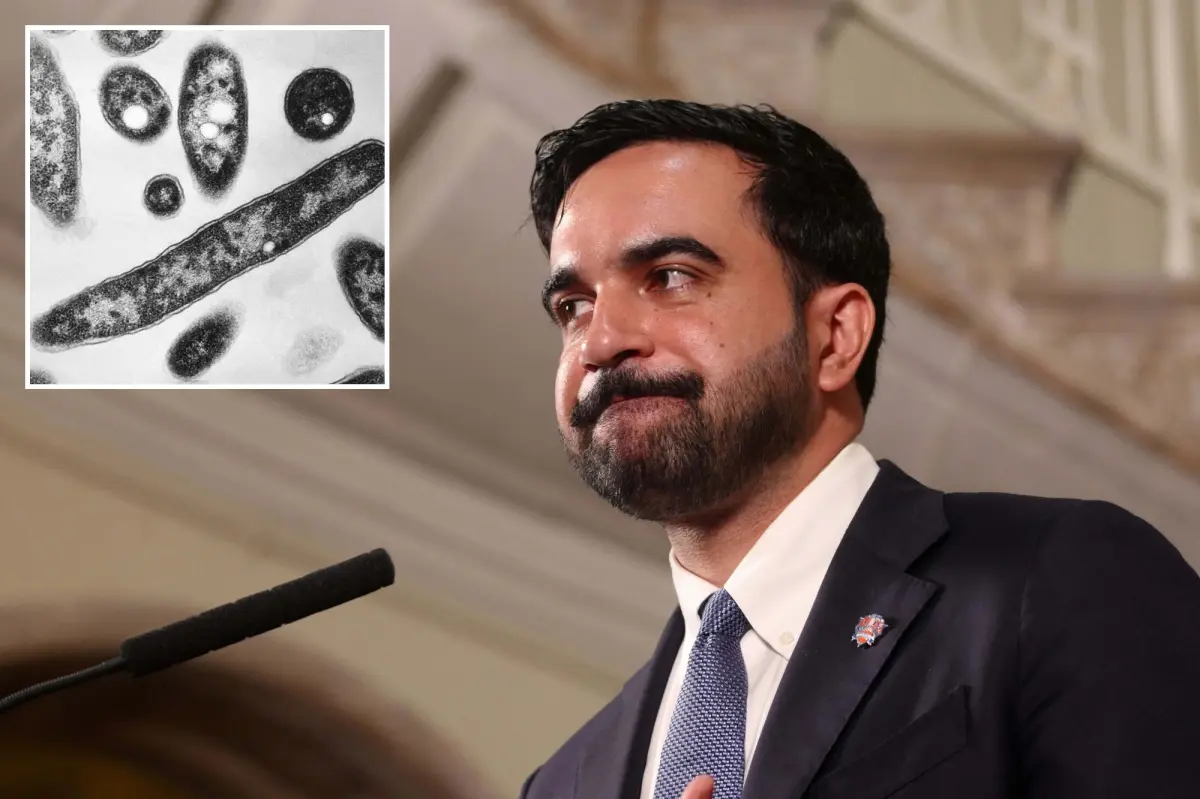

Mayor Zohran Mamdani said Wednesday that New York City has the Legionnaires’ disease outbreak under control, even as scrutiny over his administration’s response intensified and the death toll rose to five, with more than 80 people infected.
Pressed at an unrelated news conference about City Council Speaker Julie Menin’s sharp criticism of the Health Department in a recent Post op-ed, Mamdani brushed aside the political fight. “I’m frankly less interested in the politics of it all, more in the public health of it,” he said.
Menin argued that the families of the five New Yorkers who died, along with the 82 people sickened in the outbreak, “deserve … real answers” from City Hall.
She accused Department of Health officials of having “failed New York” by not moving sooner to disinfect cooling towers in Upper Manhattan, where the cluster of Legionnaires’ disease cases has been concentrated.
Legionnaires’ disease, which can resemble the flu in its early symptoms, is contracted when people inhale mist or tiny water droplets contaminated with Legionella bacteria. The illness can develop into a serious lung infection and poses heightened risks for older adults, smokers and people with compromised immune systems.
Health Commissioner Dr. Alister Martin said city officials believe they have “eliminated” the outbreak’s source after treating cooling towers in the Upper East Side cluster zone. However, the city has not yet publicly named the exact source, with officials saying DNA sequencing results are still underway.
According to the Department of Health, 21 people infected since the Upper East Side outbreak began last month are still currently ill, and more than eight remain hospitalized.
“Furthermore, we believe that we have now eliminated the source of the initial cluster. There has been no one with new symptoms reported in more than 10 days and no new diagnoses in a week,” Martin said.
Mamdani defended his approach, saying that public health experts told him that pre-emptively disinfecting could hurt the city’s ability to mitigate high risk cooling towers and could weaken their ability to protect against the disease in the future. Over using disinfectants can cause corrosion and damage the equipment as well potentially disrupting cooling systems during the summer heat.
“We want this to be a city where it’s clear that the guidance, the actions, the information that we share with New Yorkers — it’s not without any political incentive in mind, but rather a public health incentive,” Mamdani insisted.
DOH officials said that blanket water tower remediation could take resources away from mitigating high risk ones or have unintended consequences like shutting cooling systems down during high temperature days.
But Menin, a Manhattan Democrat, said her office has heard from hundreds of New Yorkers worried about the health and safety of their families and neighbors since the outbreak began.
“[Menin] has advocated for them in calling for the most rapid and robust public health response possible and arranging an oversight hearing on proposals to better contain future outbreaks.” a spokesperson said in a statement.
The speaker had also criticized the health department’s approach when there was a Legionnaires’ disease outbreak in Harlem last year under then-Mayor Eric Adams that resulted in seven deaths and more than 100 cases.
“This has nothing to do with politics, and Speaker Menin’s recent statements are consistent with her advocacy during last year’s Legionnaires’ outbreak in Harlem,” the spokesperson stated.