
During a Sunday morning visit to India, US Secretary of State Marco Rubio announced that notable advancements have been achieved in the ongoing negotiations for a peace agreement with Iran. This statement comes as new insights into the prospective deal have surfaced.
In his remarks, Rubio highlighted that discussions could potentially lead to Iran relinquishing its reserves of highly enriched uranium, alongside the reopening of the strategic Strait of Hormuz. However, Iran has yet to publicly commit to surrendering its uranium stockpile, according to local officials who spoke to The Associated Press.
Rubio hinted at further developments, stating, “Regarding the Iran issue, more information may emerge later today. I’ll defer to the President for any additional announcements,” offering a brief glimpse into the unfolding strategy.
He added, “Suffice it to say, we’ve made some strides, significant strides, though not yet reaching a final resolution.”
The United States has long pursued the reduction of Iran’s uranium supplies to thwart the potential development of nuclear weapons, which pose a significant threat to the US and its allies.
The conflict between the US and Iran escalated into war on February 28, stemming from a protracted history of tensions between the two nations.
Following the start of the war, the Strait of Hormuz, a narrow and vital waterway that is used as a high-volume shipping route, closed.
It opened temporarily, but has since shut down again after the US maintained a naval blockade of Iranian ports.
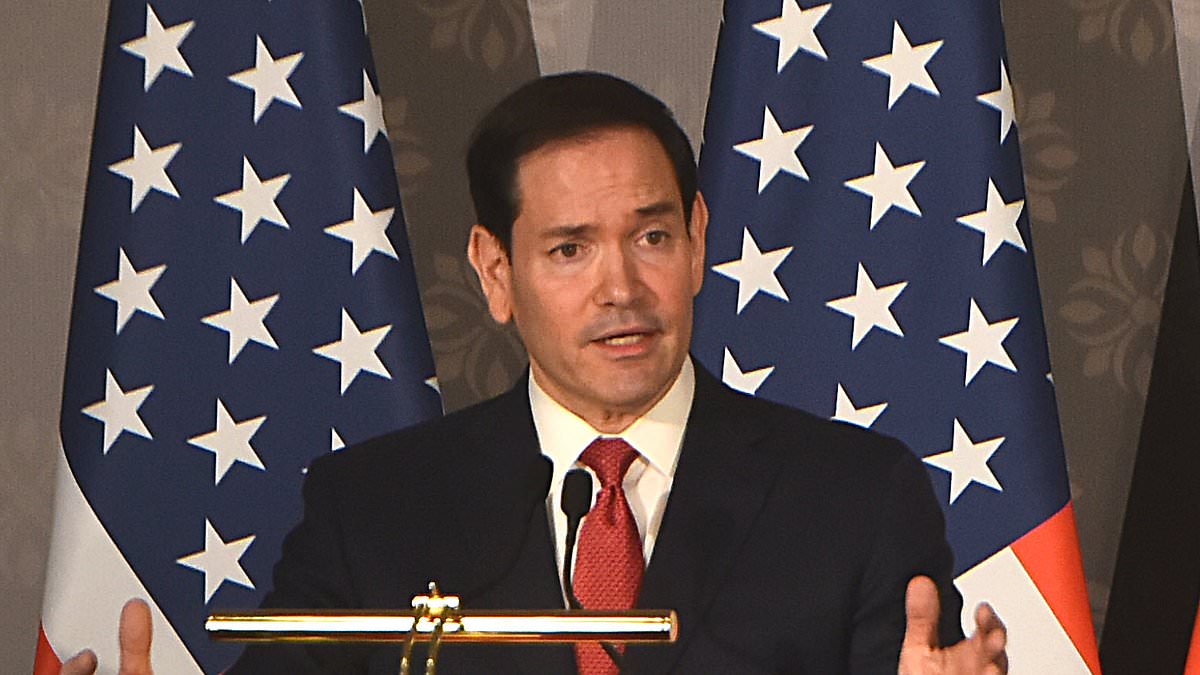
US secretary of State Marco Rubio has revealed new details about the peace deal with Iran, adding that America has made ‘significant progress’ in negotiations. He is pictured Sunday
The US-Iran war broke out on February 28 following a decades-long conflict between the nations
During his talk on Sunday, Rubio expressed why the Strait of Hormuz being closed has caused a great deal of tension amid ‘illegal’ activities Iran has taken part in.
‘This is an international waterway. They [Iran] don’t own it. It’s an international waterway, and what they are doing now, is basically they are threatening to destroy commercial vessels using an international waterway.
‘That is illegal under any concept of international law that governs us, but it’s also – if we allowed that to become normal, we would be normalizing an unacceptable status quo, and setting a dangerous precedent that could be replicated here in this region and in multiple places around the world,’ Rubio said.
According to Rubio, progress has been made over the last two days after the US and its partners in the gulf drew up an ‘outline’ that would reopen the waterway ‘without tolls’, and help in ‘addressing some of the key things that underpin what has been Iran’s nuclear weapons ambitions in the past.’
Rubio made it clear that the ‘outline’ could be a crucial step forward in a possible peace deal with Iran, but only ‘if it works.’
‘Obviously, that will require full Iranian acceptance and then compliance, and it will require some future work on negotiating the details.’
The strait’s reopening would begin to address a worldwide energy crisis sparked by the conflict.
Prices have spiked for oil, gas and several downstream products, jolting the world economy.

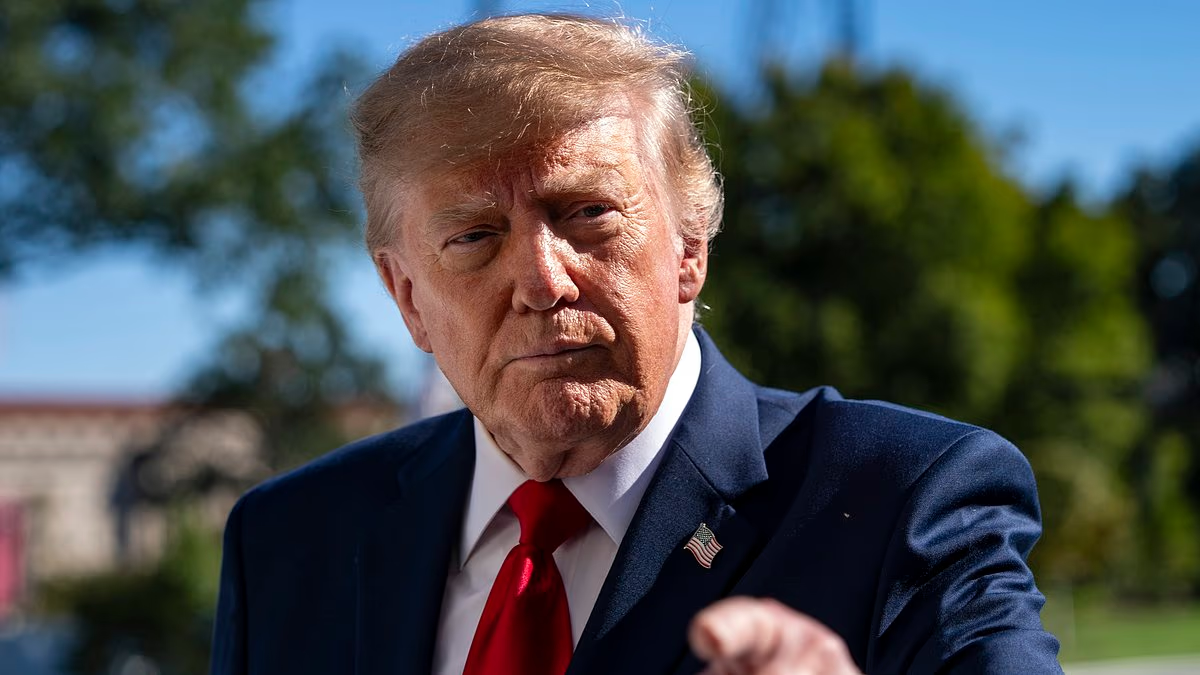
Trump said a deal had been ‘largely negotiated’ on Saturday in posts shared to social media
Experts say it would take several weeks or even months for shipping and prices to recover to prewar levels.
The US in recent weeks had threatened to resume its bombing campaign, which would have likely prolonged the closure and led to Iranian retaliation against Israel and US-allied energy producers in the Gulf.
On Saturday, Trump said a deal had been ‘largely negotiated,’ after calls with Israel and other regional allies.
‘Final aspects and details of the Deal are currently being discussed, and will be announced shortly,’ he said on social media.
Under the potential deal, Tehran would agree to give up its stockpile of highly enriched uranium, according to the two regional officials, who spoke on condition of anonymity to discuss the sensitive negotiations.
One official, with direct knowledge of the negotiations, said how Iran would give up its highly enriched uranium would be subject to further talks during a 60-day period. Some would likely be diluted, while the rest would be transferred to a third country, potentially Russia, the official said. Russia has offered to take it.
Iran has 440.9kgs of uranium that is enriched up to 60 percent purity, a short, technical step from weapons-grade levels of 90 percent, according to the International Atomic Energy Agency.
Iran said the peaceful use of nuclear science and technology is a legitimate right that it ‘will never relinquish,’ according to its embassy in India.
Trump has sought greater concessions from Iran than those required under a 2015 Obama-era agreement that the US later withdrew from under Trump.
On Saturday, Iranian Foreign Ministry spokesman Esmail Baghaei told the state-run news agency that there are ‘narrowing differences’ between the Iranian and US positions, but that Iran is cautious after being attacked twice in the past year during nuclear negotiations.
Pakistani army chief Asim Munir, a key mediator, left Tehran late Saturday after more talks with Iranian officials.
Under the emerging agreement, the Strait of Hormuz would gradually reopen in parallel with the US ending its blockade of Iran’s ports, the officials said.