
Share this @internewscast.com
In the past 17 days since Renee Good was tragically shot in Minneapolis, a sadly familiar atmosphere has descended upon the city and rippled across the nation.
Rather than gaining clarity or experiencing dignified mourning, the scene is clouded by intensifying anger, blame, and the entrenchment of narratives that often disregard the actual facts.
Yet again, an American citizen has been killed by a federal agent’s bullet in this city, setting the stage for another round of predictable, exhausting reactions.
If history is any indication, the aftermath will likely not offer a serious evaluation of the events, the decision-makers, or the responsibilities involved. Instead, a chaotic online discourse will unfold where context is prioritized over evidence, loyalty over truth, and speed over accuracy.
The initial reactions are already apparent. In response to this latest incident, Democrats have swiftly reiterated their demand for ICE to withdraw from Minneapolis, claiming that the federal presence is exacerbating tensions.
In a rapid counterattack, the White House chose confrontation over conciliation. Deputy Chief of Staff Stephen Miller took to X, asserting, “A would-be assassin tried to murder federal law enforcement and the official Democrat account sides with the terrorists.”
There it is, laid bare. Two Americas staring at the same events and seeing entirely different movies yet again.

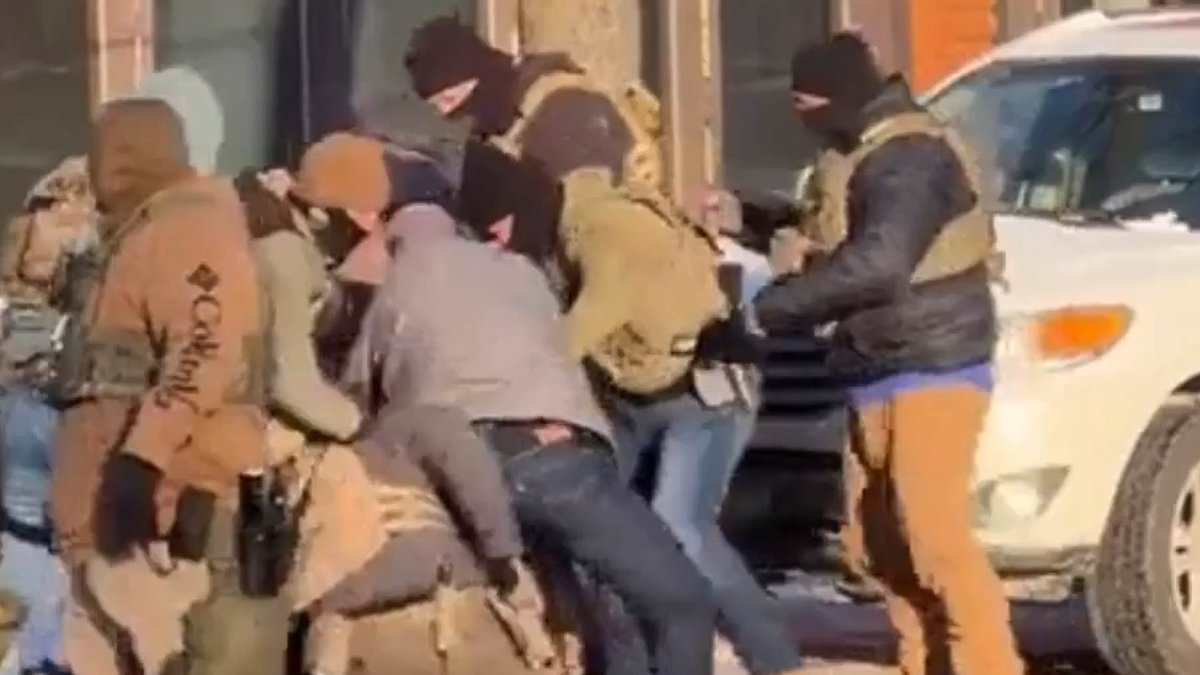
A Minneapolis man has been gunned down during a struggle with federal agents. He was identified by local media as Alex Jeffrey Pretti

The images from this weekend did nothing to lower the temperature. Mass protests. Tear gas drifting through streets already etched into the national memory, writes Mark Halperin
Red America remains appalled that state and local officials would openly oppose immigration enforcement and demand that federal agents leave their jurisdiction, as if the rule of law were optional or contingent.
Blue America sees Donald Trump’s agents as reckless interlopers, wreaking havoc in a city already raw from loss and fear. Each side believes the other is not merely wrong but dangerous.
The images from this weekend did nothing to lower the temperature. Mass protests. Tear gas drifting through streets already etched into the national memory. Dueling social media posts from officials who seem to understand the performative power of outrage better than the responsibilities of office.
And hovering over it all, the wrenching and still-murky dispute over how and why a five-year-old boy ended up in federal custody and transported to Texas. Minneapolis is on a knife’s edge, white-hot with tension even as the actual temperatures sank below zero.

Mark Halperin is the editor-in-chief and host of the interactive live video platform 2WAY and the host of the video podcast ‘Next Up’ on the Megyn Kelly network
What is striking, though, is that even some Minnesota Republicans are now saying, quietly but firmly, that the chaos has to end. They may support Trump. They may agree with his broader immigration goals. But they also know that his actions lit a fuse that only he has the authority to snuff it out.
Vice President JD Vance came through the state on Thursday and struck a notably conciliatory tone, as if auditioning for a different chapter in the story. But it was a blip.
The broader soundtrack remains one of anger. DHS Secretary Kristi Noem, Minnesota Governor Tim Walz, and Minneapolis Mayor Jacob Frey have all kept up the rhetoric, each speaking to their own audiences, each reinforcing the sense that backing down would be a form of surrender.
A defiant Attorney General Pam Bondi appeared on Fox News early Saturday afternoon. President Donald Trump posted on Truth Social.
‘Where are the local police?’ he asked. ‘The Mayor and Governor are inciting insurrection,’ he wrote, in part.
It’s vintage Trump, no retreat. But from a political standpoint, it increasingly appears that Trump made three miscalculations.
First, he underestimated how fiercely Minnesotans would oppose not just specific tactics but the basic mission as they understand it, especially when carried out in their neighborhoods by heavily armed federal agents.
Second, he failed to anticipate how the conduct of ICE and other federal officials would translate into television images that galvanize opposition far more effectively than any white paper or policy brief ever could.
And third, he misjudged how difficult it would be for Team Trump to frame this operation as a natural extension of what they describe as historic success in shutting down the border, once the liberal media and Democrats seized upper hand on the narrative and shaped it day by day, sometimes accurately, sometimes in ways that feel skewed beyond recognition to his supporters.

New angles showed Minneapolis shooting victim Alex Pretti confronting Ice agents before being pepper-sprayed and shot down

President Donald Trump posted on Truth Social. ‘Where are the local police?’ he asked. ‘The Mayor and Governor are inciting insurrection,’ he wrote, in part.
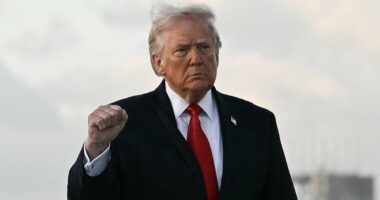
Donald Trump is not known for backing down. Escalation is always on the table. He could federalize the National Guard. He could invoke the Insurrection Act and bring active-duty military into the streets.
Brute force might impose a brittle version of order, but it would almost certainly inflame local resentment and deepen the sense of occupation. The other option -withdrawal of ICE – would be read by his base as capitulation and by his critics as proof that pressure works.
Given the poll numbers and Trump’s own instincts, it is hard to imagine what he might do next. But the ball is most assuredly in his court.
And so Minneapolis waits. The rest of the country watches. Another life has been lost, and the machinery of polarization grinds on, efficient and merciless.
One can almost hear American voices of reason asking, softly but insistently, whether this is really the best we can do. Whether the country that once prized restraint and moral seriousness has any of either left to deploy.
The answer, for now, remains as cold and unsettled as a tense Midwestern night in January.