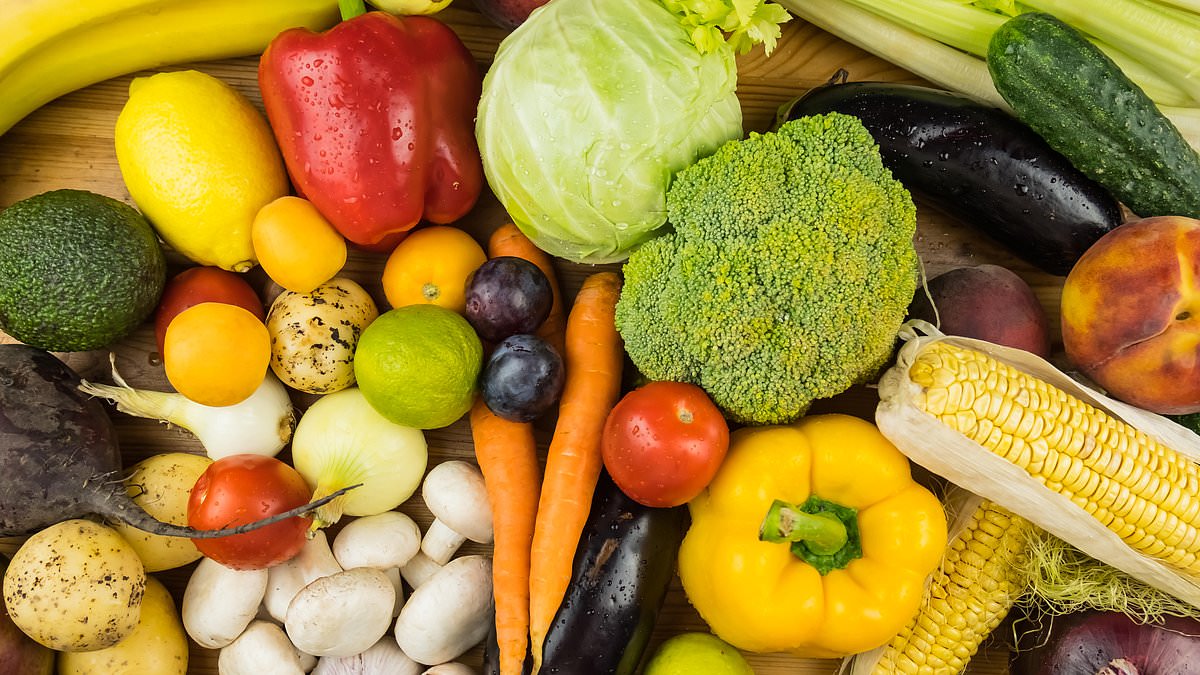

Choosing organic has become more accessible than ever, with options ranging from fresh produce like fruits and vegetables to essentials such as milk, fish, meats, and pantry staples including chopped tomatoes, beans, and flour.
Organic foods are cultivated under rigorous farming standards that minimize the use of harmful chemicals and pesticides—these are typically used to manage or eliminate pests during food production.
Moreover, organic farming places a strong emphasis on animal welfare. Livestock raised organically are fed with organically grown feed and are given more opportunities to roam outdoors, rather than being confined to cages or indoor spaces for the majority of their lives. There are also stricter regulations on the use of antibiotics in organic farming.
Although conventional farming practices are also heavily regulated, organic farming is often viewed as more environmentally friendly, better for animal welfare, and potentially healthier for humans.
This perception might explain why the latest Organic Market Report, released in March, reveals that 83 percent of British consumers now purchase organic products, with milk, eggs, and carrots being particularly popular choices.
However, with organic foods often priced higher, a significant consideration arises amidst financial challenges faced by many households: which organic products are truly worth the investment, and where could your money be better allocated?
We consulted the experts to find out.
Nichola Ludlam-Raine, specialist dietitian and author of How Not to Eat Ultra-Processed, says shoppers should prioritise buying organic foods that would otherwise be more likely to contain chemical pesticide residues, particularly those eaten with their skin on.
From fresh fruits and vegetables, to milk, fish, meats and cupboard staples such as chopped tomatoes, beans and flour – eating organic has never been easier
Why pesticides may make it worth buying organic
Chemical pesticides are applied to crops to battle weeds, insects and fungi that can harm food growth by attacking crops. While these invisible and tasteless substances are important in protecting foods – most commonly fruits and vegetables – some pesticides can also pose risks to human health if exposure levels are too high.
Research suggests that just under half of traditional farmers and agricultural workers worldwide experience pesticide poisoning each year because of their frequent exposure.
Around 90 per cent of organic farmers certified by the Soil Association – an organic certification body in the UK – use no pesticides at all. Organic farmers use between 15 and 30 while traditional farmers use hundreds.
Worryingly, studies have found that some pesticides can be acutely toxic, meaning they may cause harmful or potentially fatal effects within 48 hours of exposure.
Symptoms of acute pesticide poisoning can include a sore throat, coughing, skin and eye irritation, allergic reactions, nausea, vomiting, diarrhoea and headaches. And in more severe cases, exposure can lead to extreme weakness, loss of consciousness, seizures and death.
For consumers, the World Health Organisation states that pesticide exposure is ‘significantly lower’ but previous studies have found that 44 per cent of European food tested positive for pesticides.
This is concerning because ingesting high levels of the chemicals has been linked to diseases such as cancer.
However, the level of pesticides found on food is regulated in the UK by the Health and Safety Executive, and the Food Standards Agency recommends washing fruit and vegetables before eating them so they are clean from bacteria and soil, as well as pesticide residue.
Which foods may be worth buying organic
Pesticide Action Network UK, a charity which campaigns against the use of the chemicals, analysed official government data at the end of 2025 to reveal the ‘Dirty Dozen’ – foods in the UK which have the greatest volume of pesticide residues on them.
Leading the list was grapefruit, meaning 99 per cent of the fruit analysed contained multiple pesticide residues. Behind this were grapes (90 per cent), limes (79 per cent), bananas (67 per cent) and peppers (49 per cent).
Rounding off the ‘Dirty Dozen’ were melons (46 per cent), beans (38 per cent), chilli peppers (38 per cent), mushrooms (31 per cent), broccoli (26 per cent) aubergines (23 per cent) and dried beans at 21 per cent.
Ms Ludlam-Raine says: ‘If you’re shopping on a budget, I’d suggest prioritising organic options for foods that tend to have higher pesticide residues when eaten with the skin on, such as aubergines, mushrooms, and peppers, or simply thoroughly washing them beforehand.’
Chemical pesticides are applied to crops to battle weeds, insects and fungi that can harm food growth by attacking crops
Which foods you don’t need to buy organic
On the other side of PAN UK’s list is the ‘Clean Fifteen’ – which looked at the foods with the lowest amount of pesticide residues.
In a 2019 report, beetroot, corn on the cob, figs, rhubarb, swede and turnip all led the way with 0 per cent of samples analysed containing pesticide residues.
Behind them were onions (1 per cent), avocado (2 per cent), cauliflower (3 per cent), radish (4 per cent), sweet potatoes (6 per cent), as well as broad beans, leeks, pumpkin and squash all with 8 per cent.
Experts say this means the benefits of buying the foods organically may be minimal.
Ms Ludlam-Raine adds: ‘For foods with thick protective skins or peelings, such as avocados and onions, the benefits of buying organic are likely to be much smaller.’
Why buying organic meat and dairy may give you a health boost
As well as protecting against pesticide residues, organic farm animals generally live better lives than ones raised on intensive factory farms – where they are caged and fed poorer diets.
Some studies even suggest organic milk and meat may contain higher levels of omega-3 fats due to organic farm animals eating more nutritious diets compared to those living on standard farms.
Omega-3 has been found to give the body essential fatty acids, which is important for heart health and has been found to reduce the risk of heart attack and stroke.
Ms Ludlam Raine adds: ‘If budget allows, some people may choose organic meat and dairy for animal welfare or environmental reasons, but from a nutritional perspective, I’d be more focused on choosing lean cuts of meat, plus oily fish, and consuming a balanced diet overall – including rapeseed oil and nuts for omega-3 fats too.’
Lee Holdstock, head of trade and regulatory affairs at the Soil Association, says he can ‘confidently say’ organic food is ‘different’.
He continued: ‘If we farm differently, then we get products with different quality. For example, we know for fruit and vegetables, there are higher levels of polyphenolic compounds (antioxidants and anti-inflammatories) in organically grown fruit and vegetables.
Holdstock argues that ‘research shows there are higher levels’ of these beneficial compounds in organically grown fruit and vegetables which he described as ‘a bonus’ of eating organic.
He added: ‘And when we look at things like meat and milk, there have been repeated studies that show that the organic farming system results in better fatty acids and less of the harmful fatty acids that are connected to health issues.’
Mr Holdstock also recommended that shoppers use resources such as the ‘Dirty Dozen’ list to help prioritise which organic products are most worth buying.

Grapefruit led Pesticide Action Network UK’s ‘Dirty Dozen’ – meaning 99 per cent of the fruit analysed contained multiple pesticide residues
Why the benefits of organic may not be worth the cost
Not all experts agree that organic equals better.
Gunter Kuhnle, professor of food and nutritional sciences at the University of Reading, believes those who can afford to eat organic food are likely to be naturally healthier.
Studies have consistently found that higher levels of wealth are associated with living and leading a healthier life in Britain.
Professor Kuhnle argues: ‘Just for healthiness, I don’t think organic food is really worth the extra cost.
‘Where I can understand it is, especially with meat, you want to have better working conditions and better life conditions for livestock. That I can completely understand.
‘Or if you say, I want to use organic because I don’t like intense agriculture. That’s sort of an approach which is understandable. Although organic agriculture, of course, needs more space in general, so it uses more space.
‘And whether that’s a good thing or a bad thing is, again, quite complicated. But I don’t think there’s an easy, simple answer. It’s not better or worse.’
He added that in terms of pesticides, the volume used is ‘so low that it won’t cause any harm to health’.
But, he acknowledged: ‘There’s always the risk that too much is added. You can’t exclude this. And there’s always recalls when somewhere a mistake is made.’
Ludlam-Raine concludes that ‘for most people, the biggest health benefit comes from eating more fruit and vegetables overall, rather than worrying about whether they’re organic’.
She continued: ‘Given that most adults in the UK still struggle to eat their five-a-day, I’d much rather see someone eating conventionally grown strawberries, apples and broccoli than avoiding them altogether because organic options are too expensive.
‘Organic farming also isn’t without its challenges. It typically requires more land to produce the same yield, can be more costly for consumers, and isn’t necessarily the answer to all environmental concerns.
‘That said, some people choose organic foods for ethical, environmental or animal welfare reasons, which are entirely valid considerations.
‘Overall, organic food can be a nice-to-have, but it’s not a nutritional must-have. If choosing organic helps someone eat more fruit, vegetables and minimally processed foods, that’s great.
‘But if the higher price means buying less produce overall, I’d always recommend prioritising quantity, variety and affordability over the organic label – and simply washing and/or peeling before eating.’


