
Scotland’s NHS has paid out more than half a billion pounds to patients affected by medical negligence, the Mail on Sunday has revealed.
The substantial compensation payments were awarded to people who suffered harm as a result of botched surgery, inadequate treatment and poor care in hospitals and clinics.
Critics last night attributed the scale of the payouts to what they described as years of SNP mismanagement, arguing that it has left NHS staff overworked and lacking adequate support.
The figures cover thousands of clinical negligence claims made against Scotland’s health service.
Almost £100 million of the total was paid to victims of birth injuries. Twelve of Scotland’s 14 health boards have handed out compensation to patients harmed by maternity or obstetric negligence.
The cases included babies who developed cerebral palsy and mothers who died during childbirth.

Scotland’s NHS has paid more than half a billion pounds to victims of medical negligence

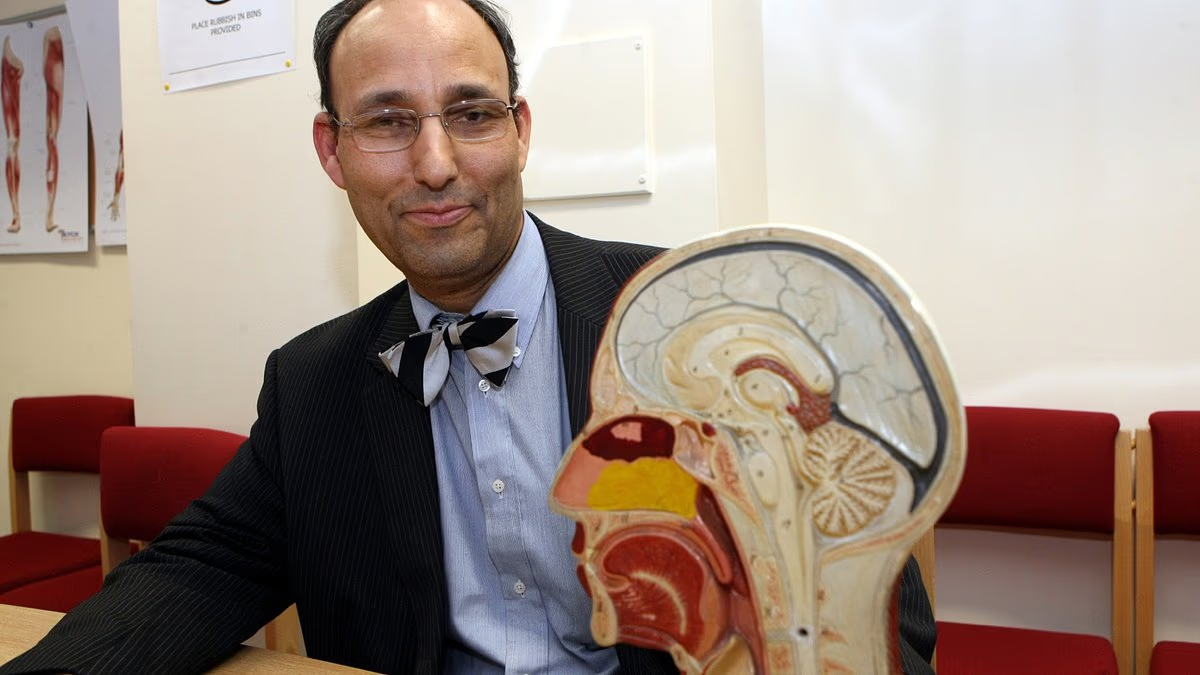
The figures come as health chiefs prepare for potential claims from patients harmed by brain surgeon Professor Eljamel
Campaigners have warned that the total could rise sharply after a time limit that previously prevented patients harmed by disgraced brain surgeon Sam Eljamel from pursuing legal action was lifted.
Miles Briggs, the Scottish Conservative health spokesman, said the number of compensation claims against NHS Scotland over the past decade was “staggering”.
He blamed what he called repeated SNP mismanagement for creating an NHS workforce that is overworked and insufficiently supported.
Mr Briggs said taxpayers had been forced to cover more than half a billion pounds because SNP ministers had failed to properly manage the national health service.
He added that patients were not receiving the same standard of care as they had a decade ago, arguing that doctors and nurses were being asked to cope with excessive workloads.
“It is clear that we are seeing significant increases in litigation against the NHS when things have gone wrong,” he said, pointing to a record number of public inquiries into NHS failings, patient deaths and avoidable fatalities.
The disclosure comes as health officials prepare for possible claims involving patients treated by Professor Eljamel.
More than 200 former patients allege that they suffered harm while under the surgeon’s care.
One of them is campaigner Jules Rose, who underwent unsuccessful surgery in 2013 after Professor Eljamel removed her tear duct instead of a brain tumour. He returned to Libya, his home country, in 2017 and has continued working as a surgeon there.
The controversial medic is suspected of carrying out numerous botched operations over a period of two decades, with some patients treated at NHS Tayside left with life-changing injuries.
Four years ago, Professor Eljamel was ordered to pay £2.8 million to a woman who suffered serious disabilities during his time at Ninewells Hospital in Dundee.
In February, NHS Tayside removed a barrier facing Eljamel’s NHS patients seeking to sue the health board by resetting the time limit for bringing legal claims.
The move came after a long campaign that argued the three-year legal time bar was preventing many victims from pursuing compensation claims against the health board.
As such, former patients are now able to consult solicitors and potentially raise actions in the Court of Session.
IN CASE YOU MISSED IT: Andy Burnham’s Troubling Ties to Manchester City’s Owners Examined

Jules Rose was compensated after her surgery was botched by shamed medic Sam Eljamel
Ms Rose, who secured compensation in 2015 as a result of the harm she suffered at Eljamel’s hands, said she expects the amount paid out in compensation to rise signifcantly as pateints harmed by the shamed medic bring cases forward.
She said: ‘It’s only this year that, through our intense campaigning, we’ve been able to get the time bar reset from NHS Tayside.
‘Scotland may have seen half a billion paid out in compensation in the last 10 years, but I expect that figure will rise significantly in years to come because there are hundreds of patients who were treated by Eljamel.
‘Not everyone will meet the threshold for clinical negligence but each patients deserves the right for access to justice. These patients have been harmed through no fault of their own.’
Ms Rose, 57, said that litigation can be a lengthy process and one that can take its toll on patients seeking to go down that route.
She said: ‘It can take years. I fear health boards feel as if patients will just give up and go away.’
She also said that the amount that has been paid out for clinical negligence raises serious questions about patient safety in Scotland.
She said: ‘The greatest concern has to be about patient safety. What exactly is happening with the clinical governance systems within health boards in Scotland if we have this scale of claims coming through?
‘Because these figures clearly demonstrate that something is far, far wrong.’
She added: ‘These figures are not surprising but they are alarming.’
A public inquiry into the scandal surrounding Prof Eljamel has been hearing public evidence in recent weeks. It will hold evidential hearings in six sections.
The current phase has been hearing from witnesses including representatives of NHS Tayside, the Scottish government, Dundee University, and regulatory or professional bodies.
The second phase, in December, will hear evidence from former patients of Eljamel.
However, numerous attempts by the public inquiry to contact him have been unsuccessful.
The sheer scale of compensation claims, comes at a time when complaints about Scotland’s public services have hit a record high – many of them concerning health boards.
Some 6,588 disgruntled people asked the Scottish Public Services Ombudsman to review their grievances with health boards, councils and other public organisations last year.
The figure was up 31 per cent on the 5,000 complaints received the previous year and part of a trend of rising demand. Among the thousands of complaints lodged with it in the last year were patients whose life-threatening conditions were misdiagnosed and people infuriated by the conduct of staff.
The Scottish Government spokesperson said the number or value of claims settled in any year does not directly correlate to an increase in incidents.
A spokesman added: ‘The NHS provides excellent care. But on the occasions where it does fall short of expectations, boards and healthcare providers must listen and act.
‘Overall responsibility and accountability lies with individual NHS Boards.’


