
NASA has issued a stark warning regarding the Artemis II mission, emphasizing that there is essentially “no plan B” should the heat shield fail during reentry, a phase deemed the most hazardous of the mission.
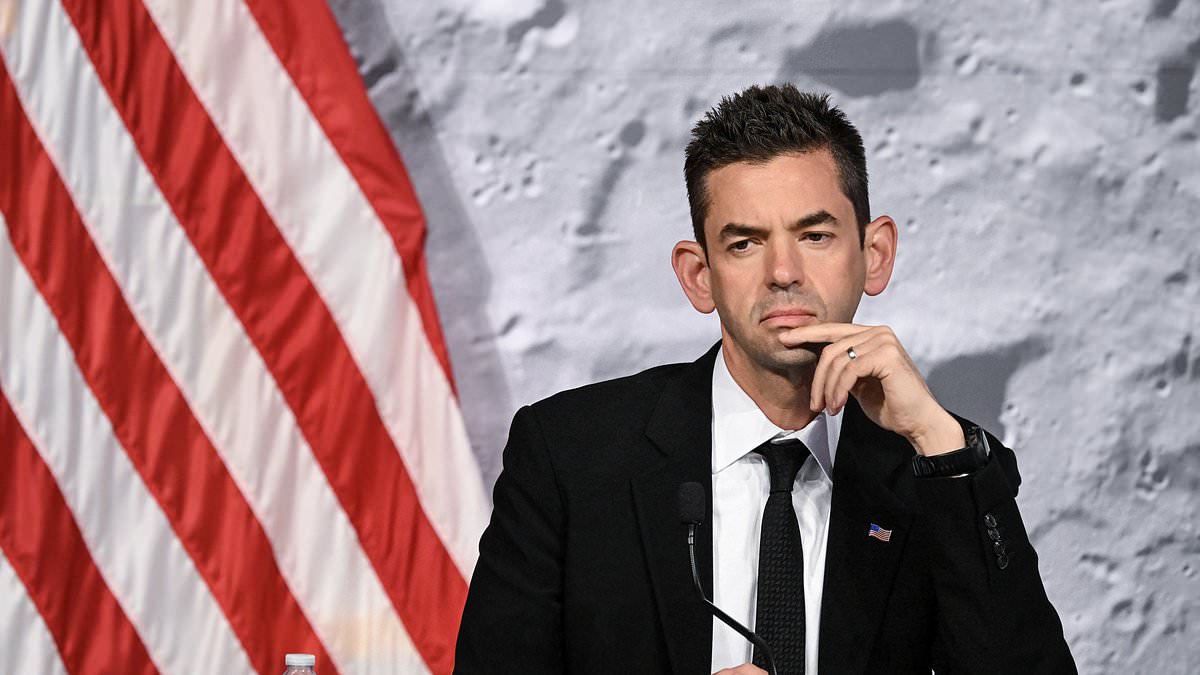
During a press briefing on Tuesday, NASA Administrator Jared Isaacman highlighted the gravity of the situation, expressing his concerns: “What keeps me up at night is knowing my blood pressure will remain high until the crew is safely under parachutes in the water off the West Coast.”
Isaacman stressed the critical importance of the thermal protection system, stating, “There’s no alternative option for this. The heat shield must perform flawlessly.”
The success of the mission hinges on the capability of this single thermal protection system to endure the intense heat generated upon re-entering Earth’s atmosphere.
Isaacman elaborated on the immense energy involved, noting that the powerful rocket, with a thrust of 8.8 million pounds at launch, channels significant energy into the compact spacecraft. This energy needs to be effectively managed as the Orion capsule makes its fiery descent back to Earth from its journey around the Moon.
The Artemis II team, consisting of NASA astronauts Reid Wiseman, Victor Glover, Christina Koch, and Canadian astronaut Jeremy Hansen, is set to conclude their mission with a splashdown near San Diego, California, at 8:07 PM ET.
The warnings come after the Artemis I mission in 2022, when the uncrewed Orion spacecraft experienced unexpected heat shield char loss, an issue engineers later addressed through changes to the spacecraft’s reentry profile.
During this mission, the Orion spacecraft experienced an unexpected char loss across the ship’s heat shield, which engineers determined was caused by gases generating inside the shield that were not able to vent and dissipate as expected through the shield’s outer material.

The Artemis II crew, comprising NASA’s Reid Wiseman (second from right), Victor Glover (right), Christina Koch and Canadian astronaut Jeremy Hansen, is scheduled to splash down off the coast of San Diego, California, at 8.07pm ET

NASA officials have warned there is effectively ‘no plan B’ if the Artemis II heat shield fails during reentry, widely considered the most dangerous phase of the mission
As Orion begins its return to Earth, the spacecraft will reach about 76 miles above the planet before its service module separates from the crew capsule. The capsule will then plunge into the atmosphere at speeds nearing 25,000 miles per hour.
At that blistering speed, air in front of the spacecraft is violently compressed, causing temperatures on the outside of the capsule to soar to nearly 5,000°F.
During this phase, an intense layer of superheated gas, known as plasma, forms around the spacecraft, temporarily blocking radio signals and cutting off communication between the astronauts and mission control for several tense minutes.
After surviving the most intense heat of reentry, two drogue parachutes will deploy to slow Orion to about 300 miles per hour.
Moments later, a set of pilot parachutes will deploy, followed by three massive main parachutes that further reduce the capsule’s speed to roughly 17 miles per hour before it splashes down in the Pacific Ocean.
Isaacman compared today’s spacecraft production to the Apollo era of the 1960s, when NASA built multiple spare components and discarded anything that looked questionable.
He said modern programs are working to increase production again, so risky hardware, such as heat shields, can be replaced rather than relied upon.
‘I have no doubt the team did a great analysis, made the most of things,’ Isaacman continued.
Join the discussion
Should NASA risk astronauts’ lives on a mission with no backup for its most dangerous phase?

The warnings come after the Artemis I mission in 2022, when the uncrewed Orion spacecraft experienced unexpected heat shield char loss, an issue engineers later addressed through changes to the spacecraft’s reentry profile

NASA Administrator Jared Isaacman discussed the risk during a press conference on Tuesday, admitting: ‘In terms of what keeps me up at night, my blood pressure will be elevated until they’re under parachutes in the water off the West Coast’
‘Most of the heat shields that we have available are not the right way to do things long term.
‘And we are fixing it going forward. That’s why we’re increasing production rate, getting back into a good rhythm, getting a little bit closer to goodness there. But it is definitely an area we will all be thinking about until they’re on the water.’
The Artemis II crew is heading back to Earth after concluding the six-hour flyby of the Moon, where they viewed the far side that permanently faces away from Earth.
As the astronauts swept over the far side in the Orion capsule, they reported seeing striking geometric patterns, winding formations they deemed ‘squiggles’ and unexpected shades of green and brown across the rugged lunar terrain.
The flyby comes after the four-person team shattered the Apollo 13 record in 1970, which saw the crew reach
248,655 miles from Earth. Artemis II surpassed the point by thousands of miles.
Isaacman congratulated the Artemis II astronauts on setting a new distance record from Earth.
‘On the far side of the Moon, 252,756 miles away, Reid, Victor, Christina and Jeremy have now traveled farther from Earth than any humans in history and now begin their journey home,’ Isaacman said in a statement on X.
‘Before they left, they said they hoped this mission would be forgotten, but it will be remembered as the moment people started to believe that America can once again do the near-impossible and change the world.’
Isaacman added that the mission ‘isn’t over until they’re under safe parachutes, splashing down into the Pacific.’