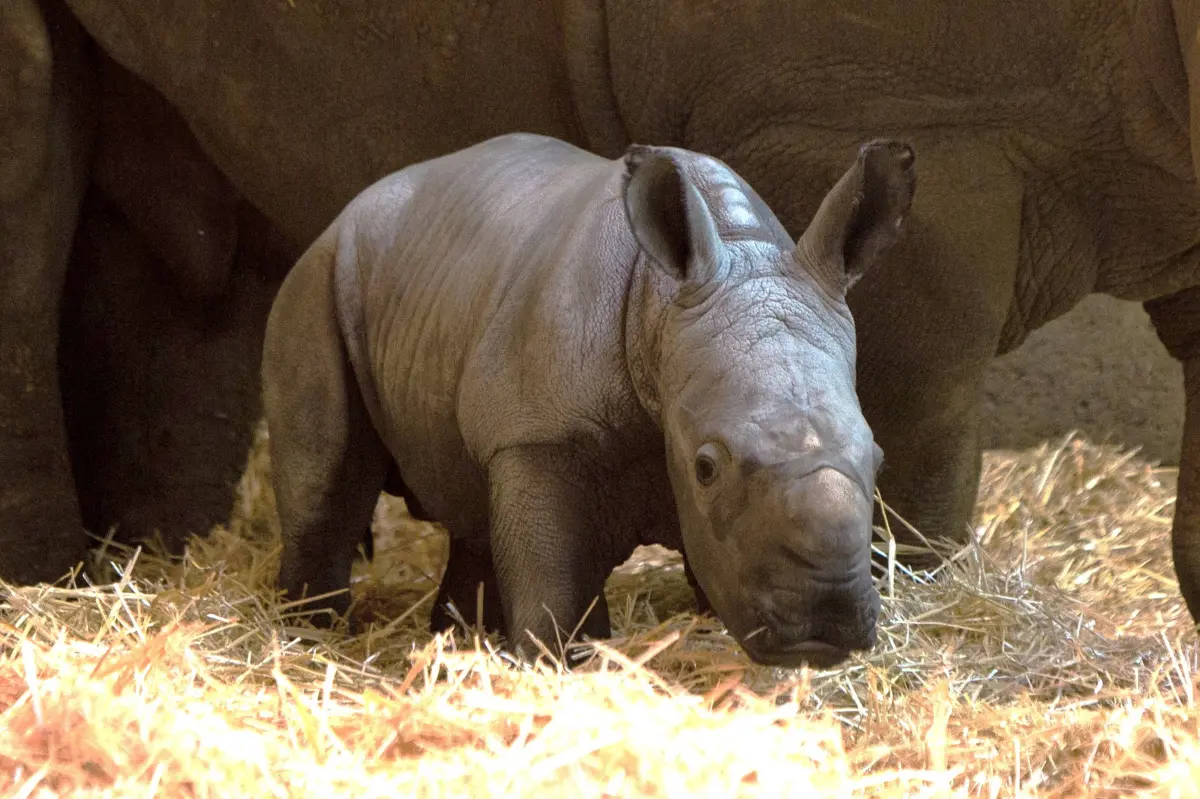

Whipsnade Zoo is celebrating the arrival of a Southern white rhinoceros calf, marking another important moment in the species’ conservation story.
The Bedfordshire zoo’s newest arrival is the 61st Southern white rhino calf born there since a dedicated breeding and conservation initiative began in 1970.
The male calf arrived on November 1 to parents Fahari and Sizzle. He is estimated to weigh 88 pounds — around 11 times the weight of an average human baby.
Keepers have named the youngster Mazinda in honor of the first Southern white rhino calf ever born in Europe, which arrived at Whipsnade Zoo in 1971.
A year earlier, in 1970, a herd of white rhinos was brought from South Africa to the conservation zoo under an agreement with the Natal Parks Board. The goal was to protect the threatened animals through a carefully managed breeding program in Europe.
Mark Holden, Hoofstock Team Leader at Whipsnade Zoo, said: “Whipsnade’s wide-open space and expertise in conservation breeding made it the ideal place to establish the program.
“Keepers did not realize at the time that one of the females was already pregnant. On June 24, 1971, she gave birth to the original Mazinda — the first white rhino calf born in Europe.
“We’re delighted to welcome another calf to Whipsnade Zoo, and Fahari is proving to be an excellent mother. Since his birth, the youngster has remained close to her in the rhino barn, growing stronger and more confident each day.”
Southern white rhinos once came perilously close to extinction, with their wild population falling to roughly 20 animals in South Africa by the end of the 19th century.
While conservation efforts have helped their numbers rebound, the species still faces serious dangers, including poaching and the loss of natural habitat. Current estimates suggest that approximately 17,500 white rhinos remain in the wild across Africa.
Holden added: “The first Mazinda was a trailblazer for her species as the first white rhino born in Europe. Now, more than 50 years later, as ZSL, the conservation charity that runs Whipsnade Zoo, marks its 200th anniversary, we’re honoring this significant birth by naming the calf after an important chapter in Whipsnade’s conservation history.”


