
Archaeologists have made a fascinating discovery at Tel Megiddo, a site steeped in biblical prophecy as the location of the ultimate battle between good and evil.
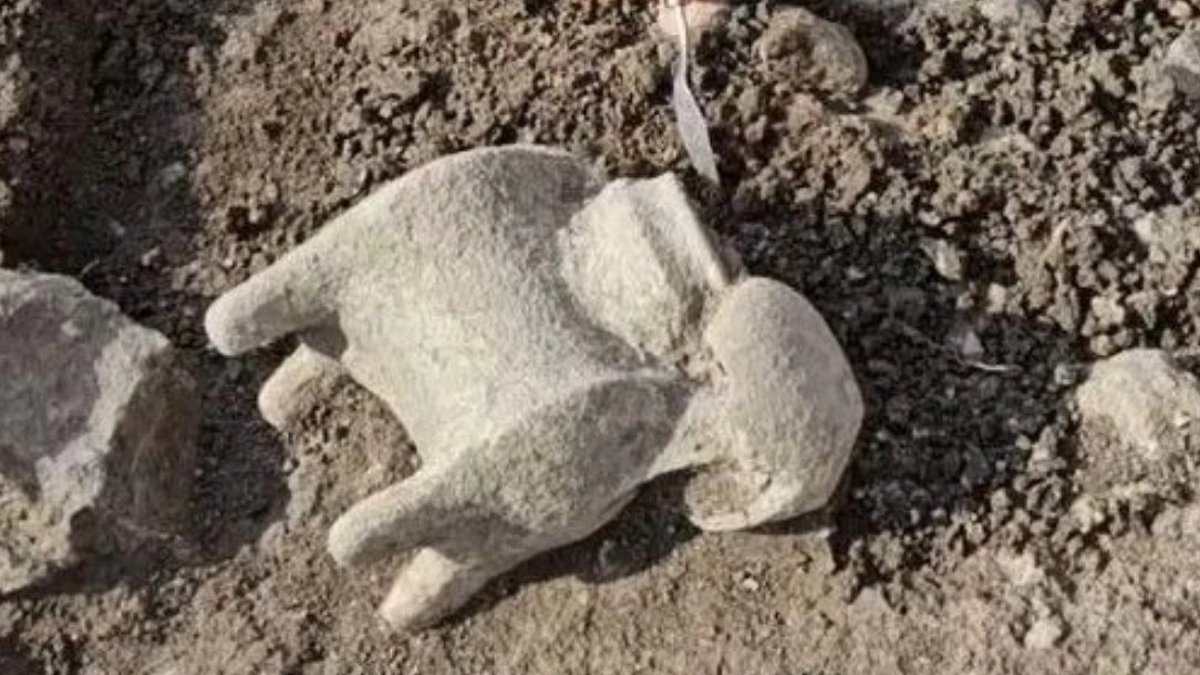
In the Jezreel Valley of Israel, excavations have brought to light 3,300-year-old artifacts crafted by the Canaanites. Among these finds are a miniature ceramic shrine and a complete ritual vessel in the shape of a ram, both shedding light on ancient ceremonial practices.
The Canaanites were the native people of the Levant region, which encompasses present-day Israel, Palestine, Lebanon, and parts of Syria and Jordan. Historically, they are recognized as the original residents of the ‘Promised Land,’ which was later sought by the Israelites for conquest.
Evidence of a burial site near the expansive temple complex of Tel Megiddo suggests that Canaanite agricultural communities practiced their rituals outside the city’s boundaries, hinting at a vibrant local folk cult.
Tel Megiddo itself was once a formidable fortress and a key military hub that commanded crucial trade routes for millennia. As a ‘tel,’ or a mound formed by successive layers of settlement, its history stretches back to the Chalcolithic era, around 4500 to 3500 BCE.
While these artifacts don’t confirm the literal occurrence of the events described in the Book of Revelation, they do indicate that Megiddo was a significant site for rituals and offerings, extending beyond its fortified center.
The ritual activity beyond the city walls, combined with Megiddo’s fortifications, mirrors the biblical portrayal of the site as a strategic battleground.
In Revelation, Armageddon is described as the ultimate confrontation between good and evil, so the presence of organized religious practices alongside defensive strength symbolically reflects its role as a stage for conflict and spiritual struggle.

Archaeologists working in Israel uncovered cult artifacts at the site known as ‘Armageddon’ in the Bible

The team believes the artifacts were used for drinking during rituals
Tel Megiddo is historically and biblically identified as the site of Armageddon, referenced in Revelation 16:16 as the location of the final battle between good and evil.
The blend of ritual activity beyond the city walls and its powerful fortifications mirrors this biblical depiction, reflecting Megiddo’s role as both a hub of influence and a stage for conflict.
‘Megiddo has been excavated for over a century,’ researchers with the Israel Antiquities Authority (IAA) said.
‘While long recognized as a key site in the study of ancient urbanism and Canaanite worship, the excavations we conducted east of the tel have revealed a new part of the matrix between the known settlement and the surrounding activity.’
The team also uncovered a 5,000-year-old hewn winepress, one of the oldest ever found in Israel, confirming that early inhabitants were producing wine at the dawn of urbanization.
Residential buildings found at the site revealed the winepress played a central role in the community, indicating that Megiddo was expanding far beyond the well-known boundaries of the tel, a mound formed by centuries of layered human habitation.
These findings reveal a city where ritual, civic organization and strategic power intersected, offering a tangible glimpse into the kinds of social and spiritual life that later inspired biblical imagery.
The preserved ritual vessels, shrines, and winepress together underscore Megiddo’s significance as both a religious and cultural center in the ancient Levant.

A 5,000-year-old hewn winepress, one of the oldest ever found in Israel, was also unearthed, confirming that early inhabitants were producing wine at the dawn of urbanization

The team unearthed residential buildings, suggesting the winepress played a central role in the community, and indicates that Megiddo was expanding far beyond the well-known boundaries of the tel, a mound formed by centuries of layered human habitation
Researchers believe the ritual vessels were used in libation ceremonies, pouring milk, wine or oil, likely by local farmers who could not enter the city’s main temple and instead offered consecrations at an open-air altar along their route to the city gate.
The intact state of the ritual vessel set is unprecedented in the region, offering archaeologists a unique view of how liquids were poured and consecrated in ancient ceremonies.
‘A small bowl attached to the ram’s body functioned as a funnel, while another handled bowl was likely used to pour the liquid into it during the ceremony,’ the researchers explained.
‘The ram’s head was shaped like a spout. Once filled, tilting the ram forward spilled the liquid from its mouth into a small bowl placed before it.
‘The vessel seems intended for pouring a valuable liquid such as milk, oil, wine, or another beverage, which could either be drunk directly from the spout, poured into a smaller vessel, or offered as a votive gift.’
Dr Amir Golani and Barak Tzin, the excavation directors, described the winepress as a ‘smoking gun’ for early wine production, confirming previous indirect evidence and placing winemaking within the context of early urban settlements.
The ritual finds illuminate a Canaanite folk cult that operated outside the city’s sacred complex, revealing how communities practiced religious ceremonies without full access to temple grounds.
Eli Escusido, Director of the IAA, called the discoveries a national treasure, noting that the excavations, layer by layer, reveal thousands of years of daily life, beliefs, and urban development in the Jezreel Valley.