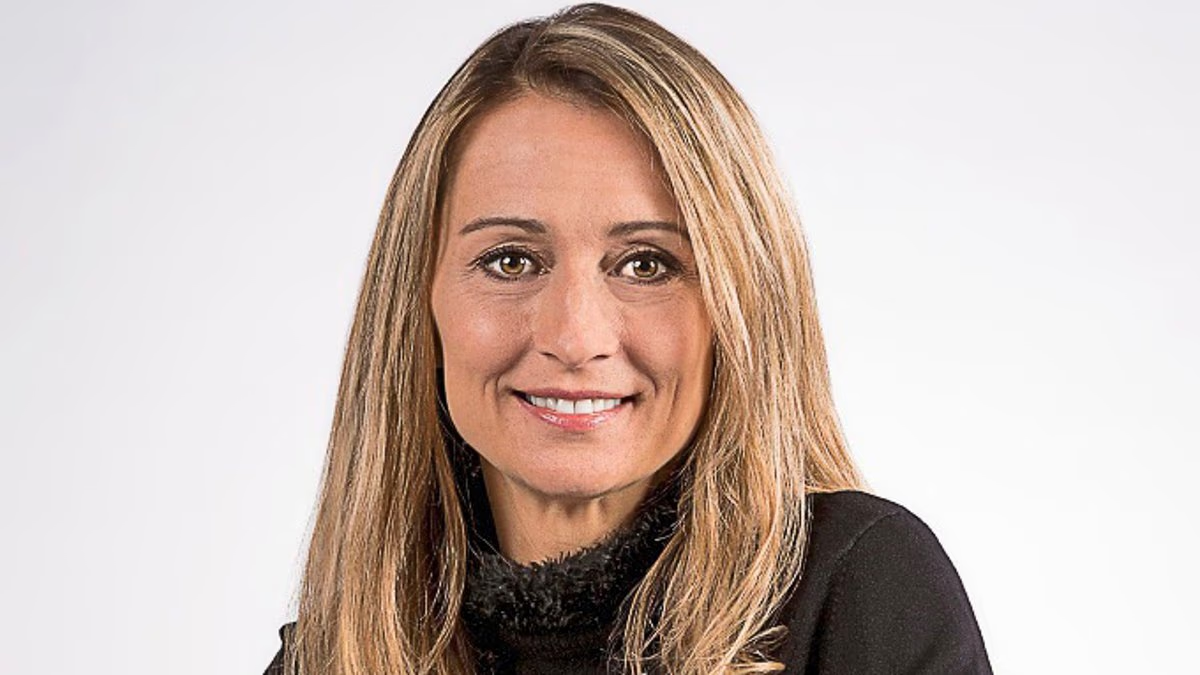
Colette Kress, who has stepped in as Nvidia’s interim chief executive, is expected to significantly reduce the company’s financial support for other artificial intelligence ventures.
Kress has reportedly been wary of former CEO Jensen Huang’s strategy of using the $3.9 trillion chipmaker’s resources to fund AI startups and accelerate the wider industry, The Wall Street Journal reports.
During Huang’s tenure, Nvidia used its enormous financial strength and influence in the technology sector to sign memorandums of understanding with major Wall Street asset managers. The aim was to attract institutional investors and private capital for data centers, chip factories and other computing infrastructure.
The proposed arrangements relied on specialized financing structures, with Nvidia’s AI processors serving as collateral, according to CNBC.
Nvidia took part in 129 venture capital transactions over the past year, a sharp increase from 49 deals in 2023. Those investments represented 27 percent of the total value of global venture capital deals, according to the Journal.
The company’s latest quarterly filing also showed that it had accumulated $36 billion in off-balance-sheet commitments, or backstops, tied to AI cloud-computing agreements.
The future of many of those arrangements is now uncertain. Founders and venture investors backing AI companies with little or no revenue have warned that a reduction in Nvidia’s equity investments could leave them struggling to secure enough funding to continue operating.
UBS analyst Tim Arcuri estimated that Nvidia’s retreat from the financing market could remove at least $50 billion from the sector, creating a serious funding shortage for young AI businesses as interest rates continue to rise.

Colette Kress became Nvidia’s interim CEO after Jensen Huang resigned last week

Under Huang, Nvidia used its financial power and industry dominance to pursue private funding for data centers, chip plants and other AI infrastructure
Huang, 63, resigned last week amid a controversy involving an alleged affair with a woman whom authorities suspect of having ties to Chinese espionage. Earlier this year, he had accelerated Nvidia’s funding efforts as competitors including Google parent Alphabet and Advanced Micro Devices began offering comparable incentives.
Nvidia formally unveiled its financing initiative in July. However, within weeks, Huang and Kress were reportedly reassessing whether some of the arrangements offered sufficient returns, according to the Journal.
The company used its strong balance sheet to help OpenAI secure a major data-center lease in Piketon, Ohio, with SoftBank’s SB Energy. But during negotiations in August, Nvidia reduced the size of its planned commitment after Kress raised concerns about the transaction, the Journal reported.
At the same time, Huang warned Nvidia’s finance team that major cloud providers were exploring alternative processors and seeking to reduce their dependence on the company. That shift left Nvidia facing a surplus of chip wafers and memory it had already agreed to purchase.
Huang instructed executives to create a framework for determining whether the guarantees Nvidia offered to smaller companies justified the financial risk.
By the end of that month, the chipmaker had put several proposed deals on hold.
The following month, as executives from emerging cloud companies gathered in Berlin for Nvidia’s flagship European AI conference, Huang declared that the company would no longer act as an unlimited source of funding.
People who attended the event told the Journal that Huang informed Nvidia’s partners they would have to pay upfront for the company’s sought-after graphics processing units rather than simply rent them.
‘You’re not charging what you should be charging,’ Huang reportedly said, arguing that Elon Musk was receiving better rates for Nvidia chips than the other companies.
‘I don’t even need you guys. I could just give all this capacity to Elon! Elon wants it,’ he added, according to two executives who heard the comments and another person briefed afterward.
It remains uncertain whether Kress will continue with that policy. The Journal noted, however, that she had previously questioned several of Nvidia’s deals and advocated tighter control over the company’s commitments.
British neocloud company Nscale is still in discussions with Nvidia and other potential investors as it seeks funding for a proposed $45 billion data center in West Virginia for Anthropic.
Nvidia also recently made an offer to Reflection AI, an open-source model developer valued at $25 billion, involving technology licensing and the recruitment of some of its employees, people familiar with the talks told the Journal.
The agreement had not been finalized before Huang’s departure.
The chipmaker has also been working to complete a major investment in Thinking Machines Lab, another open-source AI developer that would reportedly be valued at $40 billion as part of the deal, according to people familiar with the negotiations.
One person familiar with the matter said Thinking Machines remains confident the investment will be completed.
Both Reflection AI and Thinking Machines are currently spending vast sums each month on computing capacity to train their models, despite not yet having established reliable revenue streams.
MORE ON THIS: Robert Irwin Sparks Kiwi Backlash Over Australia’s Pavlova Claim
‘Big companies like Nvidia and Meta, they’re holding all the cards,’ Bob Lang, founder and chief strategist at Explosive Options, told CNBC.
‘When they decide that the game is over, that’s it—it’s going to be curtains for some of these smaller companies.’

Huang has acknowledged an affair with businesswoman Alice Huang, who authorities suspect may have acted as a Chinese spy

Supporters are campaigning for Huang to return after his successful 33-year tenure at Nvidia, despite the controversy surrounding the admitted affair with Alice Huang
The uncertainty comes as Nvidia’s market value has fallen 12.75 percent since Huang disclosed the affair and resigned. The company has also lost roughly 32 percent from its early-October peak of $5.8 trillion, reflecting a broader pullback across the AI sector.
The decline erased approximately $550 billion in market value during the week the affair allegations emerged, with total losses reaching about $1.9 trillion since the October high. Nvidia’s market capitalization closed at $3.9 trillion on Friday.
Yet Huang has reportedly been speaking with influential Silicon Valley figures about a possible return as CEO, sources involved in the effort told the Financial Times.
An ally of the former CEO told the publication that several Silicon Valley leaders were creating a “war room” to campaign for his reinstatement at Nvidia.
The group hopes to secure support from the White House, while Huang is said to be backing the effort privately, according to the source.
Investors, employees and technology executives have also voiced support for Huang, pointing to his 33 years of leadership and the vision that helped make Nvidia a central force in the AI revolution.
An open letter urging Huang’s return has reportedly attracted the backing of Elon Musk, Epic Games CEO Tim Sweeney, nearly 9,000 current and former Nvidia employees, and more than 83,000 investors.

Huang has also faced allegations of affairs with Nvidia Vice President of Healthcare Kimberly Powell and another unidentified employee
The campaign may face opposition. Treasury Secretary Scott Bessent called on Sunday for a “dramatic shakeup” of Nvidia’s leadership, potentially complicating efforts to bring Huang back.
President Donald Trump has continued to speak favorably about Huang since the allegations emerged and the executive stepped down, describing him as “a tremendous talent.”
Trump has also said Huang was right to resign if Alice Huang is ultimately confirmed to have acted as a spy.
‘It’s sad. He’s a tremendous talent. He did something nobody else did. He has a chip that’s so complex, so brilliant, you can’t copy it. What he’s done is incredible, he built an incredible company,’ Trump told CNN’s Stephen A. Smith on Thursday.
When Smith asked directly whether Huang had made the right decision by stepping down, Trump paused before responding.
‘The big thing was, was the woman a spy? If the woman was a spy, yes, if the woman was not a spy perhaps it would be different,’ the president said.
Alice Huang is an executive at Singapore-based data-center company Megaspeed, which US authorities suspect of helping move restricted Nvidia chips into China.
Authorities also suspect that she was instructed to obtain sensitive information from Huang and influence Nvidia’s business decisions in ways that could improve China’s access to the company’s processors.

Nvidia maintains strict workplace rules governing relationships between colleagues, a policy that could complicate any attempt to bring Huang back; he is pictured with his wife
Huang has also been accused of having a second affair with Nvidia Vice President of Healthcare Kimberly Powell, as well as a third relationship with another unidentified employee. He has only acknowledged the relationship with Alice Huang, who is not related to him.
Powell is married, as is Huang, and Nvidia has strict policies concerning relationships between employees, especially those involving managers and subordinates.
Those rules could make Huang’s potential return especially difficult. A source involved in the reinstatement campaign told the Financial Times that “having an affair with a subordinate is a fireable offense.”
Unlike some other Silicon Valley founders, Huang does not hold a controlling stake in Nvidia, meaning he would not be able to overrule a decision by the company’s board.
Our News Outlet has contacted Nvidia for comment.