
The security of voting systems frequently takes center stage during elections, yet concerns about systematic electoral manipulation remain a constant issue.
In the latest episode of The Drill Down Podcast, the conversation shifts away from stolen ballots and other electoral mischief. Instead, it delves into the intricate process of drawing and apportioning congressional districts. Recent developments have sparked debates about the current methods and whether they remain the most effective approach.
Host Peter Schweizer poses an intriguing question: “What if the rigging of an election occurs long before any votes are cast?”
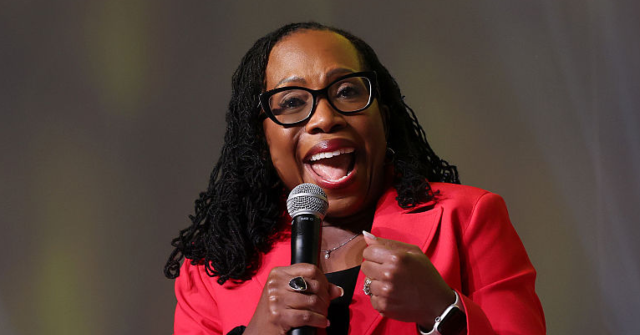
Supreme Court Justice Ketanji Brown Jackson recently drew parallels between the creation of “minority-majority” districts and the access requirements of the Americans with Disabilities Act (ADA). She pointed out that the ADA didn’t necessarily imply ongoing discrimination but required necessary adaptations. Similarly, she argued, districts created to enhance minority voting strength needn’t prove current discrimination. In her comparison, she provocatively likened Black voters to being “disabled” in this context.
Schweizer encapsulated the opposing view to forming minority-majority districts as: “Creating a new injustice to compensate for a past one isn’t the solution.”
The Supreme Court is poised to deliver a decision on a case that challenges the racial basis of congressional district apportionment, potentially causing significant political upheaval. Schweizer distinguishes minority-majority districts from gerrymandering, which strategically amplifies a political party’s influence. However, since Black voters are predominantly Democratic, the effect is comparable. This distinction draws from the 1965 Voting Rights Act, mandating certain states to establish districts where Black voters have significant influence, as a measure against historical Jim Crow discrimination in the South.
As of the 119th Congress, there are 148 majority-minority districts in the U.S. House of Representatives, which represent approximately 34 percent of the total 435 districts. Not all of these districts are the result of specific drawing to increase minority group voting power, it must be noted. Yet, overall, Democrats represent 122 of these districts, while Republicans represent only 26.
Republicans have argued for years that minority-majority districts should no longer be required because the past discrimination they were meant to eliminate no longer happens. Schweizer says the case raises the question: “How relevant is our history to the way we apportion congressional seats today?”
And that raises another news story involving the 2020 Census. The decennial census is supposed to be a literal count of every person in the U.S., although statistical estimates have long been used for practical reasons to achieve that count, which determines each state’s total share of the 435 seats in Congress, as well as its share of federal funds under various programs.
The former director of the Census Bureau, John Abowd, introduced an algorithm called “Differential Privacy” for the 2020 Census, and the Bureau itself revealed in 2022 that this algorithm caused overcounting in several Democratic states and undercounting in Republican states. Blue states including Delaware, Massachusetts, New York, Minnesota, and Rhode Island were overcounted. States like Florida and Texas were undercounted. Republicans believe the miscount led to their party having nine fewer seats than should have been apportioned.
This forms the context for the efforts now happening in Texas and California to redraw their state’s districts. Texas is allowed to do this under the state’s constitution; California Gov. Gavin Newsom is asking voters through referendum to temporarily suspend the state’s constitution so that the legislature can re-draw California’s congressional districts and offset Texas’s move. Currently, California sends 43 Democrats to Congress and just 9 Republicans.
“In California, if Republicans were a race, people would be crying racism!” says co-host Eric Eggers.
The Census Bureau has acknowledged that the “Differential Privacy” algorithm it used, which remains secret, caused errors. The irony, as Eric Eggers notes, is that Florida was undercounted despite having one of the largest populations of Black people in the nation.
That undercount affected not only how seats in Congress were assigned, but each state’s share of federal funds that are allocated based on population as well. Estimates are that Republican states lost out on about $90 billion in federal funding formulas because of the miscount in the 2020 Census.
Schweizer admits not being a statistics nerd but notes there must be greater transparency when the Census Bureau tweaks the ways it estimates population since a complete physical headcount is not possible. The way it was done in 2020, he says, “leads you to believe there was an attempt to skew the result for political advantage.”
Both stories have a common assumption, that Black voters are somehow “disabled,” which Eggers says is “incredibly insulting to them.”
Schweizer says that at least gerrymandering is done by state politicians who were elected, and he believes it might be better than relying on a formula cooked by a bureaucrat in Washington.
“Let’s just go back to the brazen, bareknuckle politics” that was used before, he says.
For more from Peter Schweizer, subscribe to The DrillDown podcast.