
Share this @internewscast.com
In a dramatic turn of events, the government decided to abandon plans for increasing specialty doctor training positions after the British Medical Association didn’t cancel the planned strike set for next week.
On Monday, Sir Keir Starmer issued a stern warning, stating he would eliminate the additional training spots unless the union postponed the resident doctors’ strike within 48 hours and presented a pay proposal to its members.
The prime minister criticized the medical professionals, saying they were ‘recklessly’ dismissing an offer that could have allowed some of them to earn over £100,000 annually.
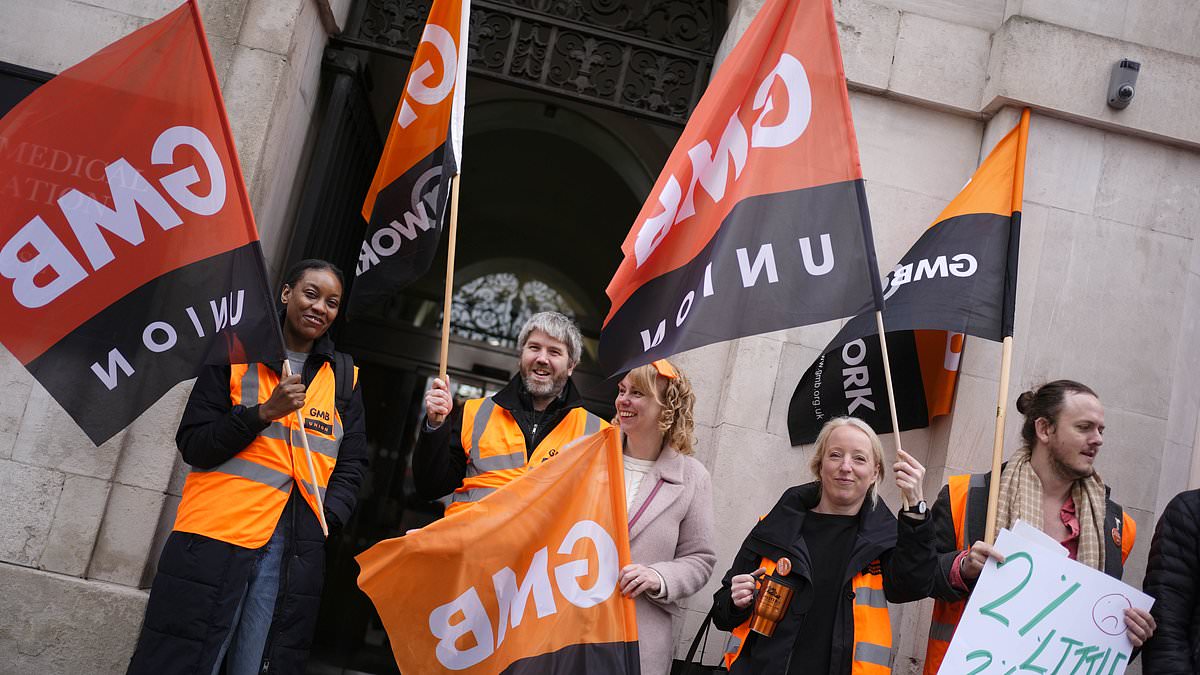
As a result, the doctors are set to strike for six days starting Tuesday, right after the East bank holiday weekend, as they push for a 26 percent pay increase.
Last week, the Resident Doctors Committee (RDC) turned down a proposal that included a pay raise of up to 7.1 percent for this year, without even bringing it to a member vote.
If accepted, the proposed deal would have resulted in a cumulative pay increase of 35 percent over the last three years.
The ‘hypocritical’ union has said that inflation caused by the Iran war means they need a bigger rise despite offering its own staff an uplift of just 2.75 per cent.
Sir Keir gave the BMA 48 hours to call off the strikes and said failing to do would lead to the Government withdrawing an offer to create at least 4,000 new specialty training posts in the NHS, for which resident doctors can apply after their first two years of training.

The Government last night scrapped plans to expand speciality doctor training places after the British Medical Association failed to call off next week’s strike

Next week’s walk out will be the 15th round of strikes by resident doctors in England since 2023 and is expected to cost the NHS more than £250million in overtime payments and lost activity (Medics are pictured striking on March 27)
Next week’s walk out will be the 15th round of strikes by resident doctors in England since 2023 and is expected to cost the NHS more than £250million in overtime payments and lost activity.
A Department of Health and Social Care Spokesperson said it would now follow through with the threat and axe 1,000 places planned for this year.
It said: ‘It is disappointing that the BMA has decided to press ahead with strikes next week, despite conversations we have been having in recent days in a bid to protect the NHS from strikes.
‘This government offered resident doctors a generous deal to improve their pay, career progression and working lives that would have seen resident doctors on average 35.2 per cent better off than they were four years ago.
‘Because the BMA Resident Doctor Committee has not agreed to call off these strikes and put an offer to members, we will now not be able to deliver the 1000 extra training places which the BMA asked for.
‘These posts would have gone live this month, but as systems now need to prepare for strikes and more uncertainty, it simply won’t be operationally or financially possible to launch these posts in April in time to recruit for this year – this won’t impact the overall number of resident doctors and the NHS will be there for patients when they need it.
‘Our attention and that of leaders across the NHS is now on protecting patients, staff and our NHS by minimising disruption to the health service.’
The BMA issued a list of pay and job demands of Government ‘to avert strike action’ on Wednesday and said the Government’s ‘threats’ to remove training places in the current offer ‘needlessly and avoidably inflamed the dispute’.

The BMA issued a list of pay and job demands of Government ‘to avert strike action’ on Wednesday (Protestors are pictured in London last week)

Dr Jack Fletcher (pictured), chairman of the BMA’s resident doctors’ committee, accepted it was the government’s ‘prerogative’ to withdraw the jobs but warned it could backfire if patients suffer
Dr Jack Fletcher, chairman of the BMA’s resident doctors’ committee, accepted it was the government’s ‘prerogative’ to withdraw the jobs but warned it could backfire if patients suffer.
Speaking on BBC Radio 4’s Today programme on Tuesday, Dr Fletcher said: ‘Making threats about withholding jobs from doctors and essentially stopping doctors from caring for patients, I don’t think is a realistic way or a credible way of ending this dispute. It will end in a negotiating room.’
Health secretary Wes Streeting said the pay offer meant that ‘for the most experienced resident doctors, basic pay would have increased to £77,348 and average earnings would have exceeded £100,000’.
First-year doctors fresh out of medical school would earn on average £52,000 a year, £12,000 more than three years ago.
This is more than many NHS staff in other roles will earn at the peak of their career.
Sir Keir said the offer was made after ‘months of collaboration with the BMA’ and their refusal to now accept will leave patients ‘paying the price’.
He added: ‘That is why walking away from this deal is the wrong decision. It is reckless.’
Dr Fletcher accused ministers of ‘shifting the goalposts’ with their latest offer.
He added: ‘The Government made very late changes to the pay offer, reducing the pay investment and stretching it over a longer period in a way that had not been previously talked about.
‘Creating posts and improving patient care should not be dependent on calling off a strike.’
Mike Prentice, national director for emergency planning at NHS England, said that the timing of the action will lead to ‘significant strain’.
In a letter to health leaders, he wrote: ‘We expect this round to be challenging as there is a shorter notice period, bank holidays within the notice period and the action itself falling during the Easter holidays. This will represent a significant strain on staffing resources to provide safe cover.’