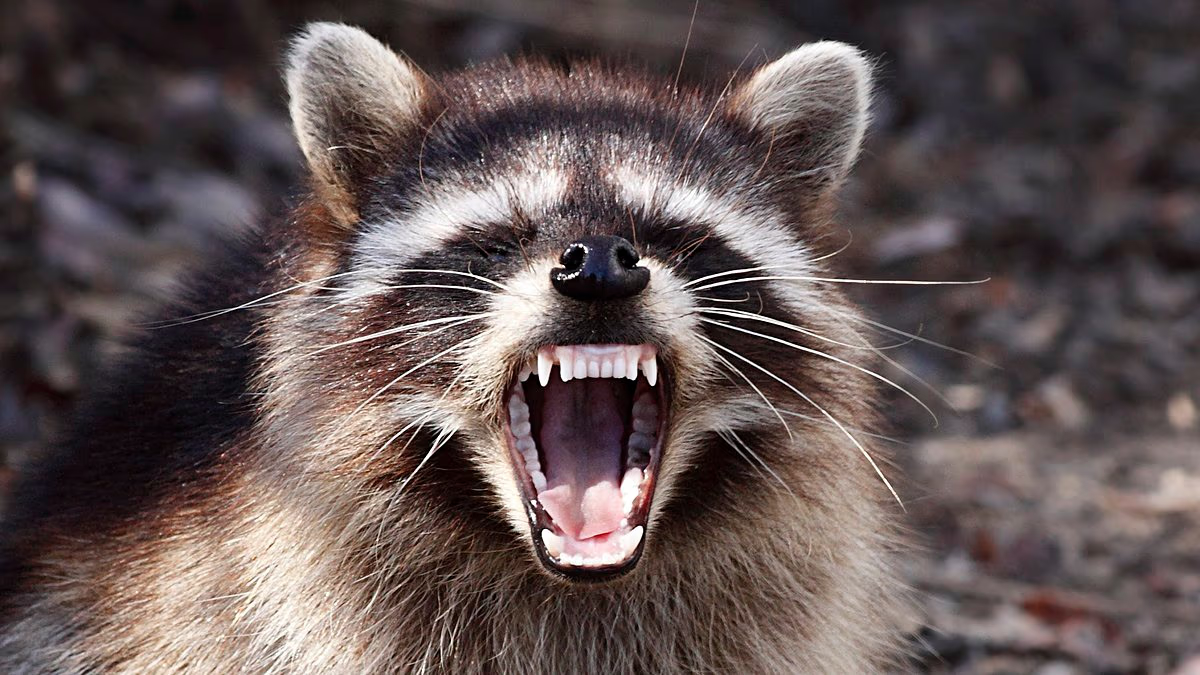

A growing rabies hotspot has emerged along the US East Coast, with officials in Rhode Island reporting nearly twice as many infected animals as the state typically records in a full year.
Rabies is a viral disease that attacks the brain and nervous system. Once symptoms appear, the infection is almost always fatal in both animals and humans. However, prompt post-exposure treatment can prevent the disease from developing after a bite, scratch or other contact with infected saliva.
Two raccoons tested positive for rabies last week, bringing Rhode Island’s total number of confirmed cases this year to 48. The affected animals have included bats, skunks, a cat, a coyote and a woodchuck.
The rabid animals were found across Rhode Island, the nation’s smallest state. Health Department officials said at least 32 people had required treatment after possible exposure to the virus.
Over the past five years, Rhode Island recorded an average of 25 rabies cases annually. In 2025, officials identified 30 rabid animals.
Both of the latest cases were discovered within 20 miles of Providence, the state capital and home to nearly 200,000 people.
The other cases reported in 2026 have been scattered throughout Rhode Island, leaving public health and wildlife officials searching for an explanation for the increase.
State Veterinarian Scott Marshall said: “We really don’t have an explanation,” adding that rabies cases had remained relatively steady throughout the year without showing a clear geographic or seasonal pattern.

Two raccoons were confirmed to have rabies in Rhode Island in early November 2026 (Stock Image)

Rhode Island has recorded nearly twice its five-year average of rabid animals, while officials have yet to identify the cause
The rise in Rhode Island rabies cases began in March and has been driven largely by raccoons. That differs from some other states experiencing increased rabies activity, including California, where bats have been a major concern.
Of the 48 confirmed cases, 27 involved raccoons. Fourteen bats, four skunks, one cat, one coyote and one woodchuck also tested positive for the virus.
Most of the infected animals were found dead or on the ground. Many were discovered after encounters with neighborhood pets, prompting urgent calls for veterinary advice and possible rabies treatment.
Rabies can be prevented when people or pets receive appropriate post-exposure treatment as soon as possible after being bitten, scratched or exposed to saliva from an infected animal. The virus can enter the body through an open wound or through the eyes, nose or mouth.
MORE ON THIS: Man in Wizard Hat Attacks TPUSA Group at Texas University Event
Leanne Garzone, an animal control officer and supervisor in North Smithfield, told The Brown Daily Herald: “When you have an animal that’s been in contact with a suspected rabies case, it needs to be vaccinated within 96 hours.”
The earliest symptoms in people commonly include fever, weakness and headache. They may not appear until days or even weeks after exposure.
As the disease progresses, symptoms can include tingling or discomfort near the bite, anxiety, agitation, unusual behavior, hallucinations and trouble swallowing. Once these signs begin, treatment cannot cure the infection.
Animals may initially show vague symptoms such as vomiting or breathing difficulties before developing more noticeable neurological problems.

Skunks, cats, bats, coyotes and woodchucks are among the animals that have tested positive for rabies in Rhode Island this year (Stock Image)

Authorities urge pet owners whose animals encounter a rabid animal to seek treatment within 96 hours of contact
Rabies concerns have increased across the US this year. The Centers for Disease Control and Prevention said calls about possible exposure were up 17 percent through August alone.
The CDC also reported that at least eight states had administered more post-exposure treatments than at the same point in 2025.
The agency did not identify the states experiencing the increase.
Rhode Island health officials suggested that increased testing could partly explain the sharp rise in cases recorded in 2026.
Another theory—that unusually dry conditions had forced animals to expand their ranges and come into contact with infected wildlife—lost support after rabies levels remained unchanged when local drought conditions ended.
Rhode Island is one of several East Coast states facing renewed concern about rabies this year, alongside Maryland and North Carolina.
The CDC has tied the increase in human exposures to several specific incidents. In North Carolina, a mobile petting zoo was linked to four baby goats infected by a rabid skunk, potentially exposing nearly 300 people to the virus.
In Maryland, multiple attacks by rabid beavers at state parks led to temporary closures and emergency treatment for people who were bitten.


