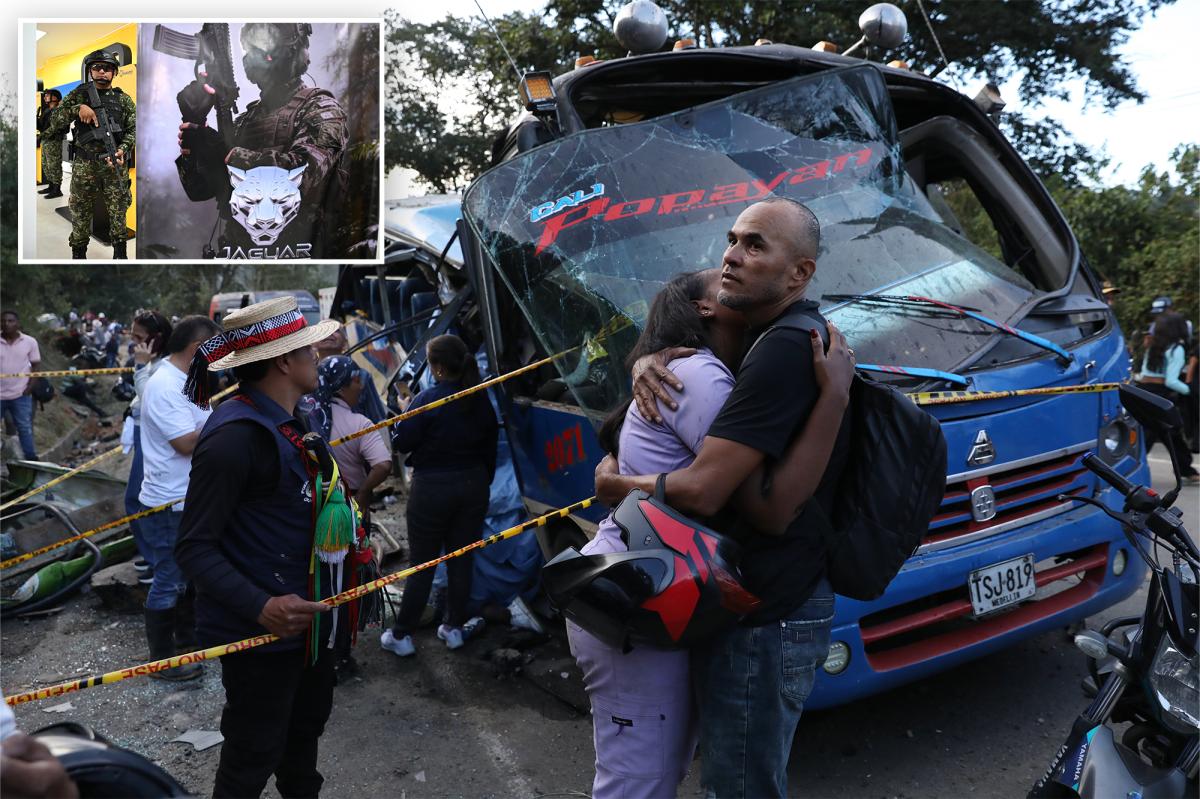


The International Committee of the Red Cross reported on Tuesday that Colombia has experienced its most severe impact on civilians from armed conflict in the past year, marking the worst in ten years as the country’s security situation worsens.
According to the humanitarian organization, the number of individuals forced to flee due to clashes between criminal gangs, rebels, and the Colombian state doubled in 2025, soaring to 235,000 displaced persons.
Additionally, there was a 99% surge last year in the number of residents subjected to lockdowns by rebel factions in small towns and villages across the nation.
Colombia has been plagued for decades by conflicts involving rebel groups and drug traffickers vying with the government for control over rural territories, particularly those important to the cocaine trade.
The 2016 peace agreement between the Colombian government and its largest rebel faction, the Revolutionary Armed Forces of Colombia (FARC), initially contributed to a reduction in rural violence.
However, the security landscape has since deteriorated across many regions, as smaller factions seek to dominate areas previously controlled by FARC, imposing taxes on local businesses and intimidating civilians who challenge their authority.
“The humanitarian situation in 2025, is the result of a progressive deterioration that the ICRC has warned about since 2018,” said Olivier Dubois, the ICRC’s chief of mission in Colombia.
For the past four years, the administration of President Gustavo Petro has tried to reduce violence in rural Colombia by staging peace talks with the nation’s remaining rebel groups and agreeing to ceasefires with some of them.
But critics say that the rebel groups have used these ceasefires to regroup, rearm and strengthen their grip over communities, where children are being increasingly recruited into the ranks of criminal groups.
Political violence has also worsened in Colombia, where a presidential candidate was shot in the head last year during a rally in the capital, Bogota, and later died from his injuries.
Authorities have blamed one of the nation’s rebel groups for the attack.
In February, the United Nations Human Rights office in Colombia said that the security situation in the country was “backsliding” with murders of human rights defenders increasing by 9% last year.
The Red Cross also noted Tuesday that in 2025 there were 965 people killed or injured by explosive devices, including landmines and drones, 33% more cases than the previous year.
The Red Cross urged the parties in Colombia’s armed conflict to respect the rights of civilians, and protect those who no longer wish to take parts in hostilities.
“Respect for international humanitarian law is not optional,” the humanitarian group said.


