
Share this @internewscast.com
Eating Japanese-style noodle soups more than once a week can lead to an early death, warn scientists.
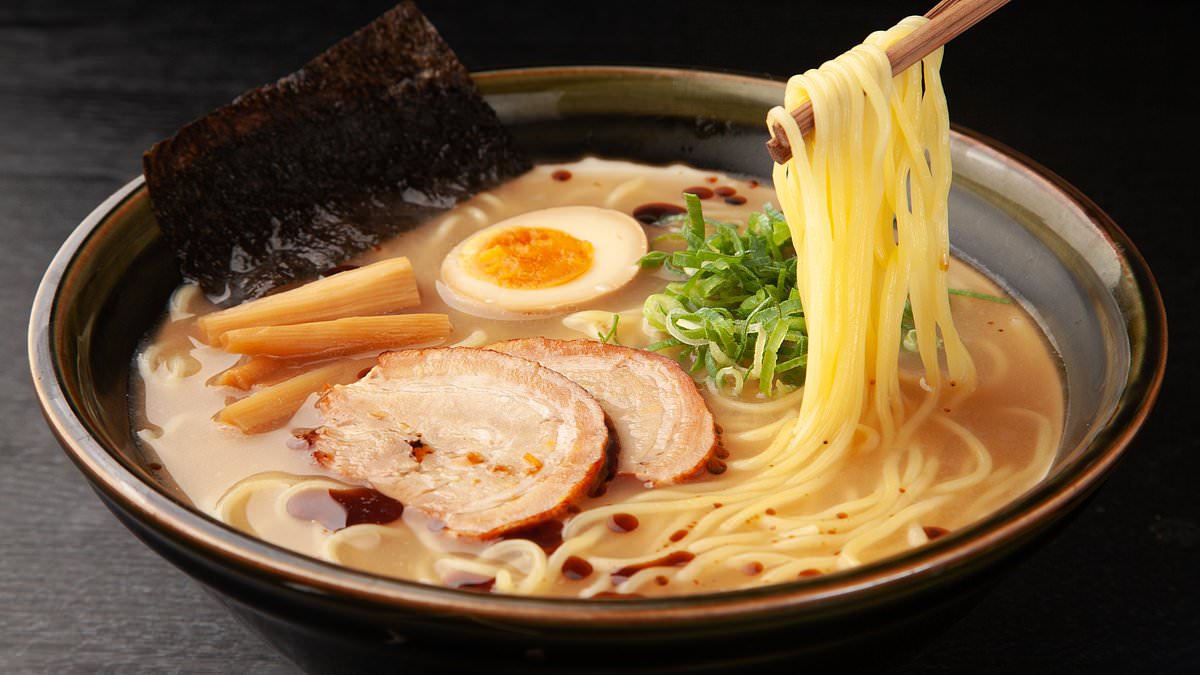
Ramen, a dish that merges noodles with a hot, typically pork-based broth, slices of meat, seaweed, and vegetables, is a traditional Japanese dish that has become a popular lunch and dinner choice in the UK.
But a study published in the Journal of Nutrition, Health and Ageing linked the savoury meal to an increased risk of premature death in some people.
Researchers surveyed 6,500 participants—comprising 2,361 men and 4,385 women—aged 40 residing in the Yamagata region of Japan, splitting them into four categories based on their weekly ramen consumption.
These were: less than once a month, one to three times a month, once or twice a week, and three or more times a week.
The study noted that most participants ate ramen at least once a month, with nearly one in three eating it weekly.
The researchers found that the people who ate ramen often tended to be younger men who smoked, drank alcohol and who were overweight.
They were also more likely to have comorbidities such as diabetes or high blood pressure.

Ramen is a traditional Japanese dish which has caught on in the UK
The researchers also asked respondents how much of the ramen broth they would typically drink, splitting it into ‘up to half’ and ‘at least half’.
The researchers conducted a follow-up on the group after four and a half years, utilizing official death records to determine the cause of death in cases of fatalities.
They discovered that 145 people had died, 100 from cancer, and 29 from heart disease.
Upon analyzing the data, the researchers found that individuals who consumed at least half of the salty ramen soup, combined with frequent ramen consumption, had a heightened risk of death.
Moreover, those consuming ramen more than three times a week and who regularly drank alcohol faced a threefold increased risk of death compared to those who ate ramen less frequently.
The conclusion drawn was that men below the age of 70 who regularly consumed ramen were at an elevated risk of death, primarily due to the high salt content in ramen broth.
‘Frequent intake of ramen noodles might be associated with mortality risk in men, aged less than 70 years and those who consumed over 50 per cent of the noodle soup and alcohol,’ they wrote.
‘Ramen noodles and their soup contain high salt content; therefore, frequent intake can lead to high amounts of sodium, which may increase the risk of salt-related diseases, such as stroke and gastric cancer.

The salty broth is served with noodles, meat and vegetables
‘This study showed that Japanese community residents frequently consume ramen noodles and high intake is associated with various comorbidities.’
But before you cancel your dinner reservation at one of the many Japanese ramen restaurants which have opened across the UK, there are several limitations surrounding this study.
Despite the large sample size, it is impossible to say that regularly eating ramen leads to early death.
It was an observational study, and relied on food diaries which can only offer a snapshot of someone’s dietary habits—seasonally what people eat changes, and if they had been asked to change their diet for medical reasons after completing the survey, the data they provided is no longer accurate.
The way that the data was collected—in self-reported diaries—also means that there is no benchmark for how much ramen constitutes a serving, or what ingredients or other foods were consumed alongside it.
‘The questionnaire relies on self-reported data and broadly defined categories, lacking details on portion size and type of ramen consumed. This may result in discrepancies between reported and actual intake.
‘Information on factors, such as the amount of ramen consumed per serving (g), intake of other foods, and exercise habits was unavailable,’ write researchers.
The third limitation was that there was a lack of data relating to existing conditions, or comorbidities, such as chronic kidney disease or cancer, nor was it recorded if the subjects exercised, and if so, how much.
Despite these, the researchers still believe there is enough evidence in their findings to advise people to limit ramen to occasional meals, and avoid drinking too much of the soup if they are also drinking alcohol with their meal.
Excess salt has long been linked with poor health, life-limiting illnesses—and death.
Eating too much salt is the main cause of raised blood pressure, which increases the risk of heart attack and stroke.
Last year, the World Health Organisation (WHO) found 52 of the 53 countries in its European Region are consuming too much salt, including the UK.
Health officials say processed food and street food, such as that purchased from supermarkets, takeaways and trendy market sellers are often the main ‘culprits’.
High blood pressure—which can be caused by excess salt—is the leading risk factor for death and disability in Europe, causing almost a quarter of deaths and 13 per cent of disability.
It usually has no symptoms, meaning it is vital to have regular checks.
Those with high blood pressure, also known as hypertension, can be given drugs and lifestyle advice to help bring it under control.
NHS guidelines suggest adults should consume no more than 6g of salt per day, the WHO, however, recommend just 5g.
A diet too high in salt is linked to high blood pressure, hypertension, as the sodium in salt leads to more water in your blood vessels.
Studies have suggested a high intake of salt is associated with a 23 per cent increase of the risk of stroke and a 14 per cent increase of the risk of cardiovascular disease.
Other research has indicated that high salt intakes cause stiffening of blood vessels and arteries.