
A series of Iranian drone strikes targeting CIA-linked facilities in the Gulf has led US intelligence analysts to examine whether Moscow may have helped Tehran with targeting data or more sophisticated drone capabilities, according to people familiar with the matter.
The individuals, who requested anonymity because they were discussing sensitive national security assessments, stressed that US intelligence agencies have not made a definitive determination about any Russian role in the attacks on CIA sites.
Still, they said the accuracy and impact of the strikes, combined with Russia’s wider technical cooperation with Iran, have raised questions among analysts about whether outside assistance was involved.
Reuters and other news organizations have previously reported, and US officials have acknowledged, that Russia has supplied targeting-related assistance and other support to Iran for attacks on American interests across the Gulf region. However, the intelligence review focused specifically on possible Russian support for the CIA facility strikes has not been reported before.
At least two CIA locations were hit in March, according to reporting by Reuters and other outlets. One was the CIA station in Saudi Arabia, housed inside the US Embassy in Riyadh, while another site was located in eastern Iraq.
Several sources said other CIA-related locations may also have been struck, though they declined to provide further details about those incidents.
An internal assessment from a Western intelligence service, described by a regional official who had access to the document, found that Russia likely contributed in some way to the targeting of CIA facilities in the region. The official spoke on the condition that the agency behind the memo not be identified.
Two Western officials based in the Gulf, both briefed on intelligence reporting, said analysts believed the strike in Saudi Arabia involved two Iranian Shahed drones that had been upgraded with Russian enhancements.

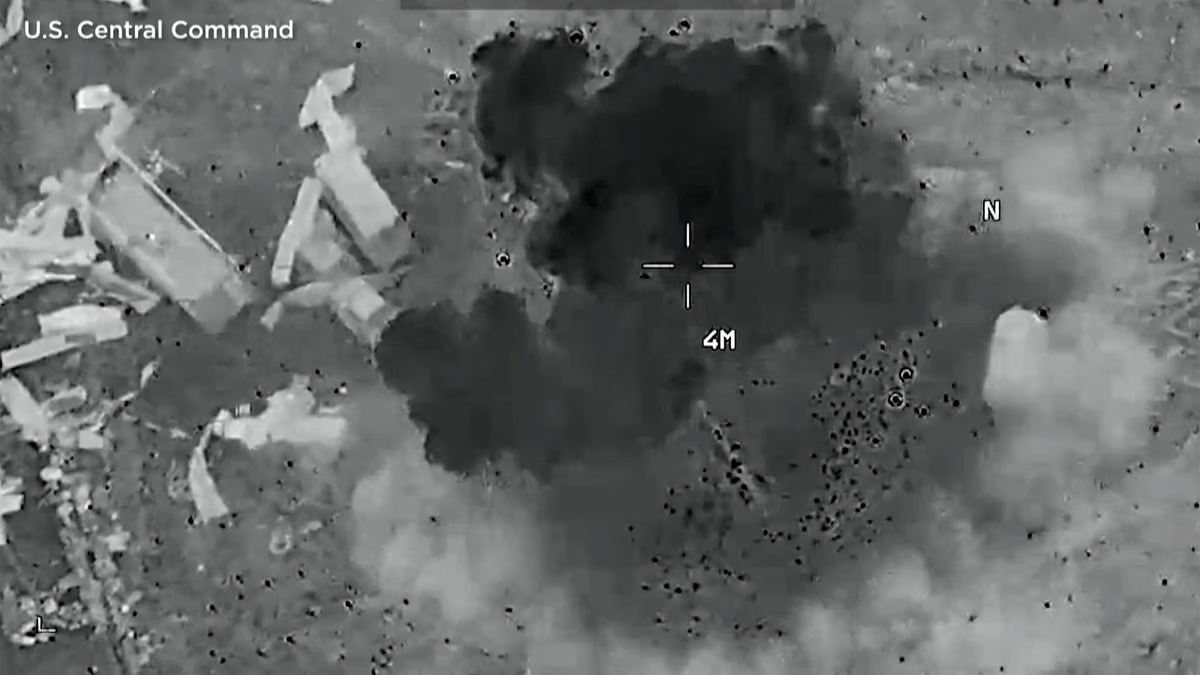
This screen grab made on July 23, 2026 from handout video footage released by the US Central Command (CENTCOM) on July 22, 2026 shows US forces launching what the military says are precision strikes against Iran for the twelth consecutive night

This screen grab taken from video footage released on July 16, 2026 by Iran’s Revolutionary Guards (IRGC)’s Sepah News website shows a missile being launched from an undisclosed location towards US targets in Jordan, Kuwait and Bahrain
One of the aircraft blew a hole through a vulnerable part of the embassy’s exterior and the second flew through the opening and detonated, they said. No deaths or injuries were reported.
While Russian assistance for Iran is longstanding, given the countries’ close ties, specific targeting of sensitive CIA sites would indicate Moscow is willing to go further in disrupting US operations as Washington struggles to bring the Iran war to an end.
Concerns that Russia could be providing targeting data to Iran intensified this weekend after strikes on a US air base in Jordan, where Iran struck army barracks with ballistic missiles, killing two soldiers.
ALSO READ: Humboldt County Mother Found Dead After Being Trapped in 20-Foot Well
The White House referred a request for comment to the CIA, which declined to provide one.
Iran’s mission to the UN, the Russian Defence Ministry and the Saudi government did not respond to requests for comment.
The two Western officials in the region said Russia has helped Iran improve its Shahed drones’ ability to reach targets, and said analysts suspected that Iran used these versions in its strike in Riyadh.
Russia, said a separate source, has helped Tehran improve the accuracy of its Shahed-136s by supplying a satellite navigation system — the Kometa-M — that experts say is far more accurate and harder to jam than the one produced by Iran.
The Wall Street Journal first reported in March that Russia has provided the Kometa-M to Iran. The Kremlin denied the report, calling it ‘fake news.’

File image: Boats float near the coast of Bab el-Mandeb, Yemen April 2, 2026
CIA facilities overseas include the agency’s main offices in individual countries that traditionally are housed in embassies and are called stations.
Additionally, the CIA maintains offices, safe houses, logistics hubs and sites involved in surveillance or other operations.
The locations of those sites are closely guarded secrets.
The sources declined to disclose the exact number or locations of CIA facilities hit by Iranian drones. One source put the number at ‘more than one and fewer than a dozen.’ A second source said several facilities were hit.
US intelligence analysts have been looking into whether Iran relied on Russian targeting data for the embassy attack, said the sources.
Doubts remain, however. Some of the sources warned that Iran could have been aiming for the US embassy generally and by chance struck the CIA station.
Some analysts have concluded that few nations beyond Russia would have the means to acquire and the interest in weaponizing such sensitive targeting intelligence against the US, according to the sources.
Daniel Hoffman, a former CIA station chief and undercover operations officer, said it would not be surprising for Moscow to help Tehran target CIA facilities given their close strategic partnership.
‘They share an interest in trying to reduce or eliminate US influence altogether in their self-designated spheres of influence,’ he said.