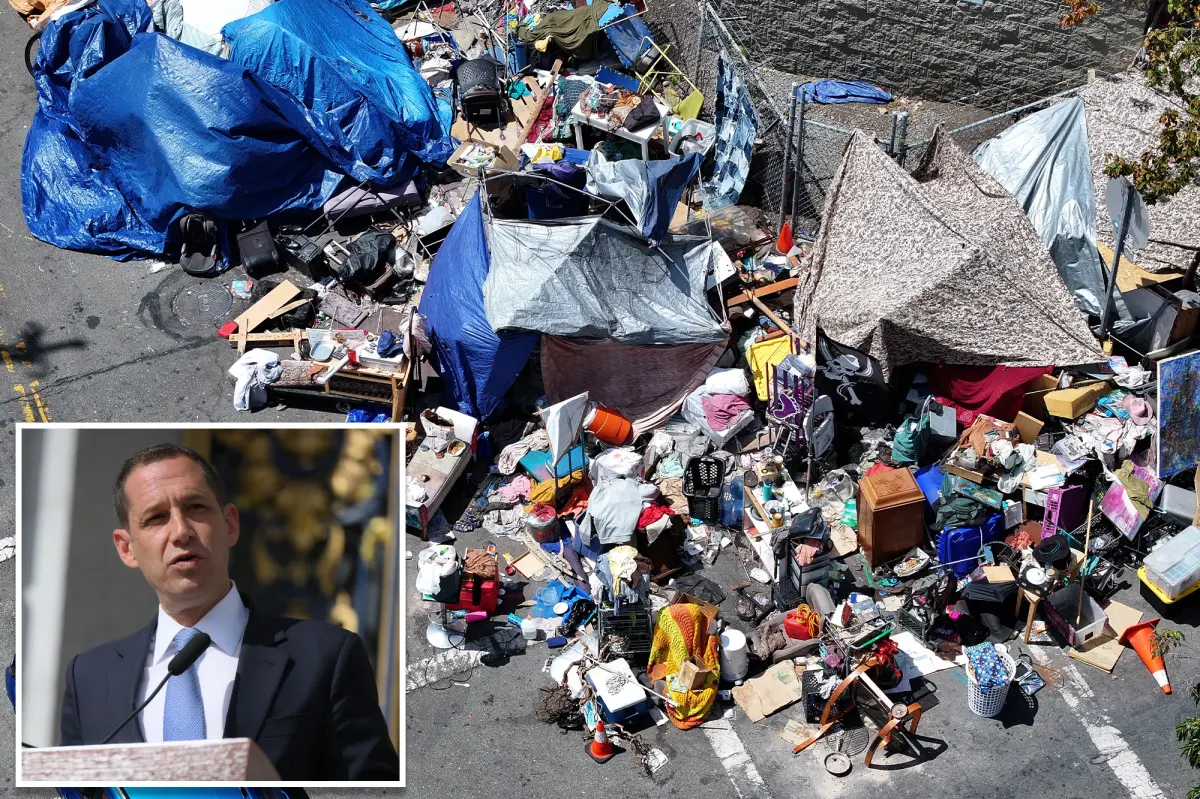

San Francisco Mayor Daniel Lurie is moving to overhaul the city’s expensive homelessness response system, pledging in a Monday statement that groups receiving taxpayer dollars will no longer get what he described as open-ended public funding without clearer results.
Under the plan, the Department of Homelessness and Supportive Housing will shift its contracts — worth about $500 million a year, according to Lurie’s office — to an “outcomes-based” structure. The new model would link funding more directly to whether providers are successfully helping unhoused residents and improving conditions for the broader public.
“We are not going to continue spending $1 billion of taxpayer money on a failing system—we’re fixing the system so we can deliver the safe and clean streets every San Franciscan deserves,” Lurie said in the statement.
From now through 2029, the homelessness department — which oversees large, multi-year nonprofit agreements for shelters, supportive housing and related services — plans to put those contracts back out for competitive awards. Future agreements will include updated terms centered on “accountability,” the mayor’s office said.
City officials are also seeking input from service providers, advocates and other stakeholders as they shape the next generation of homelessness programs and decide how provider performance should be measured.
“We will build contracts with a clear purpose, stronger measures of success, and the resources and flexibility providers need to do their best work to move our clients out of homelessness,” said Mike Levine, executive director of the homelessness agency.
The proposed reset comes after years of controversy, uneven results and mounting frustration in one of the nation’s wealthiest cities, where homelessness has remained among the most visible and persistent civic challenges.
In 2024, San Francisco counted 887 homeless residents for every 100,000 people — a rate far above the national average — even after years of multibillion-dollar spending on supportive housing, emergency shelter and other services for people without stable housing.
Homeless encampments in the city have declined roughly 85% since 2024, thanks in part to a Supreme Court ruling that allows West Coast cities to more easily enforce anti-camping laws.
Neighboring cities like Berkeley have attracted scrutiny for sprawling homeless camps close to elite UC Berkeley campus.
Critics in San Francisco have long considered the homelessness system wasteful, even verging on outright fraudulent in some cases.
Gwendolyn Westbrook, the former CEO of nonprofit United Council of Human Services, was charged earlier this year with skimming funds intended for homeless locals to fund a “lavish” lifestyle that included luxury cars and trunks full of jewelry.
The organization has received tens of millions in government grants over 20 years.
In 2024, an audit by the Controller’s Office found that HomeRise, a major supportive housing provider, had irresponsibly spent taxpayer dollars on employee bonuses and social events.
An investigation by the San Francisco Chronicle uncovered serious safety failures at HomeRise properties, including a dead body that decomposed for days — leading the city to cut off funding to the organization.


