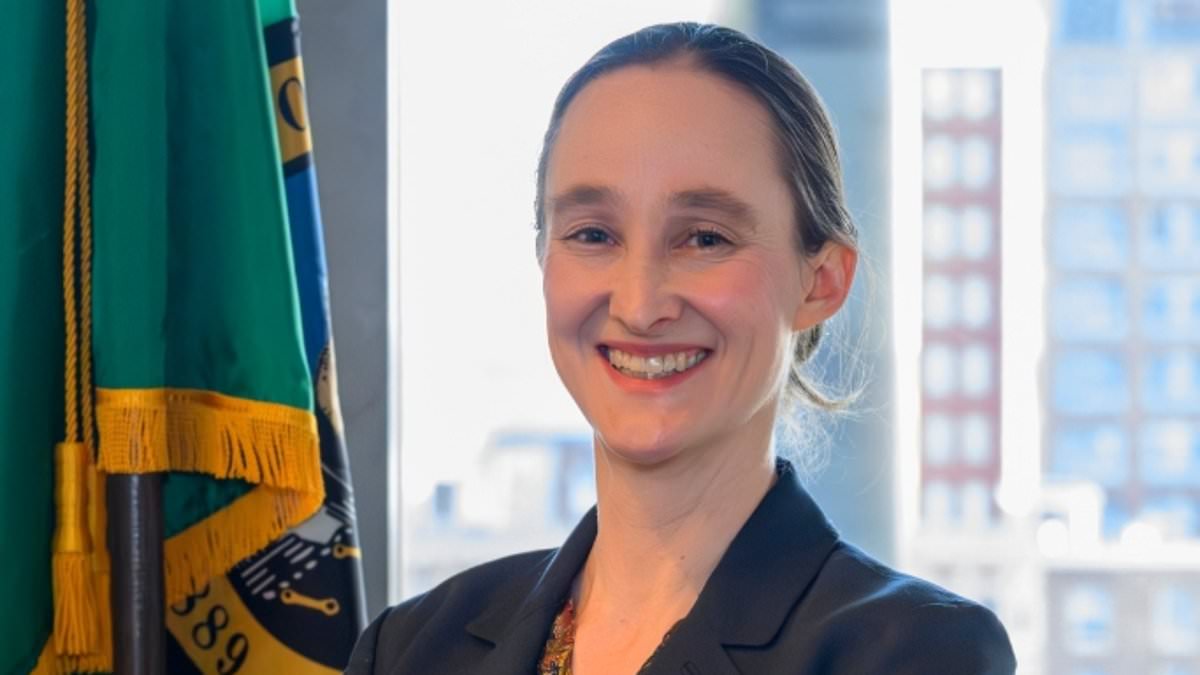

Seattle’s mayor, known for her affinity for taxation, has unveiled a proposal to nearly double the sales tax as part of her ambitious public transit initiative.
Mayor Katie Wilson, aged 43, is urging voters in the Emerald City to back a new 0.3 percent tax levy. The goal is to finance enhancements to bus services and provide more than 20,000 free bus passes.
“The Seattle Transit Measure makes taking the bus an incredibly attractive option for getting around the city,” Wilson stated on Tuesday.
“Transportation is a major expense for most households, and these investments are crucial to making our city more affordable. This way, Seattle residents can reach jobs, opportunities, and each other without relying on cars,” she added.
The proposed measure, spanning ten years, aims to replace the existing 0.15 percent Seattle transit sales tax, which will expire in March 2027. The original measure garnered roughly 80 percent voter approval in 2020.
According to city officials, funding for the Metro bus service would see a 50 percent increase, enabling approximately 280,000 trips annually, up from the current 100,000.
Around 22,000 free ORCA transit passes would also be handed out to lower-income residents over the ten-year measure, an increase of more than double the current amount, KOMO News reported.
According to the city, the median two-person household would pay an additional $29 each year, totaling $58, up from the $29 annual tax cost, the outlet reported.
Seattle Mayor Katie Wilson, 43, asked voters on Tuesday to approve a new 0.3 percent tax to help pay for bus service improvements and hand out over 20,000 free bus passes
Funding toward the Metro bus service would increase by about 50 percent and pay for around 280,000 trips each year, an increase from 100,000
The ten-year-long measure would replace the city’s current 0.15 percent Seattle Transit Measure sales tax, which is set to expire in March 2027, which saw voter support of around 80 percent in 2020
‘The Seattle Transit Measure bolsters transit service so our buses and streetcars run more frequently throughout the day and night,’ Seattle Department of Transportation acting director Angela Brady said on Tuesday.
‘People need to get around at all times of the day, and not everyone works a 9-to-5 job.’
The proposal would see around $96 million allocated annually toward all-week bus services.
It also plans to add around $6 million per year supporting Sound Transit’s light rail expansions, including the West Seattle Link Extension, Ballard Link Extension and Graham Street Station.
The measure also has hopes of tackling delays and improving accessibility at bus stops across the city.
‘We’ve made it easier for a family to be car-free, or car-light. That adds hundreds or thousands of dollars to their yearly budget,’ Wilson said in her announcement.
‘I’ll also say that, you know, ridership is climbing back up. So we’re looking forward to a future where ridership is surpassing and continuing to grow past pre-pandemic levels.’
In March, King County Metro reported an average of 274,000 weekday passengers, which, while increasing, remains far from its 2019 peak of 410,000, the Seattle Times reported.
The proposal would see around $96 million allocated annually toward all-week bus services. It also plans to add around $6 million per year, supporting Sound Transit’s light rail expansions
In March, King County Metro reported an average of 274,000 weekday passengers, which, while increasing, remains far from its 2019 peak of 410,000

The median two-person household would pay an additional $29 each year, totaling $58 up from the current $29 annual tax cost
Washington Policy Center transportation analyst Charles Prestrud, however, argued that the proposal would dismantle social equity, as 81 percent of low-income commuters drive or carpool, according to the outlet.
Prestrud argued that the rising taxes would make the region less affordable, and said: ‘Throwing money into ST3 is money in a black hole, where we will not see any benefits for decades.’
Public comment will be considered as the Seattle City Council reviews the measure and considers whether it will be put forward for a public vote.
The proposal comes after Wilson implemented a millionaire tax in the state, which is aimed at the super-rich.
The tax, which will not come into effect until the 2028 tax year, was signed into law at the end of March by Governor Bob Ferguson.
Under the new state law, those earning over $1 million per year will be slapped with a 9.9 percent hike, which Ferguson said is ‘historic.’
The move comes after Microsoft president Brad Smith raised the alarm on the state of the business climate in Washington last year.
He told KOMO News: ‘I’m probably more worried right now about the business climate in Washington than at any point over the last 30 years.
‘If other people are paying for jobs to leave and we’re taxing them to stay, that will make everything harder.’
State Republicans criticized the move all the way up until Ferguson signed it in, warning that large corporations like Starbucks and T-Mobile would leave the state.
Several other businesses, including Amazon and Meta, have already cut jobs in the state.
The Daily Mail reached out to the mayor’s office and the Seattle City Council for comment.


