Share this @internewscast.com
The United States has asserted that it can meet its strategic goals in Iran without deploying ground forces, aiming to conclude the conflict within a matter of weeks rather than months.
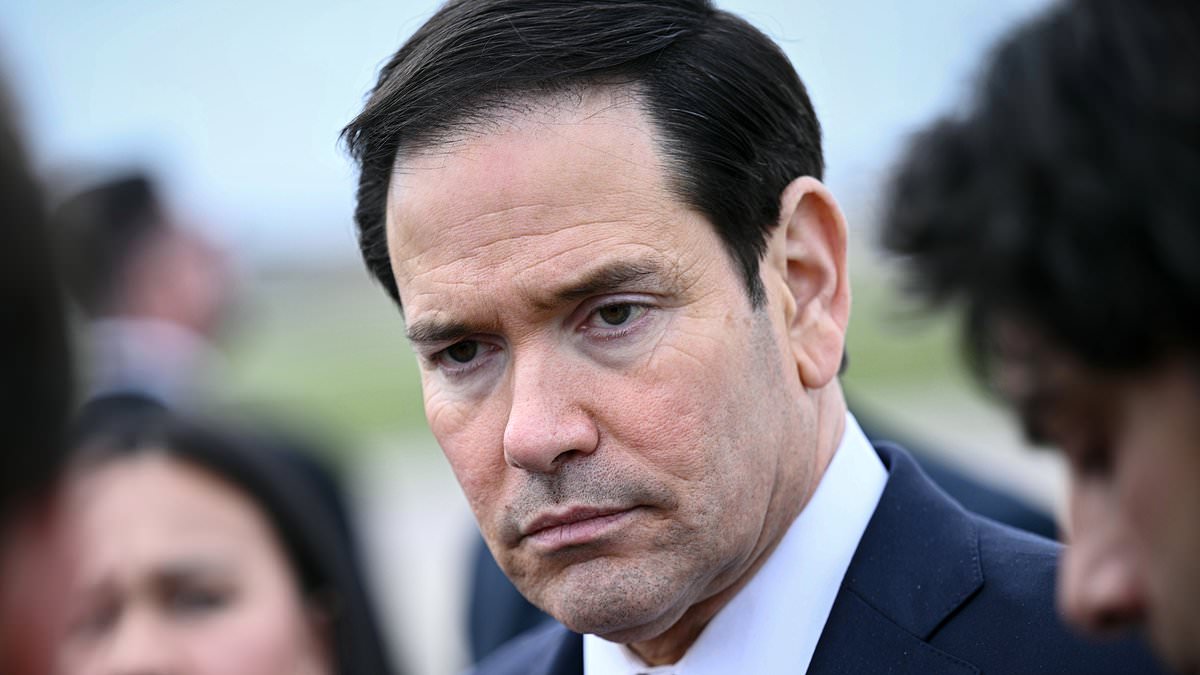
On Friday, Secretary of State Marco Rubio confidently stated that the military operation is progressing “ahead of schedule” and could reach its objectives without needing to put troops on the ground.
However, despite assurances to international leaders that the mission might wrap up in two to four weeks, U.S. officials disclosed that the option of an invasion remains under consideration.
Sources informed Axios that approximately 10,000 additional troops are set to be deployed to the region over the next ten days, supported by fighter jet squadrons and armored vehicles.
This deployment comes on top of the 5,000 Marines and 2,000 paratroopers who were dispatched to the Gulf area earlier this week.
Polish Prime Minister Donald Tusk remarked on Friday, “Based on the information received from our allies, I have reasons to believe that stabilization is unlikely in the immediate future. Instead, we might see a new escalation.”
Pushed on the reports after a G7 meeting in France, Mr Rubio told reporters: ‘This is not going to be a prolonged conflict . . .
‘We can achieve all of our objectives without ground troops, but we are always going to be prepared to give President [Trump] maximum optionality and maximum opportunity to adjust to contingencies that emerge.’

Secretary of State Marco Rubio claimed on Friday the operation against Iran was ‘ahead of schedule’
Mr Rubio also insisted that Washington has been ‘as clear as you can possibly be’ on its objectives ‘from the very first night’.
He listed them as destruction of the Iranian navy and air force and the aim to ‘significantly destroy their missile launchers so they can never hide behind these things to get a nuclear weapon’.
However, that appeared to be a dramatic walk-back from Donald Trump’s 15-point peace plan presented earlier this week. Adding to the confusion, there was consternation among Republicans after a closed door classified briefing on Wednesday over the war’s objectives.
One member was seen storming out claiming they’d been ‘misled’.
Speaking anonymously they told the Daily Mail that during the meeting they were ‘told nukes were not a military objective’ despite this having been clearly stated as a key war goal.
They said they also pushed the White House for its plans regarding a possible invasion and, while they declined to divulge what was said, described the answer as ‘jaw dropping’. It ‘will blow your brains out’, they added. The White House denied the claims.
With Mr Trump’s next move still unclear on Friday, the German Foreign Minister Johann Wadephul claimed the US and Iran are set to meet in Pakistan ‘very soon’.
Mr Wadephul said: ‘Based on my information, there has been indirect contact, and preparations have been made to meet directly.’
The war is taking its toll on America with more than 300 US troops wounded, ten with serious injuries, and 13 killed. In another blow, the US has only been able to confirm that it has destroyed about a third of Iran’s missile arsenal, sources told Reuters.

A damaged residential building in southern Tehran on Friday after continued strikes by the US and Israel
It contrasts starkly with Donald Trump’s claims that Iran has ‘very few rockets left’ and that the US has ‘decimated’ Iran’s military. America also has ‘alarmingly low’ levels of Tomahawk cruise missiles left in the region having fired more than 850, according to the Wall Street Journal.
Iran’s powerful speaker of parliament, Mohammad Ghalibaf, seen as key to negotiations, mocked America’s build up in the region.
He said: ‘How can the US, which can’t even protect its own soldiers at its bases in the region and instead leaves them stashed away in hotels and parks, protect them on our soil?’
Meanwhile, Israel has vowed to ‘escalate and expand’ its attacks after striking ‘the most central’ site to target Iran’s naval munitions.
The attack was a further sign the IDF is looking to weaken the regime’s blockade of the Strait of Hormuz. President Benjamin Netanyahu appears to be pressing to lay the groundwork to make an invasion possible to reopen the vital shipping lane through which 20 per cent of global oil passes.