
Share this @internewscast.com
An unsettling revelation has emerged from a confidential email, uncovering significant price hikes in crucial building materials, which could push Australian builders to their limits amid the economic turmoil linked to the ongoing conflict in Iran.
The internal communication from Iplex, a prominent pipe manufacturer, was addressed to Reece Plumbing, a major nationwide construction supplies chain. It detailed impending price surges—some soaring as high as 36%—set to commence on April 17.
This leaked email, which has quickly circulated among concerned builders, predicts a 27% increase in PVC products, a 36% hike in polyethylene, and a 31% rise in polypropylene costs. These materials rely heavily on crude oil, whose price has surged recently following Iran’s closure of the Strait of Hormuz, a pivotal global oil shipping route, in response to joint military actions by the US and Israel.
Additionally, the email highlighted that various products would experience price rises ranging from 28.5% to 36%. The construction sector is feeling the pinch as these increases are compounded by elevated freight costs for petrol and diesel.
This email was first brought to light by the business newsletter, Subject to Finance, which pointed out the timing of these developments amid a record number of construction insolvencies.
The email was first reported by business newsletter Subject to Finance which noted it comes ‘at a time when construction insolvencies just hit a record.’
The newsletter, which described the Iplex correspondence as ‘the email Reece didn’t want you to see’, noted that price surges were already causing builders to cancel projects on the country’s east coast due to price blowouts.
Iplex acknowledged the impact that the price surge would have on its customers.
‘The degree of pricing volatility we are currently experiencing in our plastics category is highly unusual, and the trading environment remains very uncertain,’ the company wrote.

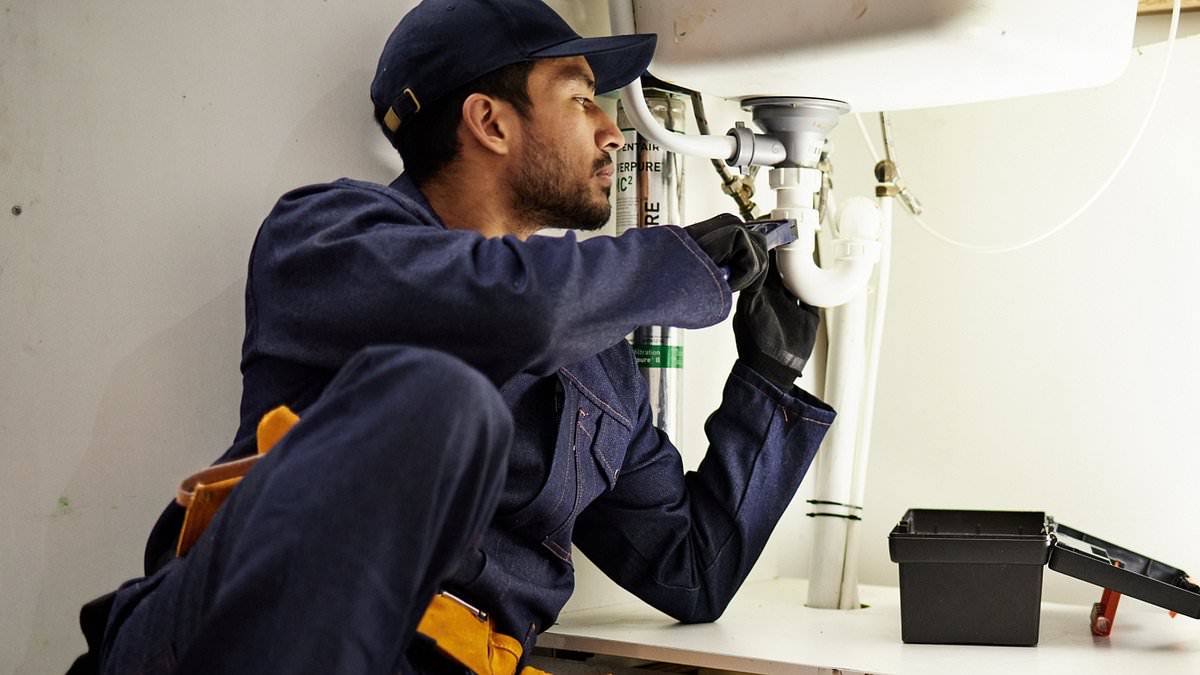
An email from pipe manufacturer Iplex to Reece Plumbing said their prices would dramatically rise from April 17

The flow-on effects could cause builders to cancel jobs as many quote on razor thin margins and cost blowouts could cripple them

Iplex said the volatility of the plastics market was highly unusual
On top of the cost of plastic pipes, builders are also being hammered by a surge in the cost of steel, plywood walling and cement in the wake of the US-Israeli bombing campaign against the Iranian regime.
Bitumen for sealing roads is also largely imported from Asia and made from crude oil, with the Australian Flexible Pavements Association noting ‘bitumen prices are anticipated to rise by more than 50 per cent’.
Housing crisis toll
The revelations have reignited fierce political debate over housing, with the Albanese government facing fresh scrutiny over whether it can deliver on its promise to build 1.2 million new homes by mid-2029.
Independent forecasting from the National Housing Supply and Affordability Council suggests Australia is set to fall more than 260,000 homes short, with only around 938,000 likely to be completed under current conditions.
For home builders locked into fixed-price contracts, rising input costs are quickly eroding profit margins and leaving companies unable to withstand further shocks.
Even before the recent escalation in the Middle East, construction was already the economy’s hardest-hit sector, recording the highest number of insolvencies, with failures more than doubling since the pandemic.
Despite strong demand for new homes, the 2024–25 financial year was the worst on record for the industry, with 3,490 construction firms entering insolvency, unable to pay debts as they fell due.

There are already record insolvencies in the building industry

The government has argued that housing prices were dropping before the Middle East war
Asked directly if global instability had doomed the government’s housing plan, Housing Minister Clare O’Neil acknowledged headwinds but insisted the government had not given up.
‘What’s going on in the Middle East certainly doesn’t make it any easier,’ O’Neil told Sky News earlier this week.
The Albanese government has pointed to recent Australian Bureau of Statistics data, which shows building approvals have hit their highest level in over four years, arguing it is evidence the sector is regaining momentum.
Labor also maintains that, prior to the latest global turmoil, cost pressures were easing, with construction cost inflation dropping sharply, from 17.3 per cent annually when Labor took office to just 1.8 per cent by December 2025.
However, Opposition figures argue the government has mismanaged the crisis from the outset, preceding these latest inflationary spikes.
Opposition housing spokesman Andrew Bragg accused Labor of creating conditions now crippling builders and stalling much-needed projects.
‘They have completely stuffed the macro environment for housing,’ Senator Bragg told Sky News on Thursday.
‘They haven’t brought in the tradies we need, they’ve wasted billions of dollars, they haven’t dealt with corruption in the CFMEU, and they’ve buried builders under red tape.’
He added that government charges continue to drive up costs and worsen housing unaffordability.
‘About 45 per cent of the cost of a new home now goes on government taxes, fees and regulation,’ he said.