
Super PACs made their presence felt in a big way.
Partisan super PAC organizations poured more than $50 million into four competitive New York City congressional contests that culminated in a striking left-wing sweep in Tuesday’s Democratic primaries, according to records.
The costliest fight was the crowded race to succeed retiring Rep. Jerry Nadler in Manhattan’s 12th Congressional District, where outside groups spent an eye-popping $40.8 million. Records indicate the contest ranked among the most expensive House races in history.
With about 102,000 Democrats voting in the five-candidate primary, that outside spending worked out to roughly $398 per ballot cast, records show.
By comparison, the campaigns of the winner, state Assemblyman Micah Lasher, and the runner-up, fellow Assembly member Alex Bores, spent only a small share of that amount, according to preliminary campaign finance filings.
Political experts said the scale of super PAC involvement could fuel concerns about candidate independence. Super PACs are allowed to raise unlimited sums from individuals, corporations, unions and other organizations, though they are legally prohibited from coordinating with campaigns or donating to candidates directly.
“When most of the total campaign spending in a race is done by super PACs, the public will presume candidates are beholden to those funding the super PAC,” said Alex Camarda, a senior policy adviser for the Reinvent Albany good government group.
Although the NY-12 primary — which also featured Kennedy family member Jack Schlossberg — attracted the largest wave of super PAC money, three other races drew heightened attention because of endorsements from Mayor Zohran Mamdani.
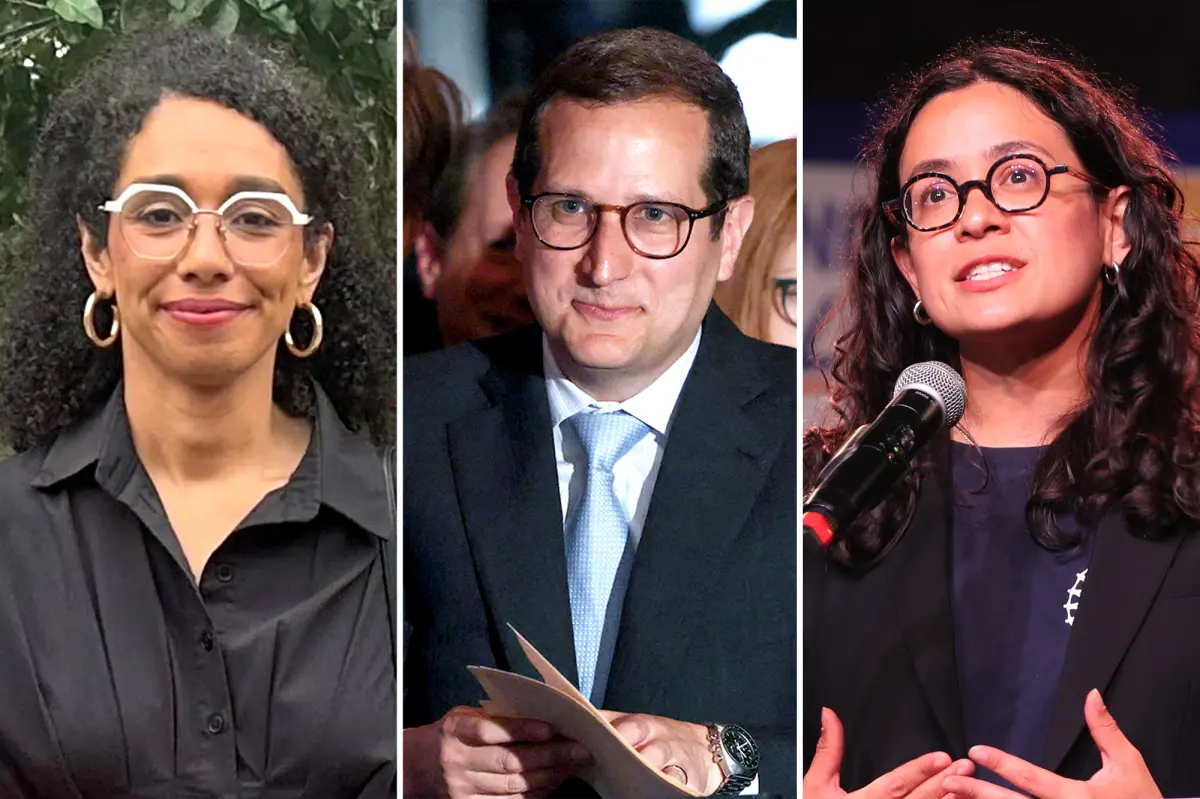
The sweep by far-left contenders Darializa Avila Chevalier, Brad Lander and Claire Valdez against establishment Democrats drew roughly $12 million in super PAC money combined.
The District 13 race won by Democratic Socialists of America acolyte Avila Chevalier over Rep. Adriano Espaillat drummed up $9.35 million in super PAC cash, records show.
Espaillat drew support from PACs traditionally aligned with establishment Democrats, such as the Hispanic Caucus-tied Bold America, which spent $1.36 million to help the five-term incumbent, according to records.
By contrast, Avila Chevalier got cash from lefty PACs such as Justice Democrats, which plopped down $1.1 million.
She also received $844,000 from the American Priorities, a PAC partly bankrolled by anti-Israel businessman Hussein “Sam” Mahrouq, the owner of Enterprises International, which runs AutoMax and Dollar Rent-A-Car.
ALSO READ: Video Captures Fiery Plane Crash on Highway as Aircraft Breaks in Two
American Priorities also funneled $455,000 into the District 7 race carried by Claire Valdez, another DSA member, records show.
The entire race drew more than $2 million in super PAC funding, with Valdez reaping another $811,000 from groups that backed Mamdani and other lefty causes.
The District 10 race won by Lander, the progressive former city comptroller, over incumbent Rep. Dan Goldman only drew $524,000 in combined super PAC funding, records show.
Goldman received $300,000 from New Yorkers Fighting Back, a PAC funded in part by the Democratic Majority for Israel, according to records.
Lander received $84,000 from the Working Families Party PAC, the records show.
Meanwhile, a group connected to billionaire former Mayor Michael Bloomberg showered nearly the total amount PACs spent in the three other races combined onto his protege Lasher.
Roughly $10.7 million flowed from that Bloomberg-bankrolled Stand for NY PAC in support of Lasher’s campaign by ads, direct mail and polling, records show.
But the Bloom-bucks paled in comparison to a combined $21 million spent by competing AI industry-connected super PACs both for and against Bores, who had pushed a bill in Albany to regulate the emerging Big Tech sector.
Think Big, an affiliate of the pro-AI super PAC Leading For the Future, spent $8.1 million attacking Bores, finance records show.
But Jobs and Democracy, a super PAC affiliated with Anthropic — an AI company supportive of regulation — furnished $13.1 million backing Bores, records show.
The super PAC largesse dwarfed the hauls for the two top candidates’ actual campaigns. As of early June, Lasher’s campaign spent $1.58 million and Bores’ campaign spent $1.83 million.
Camarda argued the super PAC spending undercut the US Supreme Court’s reasoning the Citizens United decision that independent expenditures won’t corrupt democracy.
“Wealthy donors have great access to and influence over elected officials they support through ‘independent’ spending that can be contrary to the public interest,” he said.


