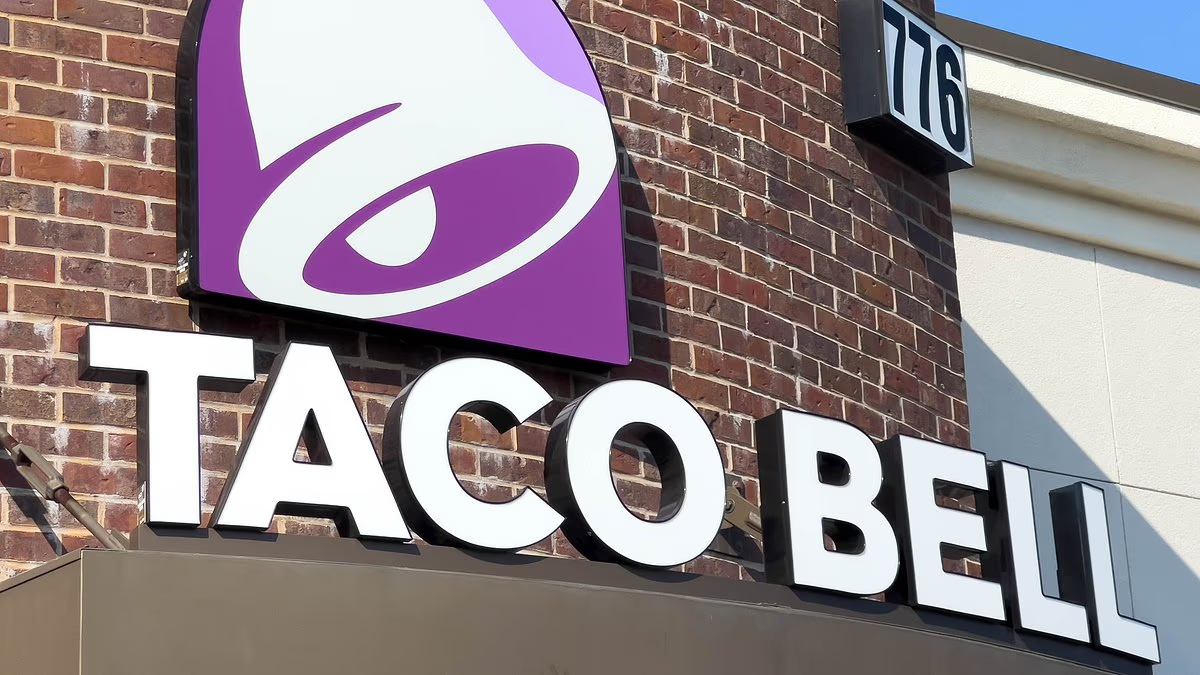

A supplier that provides Taco Bell with shredded iceberg lettuce is now being examined as a possible source of contamination in a fast-growing cyclosporiasis outbreak that has left thousands of Americans suffering severe diarrhea.
According to The Washington Post, investigators are looking at a potential link involving Taylor Farms, a California-based produce supplier, citing two people familiar with the inquiry into the parasitic outbreak.
The number of cyclosporiasis infections in the US continues to surge as health officials race to identify the contaminated product. More than 5,800 cases have been confirmed nationwide, with thousands of additional illnesses still being reviewed.
Michigan has been hit especially hard, reporting more than 4,300 infections — a dramatic jump from the state’s typical annual average of fewer than 50. Hospitalizations there have climbed to 102.
Cyclosporiasis is an intestinal infection caused by the Cyclospora parasite, which is often associated with foodborne outbreaks rather than person-to-person spread. The organism is known to cling to fresh fruits and vegetables and can be difficult to eliminate once produce is contaminated.
Symptoms can appear anywhere from two days to two weeks after exposure. They commonly include persistent watery diarrhea, abdominal cramping, nausea, fatigue, appetite loss and weight loss.
The infection can be treated with antibiotics, but if left untreated, symptoms may drag on for weeks and lead to dehydration. Roughly one in 11 patients has needed hospital care, though no deaths have been reported.
Taco Bell responded last week by removing several ingredients from some menus. Notices posted at a number of US restaurants, including locations in Michigan, said the chain would not be serving lettuce, pico de gallo, guacamole or cilantro onion.

Taco Bell’s shredded iceberg lettuce California-based supplier Taylor Farms has been identified as a potential source of contamination in the cyclosporiasis outbreak

Cyclosporiasis symptoms typically emerge two days to two weeks after exposure and include prolonged watery diarrhea, stomach cramps, nausea, fatigue, loss of appetite and weight loss. If untreated, the illness can last for weeks

Taylor Farms (Headquarters in Salinas, California pictured) is allegedly a potential source of contamination in the cyclosporiasis outbreak that has sickened thousands of people in the US with explosive diarrhea
The posted notices read: ‘We are currently unable to sell lettuce, cilantro onion, pico de gallo, and guacamole due to a nationwide recall. We apologize for the inconvenience.
‘Any items ordered that normally come with these items WILL NOT contain them.’
It is not clear what recall the company was referring to. No food recalls have been issued in connection with the spread of cyclosporiasis cases.
Items that include at least one of these ingredients are tacos, the Crunchwrap Supreme and certain Cantina Chicken items.
It’s unclear if any Taco Bell consumers have been sickened by cyclosporiasis.
Daily Mail contacted Taco Bell for comment and is awaiting response. The company has not issued any statement or response to the reports.
Cyclosporiasis, which tends to peak between May and August, is more common in people returning to the US from foreign travel and caused by the cyclospora parasite.
Dr Alan Bulbin, director of infectious disease at Catholic Health’s St. Francis Hospital, told Daily Mail that proper washing is essential, but it will not remove everything.

Cyclospora is a microscopic parasite that infects the small intestine. It doesn’t spread person-to-person. Instead, it contaminates fresh produce through infected human feces

Raspberries should be avoided right now because their bumpy, textured surfaces provide countless crevices where Cyclospora oocysts can become trapped, making them nearly impossible to wash off completely
‘People should thoroughly wash fresh fruits and vegetables under water before eating, even if their produce looks clean,’ said Dr Bulbin.
Produce with a peel, such as bananas, avocados, oranges, melons, cucumbers and pineapples, have a natural barrier; just wash the outside before cutting.
Peeled items like carrots, potatoes and apples are also safer, as peeling removes the contaminated surface layer.
Keep unwashed produce separate from ready-to-eat foods and raw meat, poultry or seafood.
To prevent cyclosporiasis, the CDC recommends avoiding consuming food or water at risk of contamination with feces and following general food safety preparation guidelines.
Most people with a healthy immune system will recover without any treatment.
The Daily Mail has reached out to Taylor Farms for comment.


