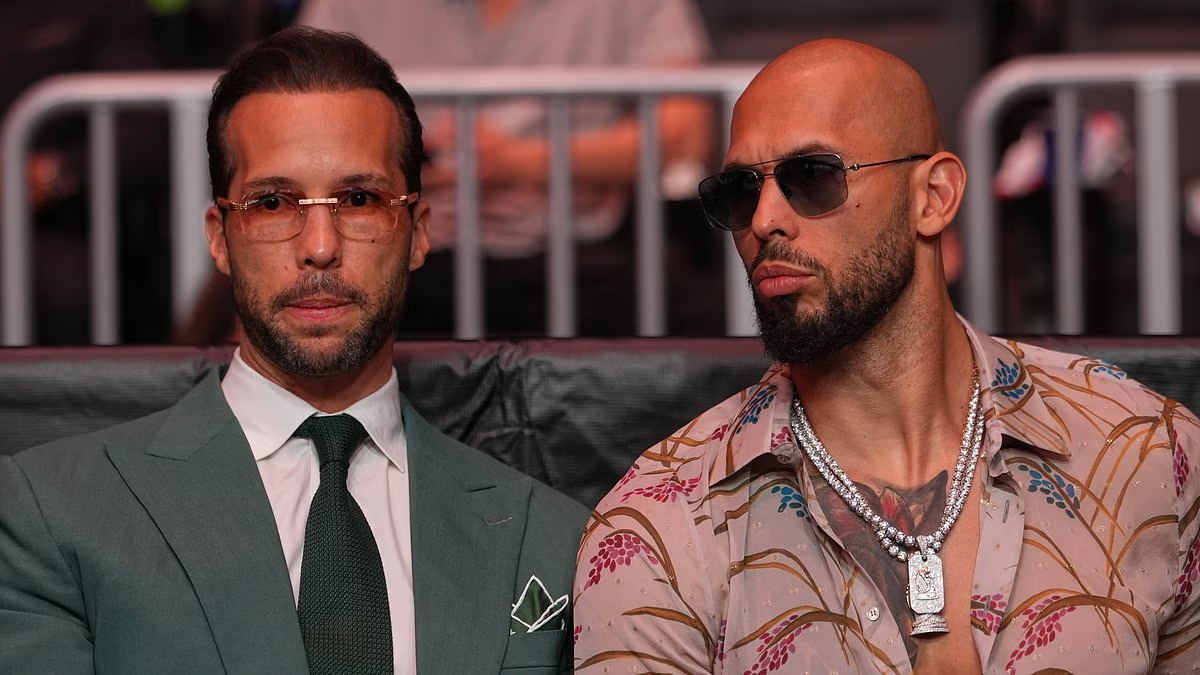

A High Court judge has rejected Andrew and Tristan Tate’s attempt to compel the Crown Prosecution Service to reveal the identities of their alleged victims in UK criminal proceedings.
Andrew, 39, a former professional kickboxer, and his brother Tristan, 37, had sought permission to challenge the CPS over the decision, which their legal team argued was unlawful and infringed their right to a fair trial.
The brothers are currently involved in legal proceedings in Romania, where they reside, and are due to be extradited to the UK once those matters end to face a total of 21 charges, including rape, actual bodily harm and human trafficking.
Andrew, 39, and Tristan, 37, have firmly denied any wrongdoing.
The alleged offences are said to have occurred between 2012 and 2016.
Both men have previously issued “unequivocal” denials, with Andrew Tate saying he and his brother are “very innocent men”.
At a hearing on Tuesday, lawyers representing the brothers argued that the CPS’s refusal to disclose the complainants’ names before the pair appear in a British court was improperly based on the alleged vulnerability of the complainants and influenced by the brothers’ “notoriety” and large social media presence.
The CPS asked for the claim to be dismissed, with its barristers arguing that the prosecution’s stance could not be considered unreasonable.

Andrew and Tristan Tate’s bid to force the Crown Prosecution Service to disclose the names of their alleged victims in UK criminal proceedings has been thrown out by a High Court judge

The pair are facing legal proceedings in Romania , where they currently live, but will be extradited to the UK upon their conclusion to face a combined 21 charges, including rape, actual bodily harm and human trafficking
But on Friday, Mr Justice Chamberlain dismissed the challenge, concluding ‘this is not a case where it can be said, even arguably’, that the Tates’ human rights had been breached.
EXCLUSIVE: Video Captures Fiery Plane Crash on Highway as Aircraft Breaks in Two
Reading a summary of his ruling, the judge said: ‘The claimants will be provided with the identities of the complainants if and when they are surrendered to and prosecuted in this jurisdiction.
‘In general, that is the point when an accused person is expected to answer the case against him and, therefore, the point when, as a matter of fairness, he needs to be given the information necessary to enable him to provide that answer.’
Earlier this week, Sallie Bennett-Jenkins KC, for the Tates, said in written submissions that the CPS had assumed the pair would identify the complainants on social media and cause them to withdraw from proceedings but that this was an ‘inflated assumption of risk’.
She said: ‘Given that the defendant has described the claimants as ‘notorious’, it is hard to avoid the conclusion that they have been treated differently from other suspects or defendants in criminal proceedings.’
Ms Bennett-Jenkins continued: ‘The controversial opinions of the claimants are not a proper basis for denying them basic information about the criminal allegations they face.’
She said the decision also prevented the Tates from ‘understanding the case against them, preserving and collating evidence that may be relevant, and providing information to the police and CPS that may trigger further lines of inquiry or lead to the charges against them being reviewed’.
The barrister continued in court that the CPS had maintained its ‘wholly perverse’ decision despite both brothers undertaking not to disclose the names, backed by a payment of £20,000 each.
Ms Bennett-Jenkins added the CPS rejected an offer from the Tates to be interviewed under caution from Romania in August last year, which the barrister said meant the body ‘will not seek or facilitate any meaningful engagement’ with the pair before they are extradited to the UK.
In written submissions, Tom Little KC, for the CPS, said it had not decided ‘never to inform the claimants of the names of the complainants’, but instead had made a ‘time-limited decision’ not to do so until ‘proceedings commence substantively’ in the UK.
He said that the decision not to provide the names was ‘being kept under review’ and that the decision was ‘not within the constitutional function nor the practical competence of the courts’ to review.
The barrister also told the court that the Tates’ rights had not been breached, stating: ‘What in reality the claimants are seeking to do is to contend that their right to a fair trial in this jurisdiction, which may not happen for many years, has been breached now.
‘This is illogical. The only time that that can be properly assessed and determined must be at trial and by a judge in the Crown Court.’
Mr Little said the claim should be thrown out for being brought too late, and told the court that the prosecutor’s decision was one which they were ‘entitled to make’ and was ‘not contrary to any form of guidance or policy’.
Bedfordshire Police is an ‘interested party’ in the legal action but was not represented at the hearing in London.
This is breaking news, more follows.


