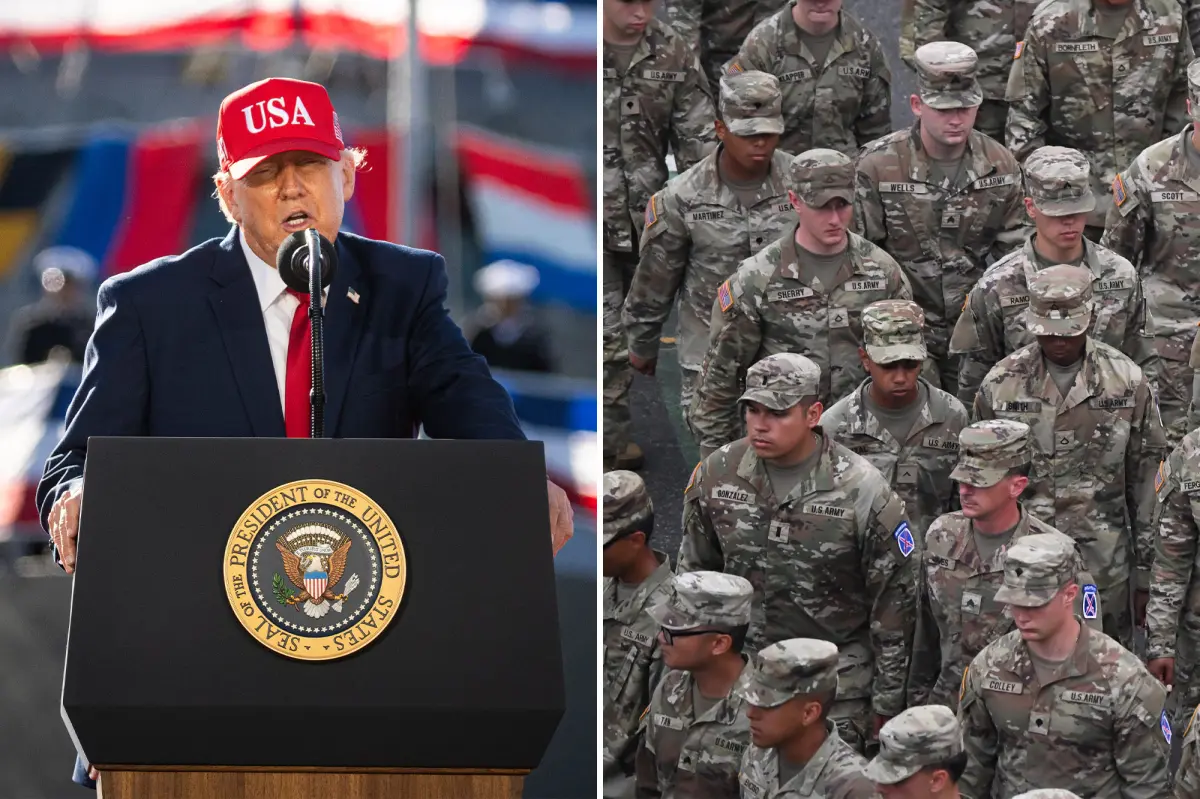

The Trump administration is treating low testosterone as a possible military readiness issue, introducing new screening recommendations for male service members as officials confront broader concerns about men’s health and the declining number of young Americans eligible to enlist.
Adm. Brian Christine, a senior Department of Health and Human Services official, told Fox News Digital that testosterone deficiency could have “absolutely national defense readiness ramifications.”
Christine also highlighted the wider health problems affecting the military’s recruiting pool. He said 77% of Americans between 17 and 24 are unable to qualify for service without receiving a waiver, citing obesity, chronic illnesses and other disqualifying conditions.
The situation is even more pronounced among young men, Christine said, with more than 70% considered ineligible. At the same time, only roughly 3% of young Americans say they are interested in military service.
The concerns come as the Trump administration renews its focus on military preparedness. Christine helped develop an effort that preceded the Pentagon’s September rollout of testosterone deficiency screening guidelines for male service members aged 30 and older.
Trump began his second term promising a force centered on combat capability and lethality. His administration has moved to strengthen fitness standards, eliminate diversity, equity and inclusion programs, revise weapons procurement, expand recruiting and place greater emphasis on military readiness.
Christine, a urologist with more than 35 years of experience in men’s health, said testosterone levels have fallen over several decades. The trend, he argued, raises questions about the long-term well-being of American men as well as the physical demands faced by military personnel.
“I think it’s incredibly important, incredibly timely,” Christine said of the new screening policy.
The Pentagon’s guidance calls for mandatory testosterone deficiency screening for male service members 30 and older. The process begins by reviewing symptoms and risk factors, followed by additional testing and possible treatment when medically warranted.
“We’re not forcing testosterone on anybody,” Christine said. Instead, the policy is designed to identify men who have symptoms and repeatedly low test results, then provide them with an appropriate medical path forward.
Christine identified obesity and chronic disease as known factors linked to low testosterone. He also raised the possibility that microplastics and other environmental toxins may play a role, though scientists are still studying whether such exposures contribute to the decline.
Christine said the average testosterone level among American men was “well over 650” in the mid-1970s but has since fallen to approximately 350.
NIH Director Jay Bhattacharya expressed similar concerns in a separate Fox News Digital interview. He said testosterone deficiency may be going undetected, while noting that accepted medical standards require both relevant symptoms and consistently low hormone readings before a diagnosis is made.
DISCOVER MORE: New Data Names Six California Cities Among America’s Riskiest Places to Drive
“If you look at the epidemiological trends, testosterone levels in the American male population have been declining over the last decades,” Bhattacharya said. “And, again, we don’t know why. We don’t have an answer.”
According to Bhattacharya, researchers need to identify what is driving the decline and determine the most appropriate medical response for men who are diagnosed with testosterone deficiency.
“There are under-diagnosed testosterone deficiencies,” he said.
“The question of what to do about it, how to prevent it, that’s at the top of my mind.”
The NIH director also cited falling sperm counts as another reproductive health trend requiring closer scientific attention. He suggested that environmental exposures could be contributing to the broader pattern.
“But even more importantly, what are the factors, probably environmental factors, that have led to the decline in sperm counts, for instance? We need an answer to those questions,” Bhattacharya said.
Bhattacharya said the NIH is funding research into the possible causes of these changes, with the goal of giving doctors clearer guidance on how to address men’s health and reproductive concerns.
Christine said that testosterone is about more than muscle growth or physical appearance, arguing that hormone levels play an important role in men’s overall health.
“Testosterone levels in men are absolutely related to their overall well-being, to their lifespan, to their health span and to their wellness,” Christine said.
He also noted that men with low testosterone tend to experience higher rates of anxiety and depression.
The administration is also developing separate hormonal health guidance for female service members, which the Defense Health Agency said would follow the September guidelines issued for male troops, with women’s health specialists contributing to the recommendations, Christine said.
Christine said the goal is ensuring that service members are equipped to perform their duties while addressing broader health challenges affecting American men.
“If we truly want our men who are in uniform to be at their best,” Christine said, the focus must be on their ability to function and perform their jobs.


