
Share this @internewscast.com
Nearly a decade has passed since the beloved singer George Michael passed away at the age of 53, yet his legacy continues to resonate with millions. However, Lord Malcolm Offord, who chairs Reform UK in Scotland, has drawn criticism for his derogatory remarks about the pop icon and his partner, Fadi Fawaz.
In 2018, at a Burns Night dinner, Lord Offord made a highly offensive and homophobic joke targeting the couple. This footage recently resurfaced, igniting a wave of backlash against him.
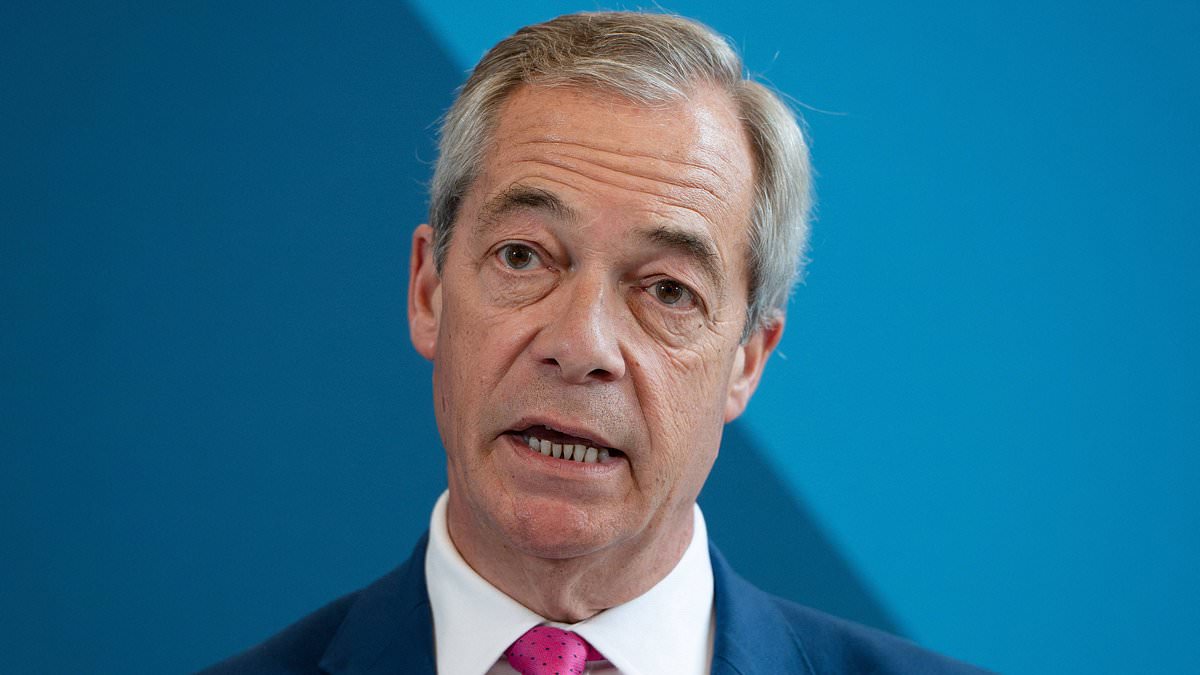
Although some might dismiss it as just a joke, the controversy highlights the complex landscape of political attitudes. Interestingly, a recent poll showed that Reform UK is notably popular among gay and bisexual men in Britain. Approximately 25 percent of this demographic expressed support for Nigel Farage, outpacing the Greens by 6 percent and Labour by 7 percent. Darren Grimes, a well-known Reform councillor, humorously noted, “Reform UK has more gays in it than Heaven nightclub.”
This intriguing data—partly attributed to concerns about the rise of radical Islamist sectarianism in the UK—provides insight into the unexpected alliances Farage is working to cultivate as he gears up for next month’s crucial local elections.
However, within Reform UK, there is an air of unease. A senior insider confided that there are growing “jitters” at their Millbank Tower headquarters, a location once synonymous with New Labour, as they brace for the upcoming May 7 elections.
Following a successful run in the 2024 General Election, where Reform UK captured 15 percent of the vote, the party surged to 35 percent in polls as recently as last September, establishing a significant 15-point lead over Labour.
Farage was on course to seize 343 seats at the next General Election, comfortably above the 326 he needs for an overall majority. After defections, he now boasts eight MPs.
But since November, the party’s support has been sinking. Reform are averaging 26 per cent in the polls, with one YouGov survey last week putting them on just 23 per cent.

Since November, support for Nigel Farage’s party has been sinking. Reform are averaging 26 per cent in the polls, with one YouGov survey last week putting them on just 23 per cent
Even at 26 per cent, they would be dozens of seats short of a majority, likely requiring a coalition with the hated Tories.
Anxiety over the upcoming elections is exacerbated by mounting problems with candidates. On Thursday, Farage sacked his new housing spokesman, Tory defector Simon Dudley, after Dudley said the 2017 Grenfell fire, which killed 72 people, was a ‘tragedy’ but then added carelessly: ‘Everyone dies in the end.’ He was making a point about excessive health-and-safety legislation – but the crass remark was a gift to Reform’s critics.
Last month, three Reform candidates withdrew from the Welsh Senedd elections, in which the party hopes to end 100 years of Labour hegemony. Eight Scottish candidates have gone the same way.
Resigning Welsh councillor Owain Clatworthy said: ‘A lack of discipline and serious concerns around candidate selection have made it clear to me that Reform UK is no longer operating in a way that reflects the standards the public deserve.’
Others agree with him. On the day Reform launched their local-election campaign last week with a pyrotechnical rally, a photograph emerged of a Welsh candidate apparently performing a Nazi salute.
To take a final example, last month, the mayoral candidate for Hampshire and Solent, Chris Parry, was suspended after he disgracefully described members of a Jewish charity ambulance service that had been the victim of an arson attack as like ‘Islamists on horseback’.

Former Conservative minister Lord Offord was named as Reform UK’s Scottish leader in January
These episodes neatly illustrate the bind Farage finds himself in. He has presented himself and his party as outsiders breaking down a stale Westminster establishment. But the well of talent from which he can recruit the mavericks he needs to take on what he calls the Tory-Labour ‘uniparty’ is hardly bottomless.
As a result, he has increasingly resorted to hiring Tory defectors, such as former home secretary Suella Braverman and ex-chancellor Nadhim Zahawi. Both served in Boris Johnson’s Cabinet (anathema to the Reform membership given the extraordinary surge in net migration that took place under that administration). In plain terms, it is hard for Farage to claim Reform mark a break from the Tories when so many ex-Tories swell his ranks.
After Zahawi’s appointment, about 1,000 Reform members resigned in protest, and Farage promised a major Labour defection. The whispers at Westminster were that this would be the free-spirited ex-Blairite minister Baroness (Kate) Hoey, now an independent. But she has denied ever planning to join Reform.
Last month, Farage unveiled former London Labour council leader Sir Robin Wales as his latest defection – not exactly the major political figure the country was promised. As for the ‘top business leaders’ that Farage last summer told the Financial Times were set to join his shadow cabinet, there has been little sign.
Now he faces a new and growing threat to his right flank. In February, ex-Reform MP Rupert Lowe established a party called Restore Britain after Farage kicked him out when he criticised his leader’s ‘messianic’ management style to me in these pages.
This week, Lowe reported that Restore, after less than two months, was already Britain’s fourth-largest party, with 123,000 members – surpassing the Tories on 113,000, and more than double Lib Dems membership. (The Greens, Labour and Reform all have at least 200,000 members.)
The ex-investment banker, who donates his MP’s salary to charity, tells me: ‘Our aim is clear – to win the next General Election.’
That may be ambitious – but Lowe’s insurgent movement could undoubtedly bleed significant support from Reform. For years, British people on the Right who were disappointed with the Tory Party’s liberal drift under David Cameron, Theresa May, Boris Johnson and Rishi Sunak – from rising taxation to Net Zero legislation and military disarmament – were forced to default to Farage.
Now, judging by Restore’s membership figures, some believe they may have a new option in a party pledging the mass deportation of every illegal migrant, stripping benefits from healthy Britons who refuse to work as well as from non-British nationals, abolishing inheritance tax and even proposing a referendum on the death penalty.

After being ousted from Reform UK for criticizing Nigel Farage’s ‘messianic’ leadership, former MP Rupert Lowe founded a new party, Restore Britain, in February
Added to which, Reform can increasingly be judged on their performance – which has not always been stellar. Having taken control of ten councils last May, the party now has to run them. In Worcestershire, where Reform have minority control, councillors have approved a 9 per cent council-tax increase. A frustrated Farage said the town hall was ‘virtually bankrupt’ when Reform captured it from the Conservatives, but Adam Kent, leader of the local Tory group, said: ‘If Reform can’t run Worcestershire, how can they run Britain?’
With all that said, Reform may yet triumph in the May elections. Voters appear heartily fed up with Labour; the Tories (for all Kemi Badenoch’s improved recent performances) are flat at best in the polls; Restore are not yet ready to field candidates; and the far-Left Greens, while ascendant, are mostly stealing support from Labour and the Lib Dems.
Farage, I’m told, is aiming to win at least 1,000 council seats across England, with targets including Sunderland and South Tyneside, Norfolk, Suffolk and the outer London boroughs of Bexley, Bromley, Havering and Barking and Dagenham. The party is also polling well in Scotland.
A senior Reform figure tells me: ‘Considering where we were at the General Election, when we won five MPs, the results in May will be extraordinary. However, expectations have been set too high that we were going to win a landslide. We haven’t controlled the messaging.’ The source said the war in Iran was another electoral drag: ‘Nigel is friends with Trump, who started the war.’
No one should deny Farage’s achievements. From a standing start he has built Reform into a political force now topping the national polls, and he remains as driven and energetic as ever. But, equally, it has been hard for him to escape that caustic description by ex-Tory adviser Dominic Cummings: that Reform boil down to ‘Farage plus iPhone’.
In that context, May 7 will be a seismic test – and a forerunner of the next General Election due in 2029, and possibly sooner if a financial crisis causes Labour to implode. Farage, in short, may not have long to turn his ‘one-man band’ into an orchestra.
The votes of gay and bisexual men, however welcome, will not be enough to sweep him to power.