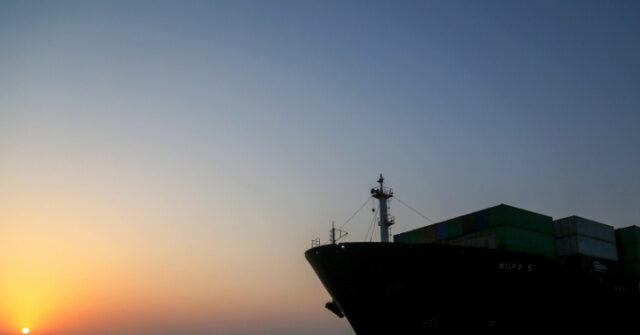
U.S. forces have helped move more than one billion barrels of crude oil through the Strait of Hormuz in recent months, while Iran has exported no oil through the waterway under Washington’s “ironclad blockade,” U.S. Central Command chief Adm. Brad Cooper said Saturday.
Cooper said American forces reached the milestone while coordinating protection for more than 2,000 commercial vessels passing through the strategically vital strait.
“Clearly, momentum is building,” he said in a video update.
Cooper said shipments of crude oil, cargo and liquefied natural gas through Hormuz during the past two weeks exceeded levels seen at any point in the six months since the war began on February 28. The strait’s main shipping lanes, he added, remain free of mines.
“Over one billion barrels of crude have been shipped from Gulf partners through the Strait of Hormuz, and Iran has exported zero barrels, thanks to our ironclad blockade,” Cooper said.
Saturday’s announcement followed what Cooper described as a “major milestone” on August 28, when CENTCOM said U.S. forces had removed Iranian sea mines from internationally recognized shipping lanes after months of hazardous clearance operations.
Cooper said military personnel from across the U.S. armed forces completed the mission “meticulously and quietly.” At the time, he declared that international shipping routes were open and that “momentum is building.”
While protected commercial traffic through Hormuz has increased, the blockade targeting Iran remains in place. CENTCOM said Friday that U.S. forces had redirected 105 commercial vessels to enforce compliance, preserving what Cooper described as a total halt to Iranian oil exports through the strait.
CENTCOM has characterized the operations as separate but concurrent efforts: reopening Hormuz to international commerce while stopping goods from entering or departing Iranian ports.
The naval blockade is being supported by Operation Economic Outcast, the Trump administration’s broad campaign to cut off Tehran’s remaining sources of revenue. The initiative targets financial channels, sanctions-evasion networks and oil-smuggling operations that fund the Iranian regime.
Cooper said CENTCOM is coordinating with all six Gulf Cooperation Council countries, along with U.S. government agencies, insurers and shipping firms, to expand commercial traffic through the strait.
“The effort is paying off,” Cooper said.
The command is also working with regional allies to strengthen air defenses and create a “new coalition attack drone unit” as missile and drone threats grow elsewhere in the region.
The update came amid a fresh escalation in Saudi Arabia. On Saturday, the Saudi-led coalition said it had intercepted a Houthi ballistic missile aimed at Riyadh. The Iran-backed Houthis separately claimed to have launched missile and drone attacks against “sensitive” targets in the Saudi capital. Flames and black smoke were reported near King Khalid International Airport, although the source of the fire had not been determined.
Iran’s military rejected Cooper’s account. Armed forces spokesman Brig. Gen. Abolfazl Shekarchi called the CENTCOM figures “false” and “ridiculous,” describing the announcement as a “failed psychological operation.”
“The initiative in the Strait of Hormuz remains in the hands of Iran’s powerful armed forces,” Shekarchi said in comments carried by Iranian state media.
The deepening military coordination between the United States and Gulf countries comes days before President Donald Trump is expected to meet in New York with leaders of all six Gulf Arab nations. His administration is considering its next moves in the nearly seven-month conflict with Iran.
U.S. Ambassador to the United Nations Mike Waltz told – News Saturday that Trump remains “very focused” on preventing Iran from acquiring a nuclear weapon. Waltz said the upcoming U.N. General Assembly would offer “a moment to continue that diplomacy.”