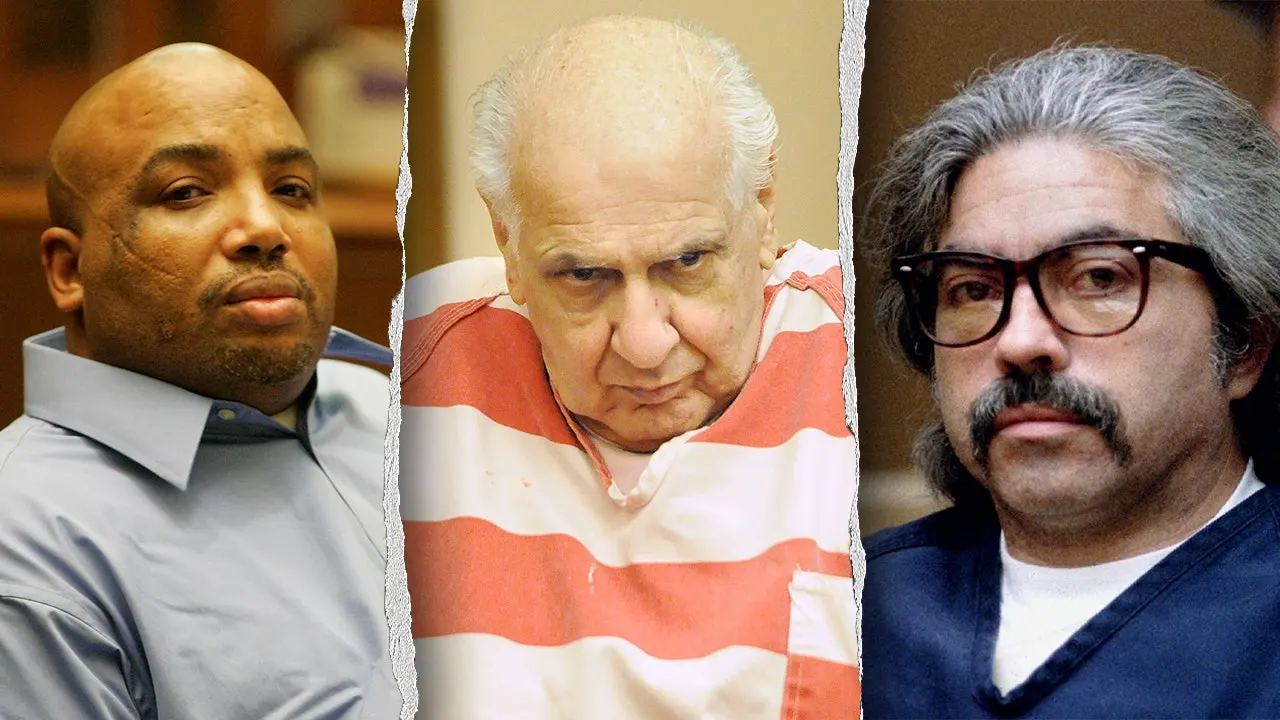

California Gov. Gavin Newsom announced Nov. 5 that 548 people on the state’s death row will have their sentences commuted to life in prison, part of an effort to dismantle the nation’s largest death row.
“I have decided to commute every death sentence,” Newsom said in an open letter, conceding that the move would anger some people and cause additional pain for victims’ relatives who oppose eliminating the death penalty.
“I will therefore issue the same commutation to every condemned person — life without the possibility of parole, the most severe punishment I can lawfully impose and the state of California can ethically enforce,” he wrote.

California Gov. Gavin Newsom addresses an event hosted by the state Democratic Party at the Clubhouse at King’s Grant in Summerville, South Carolina, on Sept. 3, 2026. Newsom is traveling through the state to mobilize Democrats ahead of the November midterm elections. South Carolina is the first primary state in the 2028 presidential contest. (Sean Rayford/Getty Images)
Newsom’s decision does not immediately remove every prisoner from death row. Under California law, commutations involving inmates with multiple felony convictions require approval from the state Supreme Court. Hundreds of condemned prisoners fall into that category.
News Outlet contacted Newsom’s office for comment.
California’s death row includes some of the nation’s most notorious convicted child killers and serial murderers, including these 10 cases:
Richard Allen Davis
Richard Allen Davis broke into a Petaluma home in 1993 and kidnapped 12-year-old Polly Ann Klaas, who was having a sleepover with two friends. Davis strangled the girl and abandoned her body in a remote area near Cloverdale.

Richard Allen Davis, now imprisoned at San Quentin State Prison, received a death sentence for kidnapping Polly Klaas from her sleepover at knifepoint and strangling her. (Klaas Kids)
A Santa Clara County Superior Court judge sentenced Davis to death in 1996. His earlier criminal record helped fuel support for California’s “Three Strikes” law.
Polly’s father, Marc Klaas, later established the nonprofit KlaasKids Foundation. Over three decades, the organization helped search for millions of missing children.
The Alphabet Killer
Joseph Naso killed at least four women in Contra Costa, Marin and Yuba counties between 1977 and 1994. He earned the nickname “Alphabet Killer” because his victims had matching initials in their first and last names.

Joseph Naso listens during his arraignment in Marin County Superior Court in San Rafael, California, on April 13, 2011. (MediaNews Group/Marin Independent Journal via Getty Images)
A Marin County Superior Court judge sentenced Naso to death in 2013.
The Yosemite Serial Killer
Cary Stayner killed four people near Yosemite National Park in February 1999.
Stayner, a handyman at the nearby Cedar Lodge, murdered 42-year-old Carole Sund. He also killed and sexually assaulted her 15-year-old daughter, Juli, and murdered the family’s 16-year-old friend, Silvina Pelosso.
Months afterward, he beheaded Joie Armstrong, a 26-year-old nature guide.

Motel handyman Cary Stayner appears in a July 29, 1999, mugshot. He was charged with capital murder in the deaths of three Yosemite visitors and was linked to a fourth killing. (California Department of Corrections)
In 2002, a Santa Clara County Superior Court judge sentenced Stayner to death for killing Sund and the two teenage girls. He was already serving a life sentence for Armstrong’s murder.
Stayner first drew public attention as the older brother of Steven Stayner, who escaped from a 1972 kidnapping in 1980.
The Southside Slayer
From 1987 through 1998, Chester Turner raped and killed low-income women in South Los Angeles, frequently leaving their bodies in dark alleys and vacant lots.
Investigators arrested Turner in 2003 after a DNA database connected him to the victims. He became known as the “Southside Slayer” because many of the women were targeted along the South Figueroa Street corridor between Gage Avenue and 108th Street in Los Angeles County.

Chester Turner appears on the first day of his trial in Los Angeles on April 3, 2007. (Anne Cusack/Los Angeles Times via Getty Images)
A Los Angeles County Superior Court judge sentenced Turner to death in 2007 for killing 10 women. He received a second death sentence in 2014 for four additional killings.
Christopher Cheary
Christopher Cheary murdered, raped and tortured Sophia Acosta, identified as his girlfriend’s 3-year-old daughter, in 2011. The attack occurred while he was babysitting Sophia and her sister at an apartment in Exeter.
Sophia’s mother, who was not charged, reported the crime after discovering the child unconscious with injuries to her head. Medical staff later testified that Sophia had suffered internal trauma and signs of sexual torture.

Christopher Cheary was convicted in the 2011 killing of 3-year-old Sophia Acosta. (Tulare County District Attorney’s Office)
After his 2016 conviction, a Tulare County Superior Court judge sentenced Cheary to death in 2017.
The Scorecard Killer
Randy Kraft raped, tortured and killed at least 16 hitchhikers and young men across Southern California between 1971 and 1983. Investigators, however, believe he may have killed more than 60 people.
Kraft became known as the “Scorecard Killer” after authorities found a coded list in his vehicle that appeared to identify victims and the locations of their bodies. His killing spree ended in 1983, when California Highway Patrol officers stopped him and found the body of Marine Terry Lee Gambrelin in the front passenger seat.

Handout photographs from the California Department of Corrections and Rehabilitation show Randy Steven Kraft in 1983, left, and June 2007, right. Considered one of California’s most prolific serial killers, Kraft may have killed as many as 65 young men in California, Oregon and Michigan over 13 years. He was sentenced to death after a trial lasting nearly a year. His crimes were uncovered after he was stopped on suspicion of drunken driving and officers found a dead Marine in his Toyota. (California Department of Corrections and Rehabilitation via Getty Images)
Investigators connected 43 victims to the coded handwriting, but prosecutors charged Kraft with 16 murders to limit the burden of proof at trial.
An Orange County Superior Court judge sentenced Kraft to death in 1989.
Isauro Aguirre
In 2013, Isauro Aguirre and his girlfriend, Pearl Fernandez, killed 8-year-old Gabriel Fernandez after subjecting him to eight months of torture at a home in Palmdale.
The abuse included withholding food, beating Gabriel, forcing him to eat cat feces and locking him inside a cabinet with a sock placed in his mouth.

Isauro Aguirre appears in Lancaster Superior Court on May 28, 2013. He was later convicted and sentenced to death for torturing and killing his girlfriend’s 8-year-old son, Gabriel Fernandez. (Irfan Khan/Los Angeles Times via Getty Images)
A Los Angeles County Superior Court judge sentenced Aguirre to death in 2018. Fernandez received life in prison without parole.
Charles Ng
Between 1983 and 1985, Charles Ng abducted, tortured and killed at least 11 people at a remote Calaveras County cabin known as “The Castle.”

Convicted murderer Charles Ng enters Orange County Superior Court in Santa Ana, where a jury recommended the death penalty for killing 11 people in Northern California in 1984. (Al Schaben/Los Angeles Times via Getty Images)
An Orange County Superior Court judge sentenced Ng to death in 1989. Leonard Lake, his co-conspirator, died by suicide during a police standoff in 1985.
The Trailside Killer
David Carpenter, known as the “Trailside Killer,” raped and murdered at least seven hikers in Marin County and Santa Cruz between 1980 and 1981.

Public defender Frank Cox, left, sits at the defense table with David Carpenter in San Rafael, California, in December 1984. (MediaNews Group/Marin Independent Journal via Getty Images)
In 1984, a Los Angeles County Superior Court judge sentenced Carpenter to death for the Santa Cruz killings. Four years later, a San Diego County Superior Court judge imposed another death sentence for the Marin County crimes.
Cherie Rhoades
Cherie Rhoades, the former leader of a small Northern California Native American tribe, fatally shot four people and attempted to kill two others during a 2014 tribal meeting concerning her eviction.

Cherie Louise Rhoades appears in an undated booking photograph released by the Modoc County Sheriff’s Office in Alturas, California. (REUTERS/Modoc County Sheriff Office/Handout via Reuters)
Rhoades was sentenced to death in 2017.


