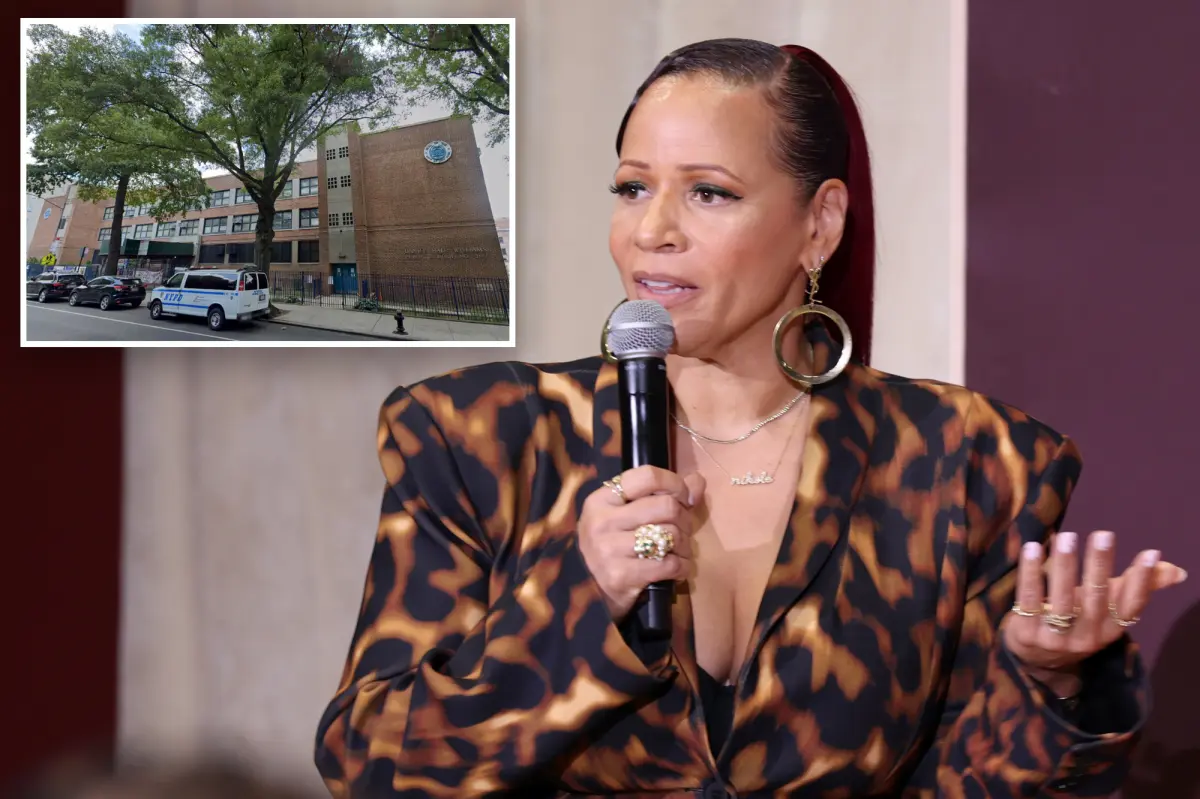

New York Times writer Nikole Hannah-Jones is facing criticism after describing how she chose schools for her daughter, with detractors accusing her of putting an effort to highlight systemic racism ahead of her child’s educational needs.
Hannah-Jones, 50, who helped create the newspaper’s controversial 1619 Project, said she and her husband—who bought a $1.5 million brownstone in Bedford-Stuyvesant in 2018—believed that enrolling their daughter, Najya, in a predominantly low-income, Black school could help improve conditions for all students.
After several years at schools serving mostly low-income communities, including PS 307 and Urban Assembly Unison, Hannah-Jones said her academically capable daughter, now 16, struggled with basic skills in high school. She also described Najya’s anger over the decision to prioritize broader social goals over what she viewed as her own educational interests.
Readers responded by criticizing Hannah-Jones for placing her activism and educational philosophy ahead of her daughter’s future.
Thomas Chatterton Williams, an Atlantic writer and Bard College faculty member, said on X that he was grateful his own father had focused on sending him and his brother to the safest and best schools he could afford rather than trying to make a broader statement. Williams said his father, who had experienced segregated and underfunded schools before the civil rights era, also supplemented their education at home.
“He did this because he’d been forced into segregated, under-resourced schools before civil rights and knew you have one shot at an education and this isn’t a game,” he wrote.
Jack Despain Zhou, founder of the nonprofit Center for Educational Progress, likewise argued that Hannah-Jones had failed to put her daughter’s interests first.
“You have a duty to your children. It is wrong to use them as vehicles for activism instead of fighting for their interests,” Zhou wrote on X.
At the same time, Zhou credited Hannah-Jones for publicly acknowledging the consequences of her decision.
“I don’t want to take a victory lap here, because NHJ could have simply never written this article, and it’s incredibly important that she did,” he added.
In an essay published Sunday in the New York Times Magazine, Hannah-Jones acknowledged that she had the financial means to choose highly rated schools but now feels her decision left her having “failed” her daughter.
“Najya was asking what I’d accomplished by not choosing the ‘best’ school for her,” Hannah-Jones wrote. “The honest answer is, I don’t know.”
She added: “When it comes to the choices my husband and I have made about public education, these days I feel that I failed both my values and my child.”